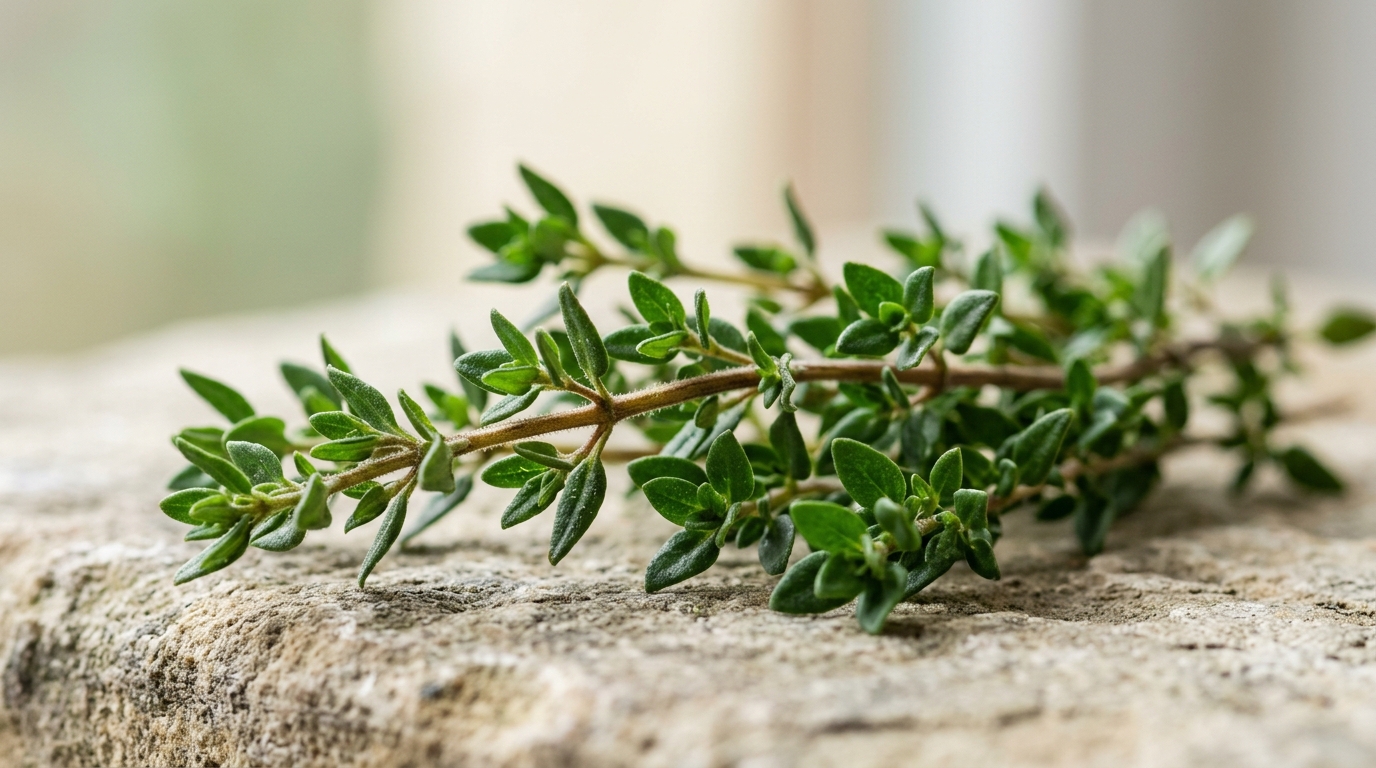
A standardized leaf extract from Thymus vulgaris significantly attenuated pulmonary injury and modulated airway secretion in mice exposed to fine particulate matter, according to an experimental investigation published in BMC Complementary Medicine and Therapies. The laboratory study examined how oral administration of the botanical extract influenced lung tissue damage, cellular inflammation, mucus dysregulation, and apoptosis-related markers following exposure to airborne particles. While previous experimental models have demonstrated antioxidant and anti-inflammatory properties for Thymus vulgaris, its specific actions on respiratory secretion and structural tissue damage under fine particulate exposure required systematic characterization.
Fine particulate matter, designated PM2.5, is recognized as a widespread environmental air pollutant associated with oxidative stress, persistent inflammation, mucus dysregulation, and structural lung injury. To evaluate whether Thymus vulgaris leaf extract could counteract these respiratory insults under controlled laboratory conditions, the research team established a subacute pulmonary injury model using Balb/c mice. Subacute respiratory toxicity was induced in the animals through the intranasal instillation of diesel particulate matter, using the reference standard NIST 1650b administered at one milligram per kilogram on Days 0 and 2.
Following the induction of particulate injury, the researchers administered the standardized Thymus vulgaris leaf extract orally once daily over a ten-day experimental period. The botanical treatment was evaluated across three escalating oral dosage levels: 50 milligrams per kilogram, 100 milligrams per kilogram, and 200 milligrams per kilogram. To benchmark its relative efficacy, ambroxol hydrochloride was administered at a dosage of 250 milligrams per kilogram to serve as an established reference secretagogue and mucoactive drug comparator. All animal subjects were systematically fasted before the initial compound administration and prior to terminal necropsy.
The research team employed multiple diagnostic assessments to evaluate the physiological and molecular mechanisms involved. Expectorant-related activity was quantified using the tracheal phenol red secretion assay. In addition, detailed histopathological examinations and molecular assays were conducted on excised lung tissues to evaluate mucus-related, inflammatory, and apoptosis-associated changes. The investigators measured tissue concentrations of acetylcholine and substance P, analyzed MUC5AC and MUC5B mRNA expression levels, and quantified immunohistochemical immunoreactivity for the inflammatory enzyme cyclooxygenase-2 and the apoptotic executioner marker cleaved caspase-3.
The experimental instillation of diesel particulate matter caused marked pathological disturbances throughout the respiratory system of the mice. Animals subjected to PM2.5 exposure exhibited significantly increased tracheal phenol red secretion, marked pulmonary congestion, increased lung weight, and extensive inflammatory-cell infiltration. Microscopic examination of lung histology confirmed noticeable alveolar septal thickening and an elevated count of periodic acid–Schiff-positive goblet cells within the airways, alongside a substantial reduction in the available alveolar surface area.
Molecular analyses revealed corresponding increases in lung acetylcholine and substance P levels, alongside elevated expression of MUC5AC and MUC5B mRNA and increased immunoreactivity for cyclooxygenase-2 and cleaved caspase-3. Daily oral treatment with the standardized Thymus vulgaris leaf extract attenuated each of these pathological and molecular changes in a clear dose-dependent manner. Furthermore, the highest tested dose of 200 milligrams per kilogram produced therapeutic responses broadly comparable to the reference agent ambroxol across several measured biological endpoints.
Under the specified experimental conditions, the standardized Thymus vulgaris leaf extract successfully attenuated multiple indices of PM2.5-induced subacute pulmonary toxicity and altered key airway secretion-related endpoints in mice. The authors concluded that these preclinical findings support further scientific investigation into Thymus vulgaris as a potential complementary or preventive candidate against fine particulate-associated respiratory damage, while noting that the findings remain grounded in an animal model of subacute diesel particulate exposure.
Subject of Research: Protective and expectorant effects of Thymus vulgaris against PM2.5 lung toxicity in mice
Article Title: Pulmonary protective and expectorant effects of Thymus vulgaris leaf extract against PM2.5-induced pulmonary toxicity in mice
Article References: Lee, J.-K., Bashir, K. M. I., Park, H.-R., Kwon, J.-G., Choi, B.-R., Choi, J.-S., & Ku, S.-K. (2026). Pulmonary protective and expectorant effects of Thymus vulgaris leaf extract against PM2.5-induced pulmonary toxicity in mice. BMC Complementary Medicine and Therapies. https://doi.org/10.1186/s12906-026-05699-3
Image Credits: AI Generated
DOI: 10.1186/s12906-026-05699-3
Keywords: Thymus vulgaris, thyme leaf extract, PM2.5, particulate matter, pulmonary toxicity, lung injury, airway secretion, expectorant, Balb/c mice, diesel particulate matter, NIST 1650b, ambroxol hydrochloride, tracheal phenol red secretion, MUC5AC, MUC5B, COX-2, cleaved caspase-3, acetylcholine, substance P
News Source: Ophelia Keating. (November 25, 2026). Thyme Leaf Extract Protects Murine Lungs Against Fine Particulate Damage. Scienmag.