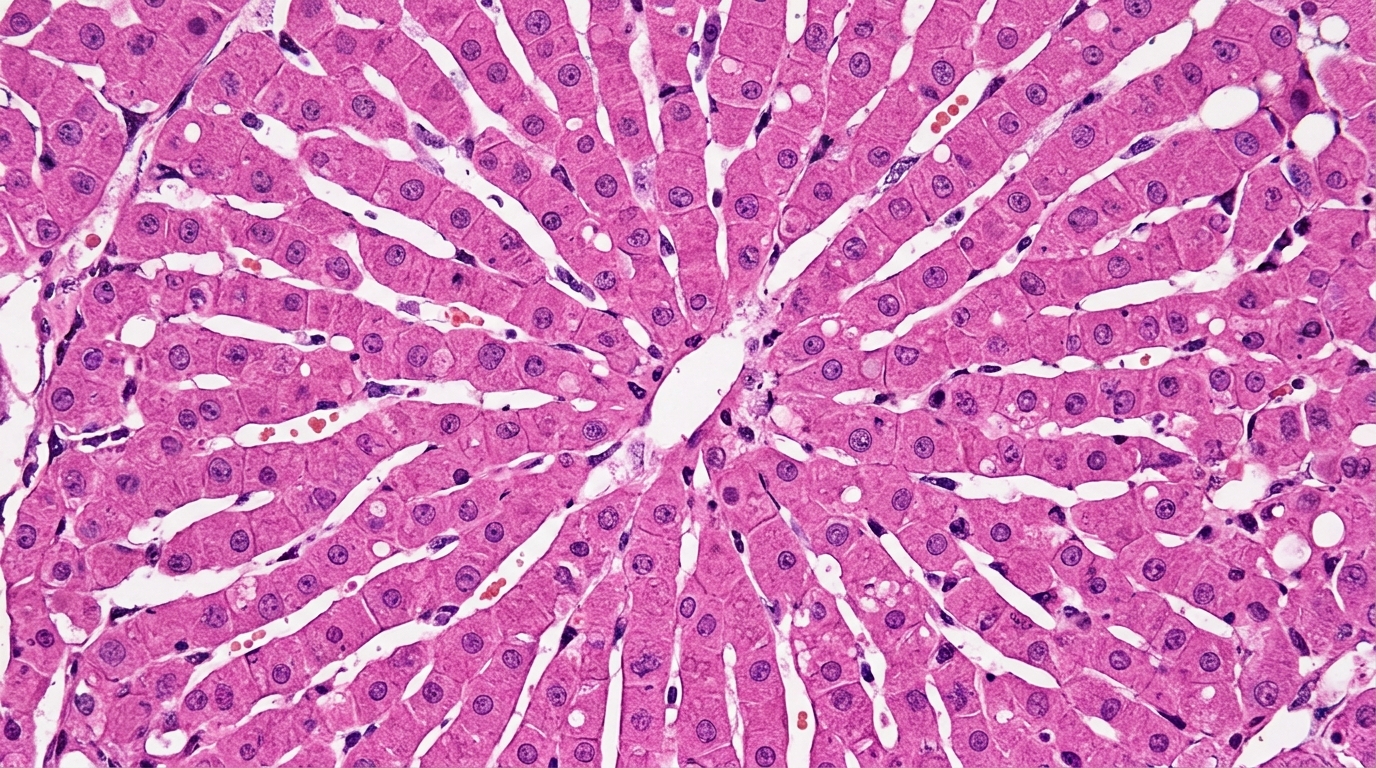
A newly developed explainable deep-learning framework integrates dual-stain liver biopsy images, clinical data, and longitudinal lifestyle records to predict multisystem health outcomes in patients diagnosed with metabolic dysfunction-associated steatotic liver disease. Designated as AEGIS-MASLD, the computational system was engineered to overcome critical limitations inherent in standard non-invasive testing modalities. Existing non-invasive tools frequently yield indirect and largely cross-sectional risk estimates, restricting clinicians from establishing continuous, individualized prognostic assessments for affected individuals.
The retrospective investigation gathered clinical records from a multicentre study cohort comprising 814 adult patients with biopsy-confirmed steatotic liver disease who presented without baseline medical comorbidities. Participating individuals across the study sites underwent extensive long-term health tracking. Over the course of the investigation, the research team documented a median patient follow-up duration of 203 months to monitor long-term clinical trajectories and subsequent health events.
Model training and optimization relied on five-fold cross-validation within a developmental cohort consisting of 546 patients selected from three medical centres located in China. To rigorously examine transportability and diagnostic performance across independent clinical environments, the investigators conducted external validation using a separate cohort of 268 patients treated across six additional independent medical institutions.
During external testing across the six independent validation centres, the framework successfully predicted twelve non-fatal multisystem outcomes associated with the liver condition. The system achieved areas under the receiver operating characteristic curve spanning between 0.766 and 0.867 across these endpoints. Through these comparative evaluations, the deep-learning model consistently outperformed conventional histological assessment systems as well as standard non-invasive fibrosis scores.
The analytical framework also addressed all-cause mortality, evaluating this survival endpoint through a distinct analysis incorporating patient pathology data alongside standardized laboratory measurements. In parallel, the architecture generated updated annual risk projections for the non-fatal outcomes. These ongoing risk calculations were continuously recalculated as individual patients experienced changes in their recorded longitudinal lifestyle exposures over time.
High-resolution computational tissue analyses of the dual-stain biopsy specimens identified twenty-four distinct histopathological phenotype clusters. Characterization of these cellular patterns revealed specific clinical pathways: fibrotic phenotype clusters demonstrated clear associations with subsequent progression to cirrhosis and hepatocellular carcinoma, whereas discrete inflammatory clusters showed direct predictive links to emerging cardiovascular events.
The study investigators concluded that digital pathology analysis applied to routinely acquired biopsy tissue, when integrated with structured clinical metrics and lifestyle information, could support individualized multisystem risk assessment. The authors emphasized that such computational frameworks offer valuable potential for monitoring and structured clinical follow-up in comorbidity-free patients who undergo diagnostic liver biopsy procedures for steatotic liver disease.
Subject of Research: Deep-learning prediction of multisystem outcomes in comorbidity-free MASLD
Article Title: An explainable deep-learning framework for predicting multisystem outcomes in comorbidity-free MASLD
Article References: Yuan, T., Shen, Y., Chen, W., He, C., Ding, Z., Chen, S., Zhang, H., Liu, J., Su, B., Wang, H., Zhang, X., Xie, X., Zhang, Z., Zheng, Q., Ma, J., Yang, Y., Si, A., Wang, Q., Xie, Z., … Shen, H. (2026). An explainable deep-learning framework for predicting multisystem outcomes in comorbidity-free MASLD. Nature Communications. https://doi.org/10.1038/s41467-026-79594-3
Image Credits: AI Generated
DOI: 10.1038/s41467-026-79594-3
Keywords: AEGIS-MASLD, metabolic dysfunction-associated steatotic liver disease, deep learning, digital pathology, liver biopsy, dual-stain histology, multisystem outcomes, histopathological phenotype clusters, cirrhosis, hepatocellular carcinoma, cardiovascular events, all-cause mortality, multicentre validation, prognostic modeling, lifestyle records, fibrosis scores
News Source: Blake Davidson. (November 25, 2026). Deep Learning Predicts Multisystem Complications in Comorbidity-Free Liver Disease. Scienmag.