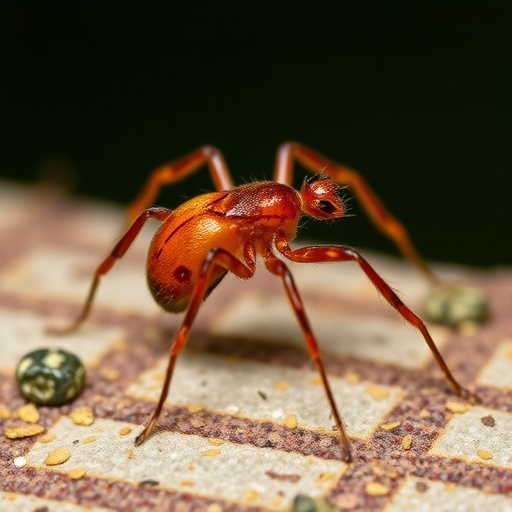
Lyme disease risk in the United States is governed by a far more complicated ecological network than researchers once understood, according to a new synthesis of more than three decades of field observations. The study, published in Proceedings of the National Academy of Sciences, draws on long-term monitoring conducted at the Cary Institute of Ecosystem Studies in Dutchess County, New York, where scientists have tracked oak trees, acorns, rodents, ticks, predators, weather, and microorganisms since 1991. The research offers a detailed account of how fluctuations in one part of the forest community can influence the abundance and infection status of ticks that transmit Borrelia burgdorferi, the bacterium responsible for Lyme disease.
Lyme disease is the most commonly reported vector-borne disease in the United States, with nearly half a million diagnoses estimated each year. It is primarily transmitted by blacklegged ticks, especially during the nymphal stage, when the arachnids are small, difficult to detect, and active during periods when people spend time outdoors. Untreated infections can spread from the skin to the joints, heart, and nervous system, while some patients experience persistent symptoms even after treatment. Although ticks transmit roughly 90 percent of vector-borne diseases in the United States, the ecological conditions that determine their abundance and capacity to carry pathogens remain difficult to predict. The Cary Institute project was designed to resolve those relationships by observing the entire forest system rather than focusing on a single host or climate variable.
One of the clearest conclusions from the long-term record challenges an assumption that shaped early Lyme disease research: white-tailed deer are less important drivers of human risk than previously believed. Deer can carry large numbers of adult blacklegged ticks, and adult female ticks require a blood meal before producing eggs. That observation led researchers to predict that more deer would ultimately generate more ticks. Deer, however, are poor reservoirs for B. burgdorferi and do not efficiently infect feeding ticks. When the Cary Institute team analyzed the full time series, it found no statistical relationship between deer abundance and the density of nymphal ticks, the life stage most likely to transmit Lyme disease to people. Shorter segments of the data showed a weak positive association, but that pattern disappeared when all decades of observations were considered together.
White-footed mice, by contrast, have emerged as a much more consequential component of the transmission system. Mice are highly competent reservoirs for B. burgdorferi, meaning that larval ticks feeding on them are particularly likely to acquire the bacterium. Those infected larvae molt into nymphs, which can then transmit the pathogen during their next blood meal. The long-term data show that a strong mouse year is followed by an approximately 40 percent increase in nymphal tick abundance the following year. This relationship reflects both the availability of hosts and the life cycle of the tick. Larvae generally feed in late summer, molt during the subsequent months, and reappear as nymphs the next spring or summer, creating a delay between changes in mouse populations and changes in human exposure risk.
The mouse–tick connection is itself linked to the reproductive cycles of oak forests. During mast years, oak trees produce unusually large and synchronized crops of acorns. These seeds provide a concentrated food supply for mice and other mammals, allowing mouse populations to increase in the following year. The resulting rise in mice supports more larval ticks, and the effect becomes visible as elevated nymphal tick numbers roughly two years after the original acorn crop. This lag gives the ecological system a degree of predictability. By monitoring oak reproduction, researchers may be able to anticipate periods of increased nymphal abundance well before those ticks reach peak activity, although abundance alone does not determine how many ticks carry B. burgdorferi.
That distinction became one of the study’s most puzzling findings. Scientists initially expected mouse abundance to predict not only the number of nymphal ticks but also the proportion infected with Lyme bacteria. Early observations appeared to support that expectation. Over time, however, the relationship weakened and ultimately disappeared. The explanation was that larval ticks do not feed exclusively on mice. In years when mice are numerous, other hosts—including skunks, squirrels, and opossums—may also be abundant. Many of these animals are inefficient reservoirs for B. burgdorferi. If a larger share of larval tick meals occurs on such hosts, the overall infection prevalence among nymphs can remain stable or decline even while the total number of ticks rises.
This finding illustrates why Lyme disease risk cannot be estimated from tick abundance alone. Human exposure depends on at least two separate variables: how many nymphs are present and what fraction of them carry the pathogen. The first is strongly influenced by host availability and the acorn-driven dynamics of mice. The second depends on the distribution of larval blood meals across an entire vertebrate community. In ecological terms, the system is shaped by host competence, host abundance, tick feeding behavior, and the timing of tick development. A forest containing many ticks may not have the same infection risk as a forest with fewer ticks but a higher proportion infected. Conversely, a surge in nymphal abundance can increase exposure even if infection prevalence remains unchanged.
The field observations also contradict conclusions drawn from laboratory studies about the effects of extreme temperatures. Experiments have suggested that blacklegged ticks can be killed by severe heat or cold. In natural habitats, however, ticks appear able to avoid the most damaging conditions by moving deeper into leaf litter and soil, where temperature and humidity fluctuate less than at the surface. Cary Institute researchers found no evidence that isolated episodes of extreme heat or cold reliably eliminate wild tick populations. The broader climate signal is more complicated: years that are warmer overall have tended to predict lower-than-normal nymphal tick numbers, even though warmer conditions can benefit mouse populations. The outcome may depend on whether warmth is accompanied by drought or moisture, when during the year it occurs, and how it affects oak growth, acorn production, host survival, and tick development.
These complexities are becoming increasingly important as climate change alters northeastern forests. A warmer climate might appear likely to increase Lyme disease risk by improving conditions for mice and extending the seasonal activity of ticks, but the long-term record has not produced a simple upward response. Warmer and drier conditions may affect ticks differently from warmer and wetter conditions. Heat during the period when oak trees form acorns could alter the food pulse that drives mouse populations, while seasonal changes in temperature may influence tick survival, host behavior, and the timing of blood meals. Landscape change and invasive species may further modify these interactions. The researchers argue that only sustained, ecosystem-scale monitoring can reveal whether emerging trends are genuine or merely short-term correlations.
The Cary Institute study demonstrates the value of ecological time series for public health. Its central message is not that one species controls Lyme disease risk, but that risk emerges from interactions among trees, mammals, parasites, pathogens, predators, and climate. Acorn production can foreshadow mouse population growth; mouse abundance can predict a rise in nymphal ticks; and the composition of the broader host community can determine how many of those ticks become infected. Deer management alone therefore cannot be assumed to reduce human risk, while information about oak reproduction, rodent dynamics, and seasonal conditions may help health officials anticipate dangerous periods. As the monitoring program continues, researchers hope that its unusually deep record will clarify how climate change is reshaping the ecological chain that connects forests to human disease.
Subject of Research: Ecology of Lyme disease transmission, including interactions among oak trees, acorns, rodents, ticks, predators, pathogens, and climate.
Article Title: The ecology of Lyme disease: Long-term data, surprises, and a synthesis
News Publication Date: 17-Aug-2026
Web References: https://doi.org/10.1073/pnas.2610907123
References: Ostfeld, R. S., LaDeau, S. L., Oggenfuss, K., Canham, C. D., Fargione, M., Winchcombe, R. J., and Keesing, F. “The ecology of Lyme disease: Long-term data, surprises, and a synthesis.” Proceedings of the National Academy of Sciences.
Image Credits: Robin Moore / Cary Institute of Ecosystem Studies
Keywords: Lyme disease, blacklegged ticks, Borrelia burgdorferi, white-footed mice, white-tailed deer, acorns, oak forests, nymphal ticks, vector-borne disease, climate change, disease ecology, public health
Tags: blacklegged tick life cycleBorrelia burgdorferi transmissionecological network of vector-borne diseasesforest ecosystem and Lyme diseaseimpact of acorn abundance on tick populationslong-term ecological study of Lyme diseaseLyme disease ecologyLyme disease risk factors in the USmicrobial factors in Lyme disease ecologypredator effects on tick hostsrole of rodents in Lyme disease spreadweather influence on tick activity