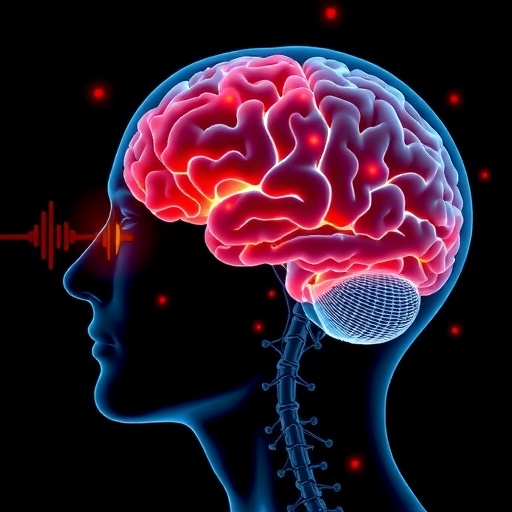
A new study is challenging one of the most stubborn assumptions in Parkinson’s disease: that deep-brain stimulation can relieve movement symptoms but has little to offer when memory, attention, and mental flexibility begin to fail. Researchers report that tuning electrical stimulation to the brain’s theta rhythm improved cognitive performance in Parkinson’s patients with cognitive impairments, suggesting that the same technology used to steady movement may also be engineered to restore fragile communication across brain networks.
The findings, published in npj Parkinson’s Disease by R.C. Cole, J.F. Cavanagh, Q. Zhang and colleagues, focus on theta-frequency deep-brain stimulation. Theta rhythms generally occupy a slow electrical range of roughly 4 to 8 cycles per second and are associated with memory formation, attention, navigation, and the coordination of activity between distant brain regions. In Parkinson’s disease, the neural circuits linking the basal ganglia, frontal cortex, and memory-related structures can become progressively disorganized. The new work suggests that carefully timed stimulation may help push those circuits back toward a more functional operating state.
Parkinson’s disease is best known for tremor, slowness, rigidity, and problems with balance, but its cognitive symptoms can be equally disruptive. Patients may struggle to hold information in mind, switch between tasks, plan actions, or remain focused in the presence of distractions. These difficulties are not simply a consequence of slowed movement. They reflect changes in large-scale brain networks, including circuits that use dopamine and other chemical signals to regulate the flow of information through the frontal lobes. As the disease advances, cognitive impairment can limit independence even when motor symptoms are being treated effectively.
Deep-brain stimulation, or DBS, works by delivering electrical pulses through surgically implanted electrodes positioned inside the brain. Conventional systems typically operate at high frequencies, often around 130 pulses per second, to suppress abnormal activity associated with motor symptoms. That approach can be remarkably effective for tremor and rigidity, but high-frequency stimulation is not necessarily suited to every neural function. Cognition depends on the precise timing of communication, and the researchers’ strategy was to use a slower rhythm that more closely resembles the brain’s own theta oscillations.
The idea is not to force the entire brain into a single rhythm. Instead, rhythmic stimulation may act like a metronome for neural circuits that have lost their timing. Neurons communicate through patterns of electrical activity, and the phase of an oscillation can determine when a signal is amplified, ignored, or transmitted to another region. By delivering pulses at theta frequency, stimulation could improve the coordination of activity between deep brain structures and the cortex. In theory, that may make it easier for patients to maintain attention, update information, and select an appropriate response when a task changes.
The study is significant because it targets cognition directly rather than treating cognitive problems as an unavoidable side effect of neurological degeneration. The researchers assessed cognitive performance while patients received theta-pattern stimulation and compared their results with performance under other conditions. The reported improvement indicates that the stimulation was not merely making participants faster or more alert in a general sense. Rather, it appears to have influenced mental operations that are particularly vulnerable in Parkinson’s disease, such as working memory, cognitive control, and the ability to manage competing information.
This distinction matters clinically. A patient may complete a motor task more quickly without being better able to remember instructions, organize a sequence of actions, or adapt when circumstances change. Cognitive performance is also highly sensitive to fatigue, medication timing, anxiety, and practice effects, so any promising result must be interpreted through carefully controlled testing. The value of the new findings is that they provide evidence for a physiologically informed approach: stimulation parameters can be selected not only to suppress pathological motor signals, but also to engage rhythms associated with higher-order brain function.
The work also points toward a future in which DBS becomes more personalized and responsive. At present, clinicians often adjust stimulation using a combination of symptoms, patient reports, and standardized examinations. A next-generation system could monitor neural signals in real time, identify when a patient’s cognitive network is losing coordination, and deliver brief theta-pattern interventions only when needed. Such closed-loop stimulation would be more complex than simply turning a device on or off, but it could reduce unnecessary electrical exposure and allow treatment to adapt as disease, medication, sleep, and attention fluctuate throughout the day.
The findings do not mean that theta stimulation is a cure for Parkinson’s dementia, nor do they establish that every patient with cognitive impairment will benefit. DBS requires brain surgery, and stimulation can produce unwanted effects depending on the electrode location, electrical intensity, and neural pathways activated. Cognitive outcomes may also differ according to disease stage, medication status, the specific type of impairment, and the brain target being stimulated. Larger studies will need to determine how long the benefits last, whether they transfer to everyday activities, and whether repeated theta stimulation can produce durable improvements rather than short-term gains during laboratory testing.
Even with those limitations, the research delivers a striking message: electrical stimulation may be capable of changing not just how Parkinson’s patients move, but how their brains organize thought. The study turns a familiar medical device into a tool for probing the brain’s timing code, showing that frequency is not a technical detail but a potentially decisive component of treatment. If future trials confirm the result, theta-based DBS could help open a new chapter in neurology—one in which implanted stimulation is tuned to the rhythms of memory and attention as carefully as it is to the circuits controlling movement.
Subject of Research: Theta-frequency deep-brain stimulation for improving cognitive performance in Parkinson’s patients with cognitive impairments.
Article Title: Theta deep-brain stimulation improves cognitive performance in Parkinson’s patients with cognitive impairments.
Article References: Cole, R.C., Cavanagh, J.F., Zhang, Q. et al. “Theta deep-brain stimulation improves cognitive performance in Parkinson’s patients with cognitive impairments.” npj Parkinson’s Disease (2026). https://doi.org/10.1038/s41531-026-01529-y
Image Credits: AI Generated
DOI: 10.1038/s41531-026-01529-y
Keywords: Parkinson’s disease, cognitive impairment, deep-brain stimulation, theta rhythm, memory, attention, neural oscillations, neuromodulation, DBS, brain-computer interfaces
Tags: basal ganglia and frontal cortex connectivitybrain stimulation for cognitive enhancementelectrical brain rhythm modulationimproving cognitive performance in Parkinson’smemory formation and attention in Parkinson’sneural circuit reorganizationneural circuits and brain network communicationneurostimulation for cognitive deficitsParkinson’s disease cognitive impairmentParkinson’s disease treatment advancementsrestoring brain network functiontheta-frequency deep brain stimulation