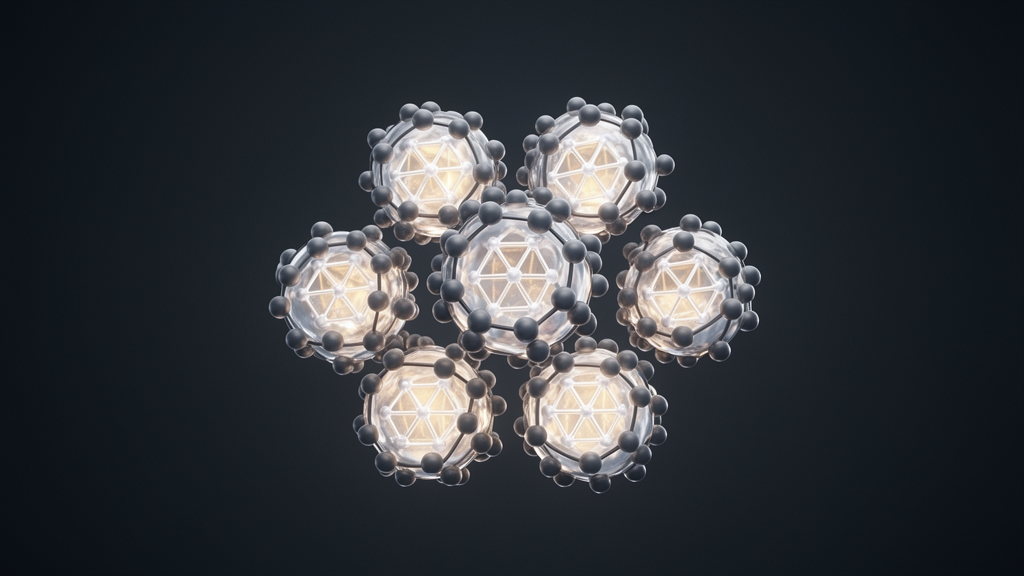
Colloidal indium phosphide quantum dots have advanced as leading cadmium-free semiconductor nanocrystals for lighting displays, photodetectors, and photovoltaic systems, yet their optical efficiency has consistently lagged behind legacy cadmium selenide platforms due to intricate surface chemistry. In contrast to the ionic character of divalent metal chalcogenides, the strongly covalent zinc-blende lattice of indium phosphide imposes structural asymmetry across its crystal boundaries. When periodic bulk bonding terminates at the nanoscale, the cleavage of tetrahedral bonds creates under-coordinated indium and phosphorus atoms termed dangling bonds. These surface sites yield polarized electronic perturbations: cation-rich indium terminations generate electron-deficient donor-like levels situated near the conduction-band edge, whereas anion-rich phosphorus surfaces produce electron-rich acceptor levels near the valence-band edge. These under-coordinated atoms generate localized electronic states inside the fundamental bandgap that serve as aggressive non-radiative recombination centers. A systematic review published in Chemical Physics Impact details how atomic-scale surface reconstruction, thermodynamic equilibria, and chemical passivation govern defect formation, providing a quantitative roadmap to overcome non-radiative losses in optoelectronic nanocrystals.
The atomistic origin of these surface defects is rooted in crystallographic polarity and growth-induced stoichiometric imbalances that deviate from ideal one-to-one elemental ratios. During colloidal synthesis, differences in precursor reactivity and ligand coordination affinities frequently generate cation-enriched or anion-enriched surface domains. Spectroscopic analyses of tris(diethylamino)phosphine and indium chloride precursors demonstrate that complete conversion to nanocrystalline indium phosphide requires a precursor molar ratio of at least four to one, exceeding stoichiometric proportions because the aminophosphine must undergo complex transamination and redox reactions reducing phosphorus from a plus three to a minus three oxidation state. This synthetic requirement leaves nanocrystal surfaces chemically heterogeneous, producing mosaics of indium-rich clusters that introduce shallow donor states and phosphorus-rich zones that yield localized states near the valence band. Concurrently, polar crystallographic facets such as the {111} planes establish surface dipoles that promote spatial charge separation, while {100} facets undergo atomic dimerization that reduces total dangling bonds at the expense of altering carrier relaxation pathways.
These intrinsic surface defects hybridize with the quantum-confined core electronic states, fundamentally restructuring the band edges and dictating carrier dynamics. Because surface atoms constitute a substantial proportion of the total atomic population in nanometer-scale crystals, minor structural variations exert disproportionate control over exciton confinement and luminescence efficiency. Rather than acting as isolated, uniform trap centers, dangling bonds interact collectively across facet boundaries to form broad defect distributions and multi-step non-radiative recombination channels. X-ray photoelectron spectroscopy, ultraviolet photoelectron spectroscopy, and density functional theory calculations confirm that these hybridized states perturb the effective bandgap, causing exciton localization and severe photoluminescence quenching. Consequently, conventional core-shell heterostructures, including wide-bandgap zinc sulfide and zinc selenide shells, often fail to achieve full theoretical luminescence efficiency because unpassivated dangling bonds and stoichiometric fluctuations remain trapped beneath the inorganic interface, continuing to facilitate non-radiative energy dissipation.
Beyond intrinsic structural termination, environmental degradation pathways further undermine the operational integrity of indium phosphide quantum dots through surface oxidation, moisture-induced hydrolysis, and ligand detachment. Exposure to ambient oxygen initiates preferential chemisorption onto reactive under-coordinated indium sites, producing indium oxide species that generate deep mid-gap trap levels, while phosphorus oxidation forms valence-band tail states. Under optical excitation, photo-generated charge carriers accelerate these transformations through surface redox reactions, wherein localized electrons reduce adsorbed oxygen molecules and photo-generated holes drive the cleavage of indium-phosphorus bonds. Concurrently, environmental moisture drives hydrolytic bond cleavage, wherein polar water molecules coordinate to exposed indium atoms, inducing proton transfer that releases phosphorus-containing fragments and creates defective indium hydroxide species. These oxidative and hydrolytic reactions act synergistically: partial oxidation increases surface hydrophilicity to accelerate water adsorption, which subsequently cleaves lattice bonds and exposes fresh metal sites to oxidative degradation.
Compounding these environmental vulnerabilities is the dynamic nature of the organic ligand shell that stabilizes colloidal nanocrystals in solution. Native organic ligands, predominantly aliphatic carboxylates and alkylamines, coordinate through reversible coordination bonds that undergo spontaneous detachment under thermal fluctuations, solvent dilution, or competitive chemical displacement. Ligand desorption preferentially strips high-energy surface sites, exposing bare crystal facets to the surrounding chemical atmosphere and serving as nucleation sites for accelerated lattice degradation. Mechanistic investigations utilizing anhydrous hydrofluoric acid etching, generated in situ via benzoyl fluoride and octylamine amidation, illustrate the delicate balance between surface destabilization and structural restoration. While aggressive etching erodes structural integrity, controlled fluoride treatment at elevated temperatures between 150 and 200 degrees Celsius activates bond reorganization, purging surface non-radiative recombination centers and significantly prolonging carrier lifetimes. Similarly, universal indium trifluoride treatments enhance photoluminescence quantum yields across heat-up, hot-injection, and aminophosphine-derived nanocrystals, with yields reaching 93 percent by reorganizing partially oxidized surface layers.
Resolving the dynamic instability of colloidal nanocrystal surfaces requires an exact thermodynamic understanding of ligand-exchange equilibria. Quantitative isothermal titration calorimetry and proton nuclear magnetic resonance spectroscopy, interpreted through statistical Ising-type lattice models, demonstrate that ligand exchange is fundamentally governed by inter-ligand tail interactions rather than solely by head-group coordination energy. The substitution of native carboxylates by oleic acid reveals endothermic enthalpy profiles, indicating that the thermodynamic driving force for exchange originates from an entropic gain associated with disrupting ordered hydrocarbon tail packing. Shorter aliphatic chains promote rapid dynamic ligand exchange but produce a destabilized organic shell prone to desorption, whereas longer, densely packed chains impose an entropic penalty during substitution while delivering robust steric protection. These measurements establish that the packing density and conformational entropy of the ligand shell dynamically modulate the chemical potential of surface atoms, directly altering the activation barriers for defect formation and surface reconstruction.
Building on these thermodynamic foundations, metal halide salt treatments have revolutionized surface passivation by transitioning the field from static ligand coverage models to dynamic, defect-resistant chemical equilibria. Introducing zinc chloride, zinc bromide, or indium chloride into the colloidal reaction mixture induces favorable enthalpy and positive entropy changes, displacing weakly bound native indium carboxylates to establish robust metal-halide coordination. These halide exchanges convert disordered, partially oxidized indium-phosphorus networks into well-ordered metal-halide surface domains, effectively suppressing deep mid-gap states and doubling photoluminescence intensity. Spectroscopic analyses demonstrate that zinc-based halides consistently outperform indium halides, correlating photoluminescence red-shifts and conduction-band delocalization with halide electronegativity and ionic radius. Rather than functioning as inert capping agents, metal halides operate as thermodynamic equilibrium regulators that reconfigure local surface stoichiometry toward an energetically minimized, defect-resistant ground state.
To achieve complete electronic passivation, modern surface engineering must simultaneously neutralize both cationic and anionic dangling bonds across the nanocrystal facets. Historically, passivation protocols targeted phosphorus-related oxide species, leaving uncoordinated indium atoms to sustain non-radiative carrier trapping. Synchrotron-based spectroscopy and unified single-step chemical treatments reveal that balancing precursor stoichiometry enables the concurrent saturation of indium and phosphorus dangling bonds. Neutralizing both donor-like indium sites and acceptor-like phosphorus sites lowers total surface free energy and mitigates interfacial charge accumulation. When followed by epitaxial zinc selenide shell deposition, this balanced surface spontaneously reconfigures into indium-selenium and phosphorus-zinc coordination bonds without generating lattice strain. This comprehensive defect compensation elevates photoluminescence quantum yields above 70 percent while narrowing emission full-width at half-maximum linewidths to approximately 48 nanometers, validating the principle that balanced charge compensation is essential for uniform excitonic confinement.
Recent breakthroughs in metal-assisted, shell-less passivation have pushed photoluminescence efficiencies to near-unity levels by leveraging multi-component coordination chemistry. By introducing tailored metal halides and coordinating amines directly into the reaction medium, researchers satisfy the fundamental eight-electron rule on indium-rich crystallographic facets, where three halides and one amine per surface unit cell neutralize unsatisfied valencies to produce strain-free nanocrystals. Heterometallic ligand blending, particularly combining zinc carboxylates with gallium chlorides, balances surface polarity through cooperative donor-acceptor electron redistribution, eliminating shallow trap states and yielding photoluminescence quantum yields exceeding 90 percent without requiring thick inorganic shells. Furthermore, pre-shell chemical treatments incorporating aluminum, gallium, or indium salts alongside trace manganese dopants facilitate atomic-scale lattice relaxation, relieving interfacial stress during subsequent shell growth to achieve quantum yields up to 94 percent and narrow emission linewidths of 35 nanometers.
Despite these laboratory triumphs in colloidal solution, substantial bottlenecks emerge when integrating passivated indium phosphide nanocrystals into solid-state optoelectronic architectures like light-emitting diodes. During thin-film deposition and subsequent thermal annealing, solvent removal, ligand compression, and inter-particle coupling perturb the coordination equilibrium, stripping labile ligands and exposing reactive dangling bonds. Inside functioning devices, operational stresses such as continuous electrical bias, high charge-carrier flux, and Joule heating accelerate ligand migration, causing dynamic surface reconstruction and trap state regeneration. Interfacial energy level misalignments with adjacent charge-transport layers further induce secondary trap formation and efficiency roll-off. Overcoming these device-level limitations requires replacing empirical trial-and-error passivation with predictive computational frameworks that correlate ligand binding thermodynamics, dynamic exchange kinetics, and interfacial strain directly with external quantum efficiency and device operational lifetimes.
Subject of Research: Thermodynamic mechanisms of surface reconstruction and defect passivation in indium phosphide quantum dots for optoelectronics
Article Title: Chemical physics of surface reconstruction and defect passivation in InP quantum dots: Thermodynamic mechanisms, electronic structure evolution, and implications for high-performance optoelectronics
Article References: Shuheil, M. A., Raj, P. B., Kaur, I., Aldulaimi, A., Tawfiq, M. M., Sohal, H. S., Eshmetov, R., Ibrohimova, G., & Taherian, M. (2026). Chemical physics of surface reconstruction and defect passivation in InP quantum dots: Thermodynamic mechanisms, electronic structure evolution, and implications for high-performance optoelectronics. Chemical Physics Impact, 13, Article 101119. https://doi.org/10.1016/j.chphi.2026.101119
Image Credits: AI Generated
DOI: 10.1016/j.chphi.2026.101119
Keywords: quantum dots, indium phosphide, surface reconstruction, defect passivation, thermodynamics, photoluminescence quantum yield, optoelectronics, ligand exchange, metal halides, dangling bonds, isothermal titration calorimetry, light-emitting diodes, electronic band structure, nanocrystals, carrier recombination, stoichiometric imbalance, non-radiative recombination
News Source: Katie Riggs. (November 24, 2026). Thermodynamic Surface Passivation Suppresses Trapping Defects in Indium Phosphide Quantum Dots. Scienmag.