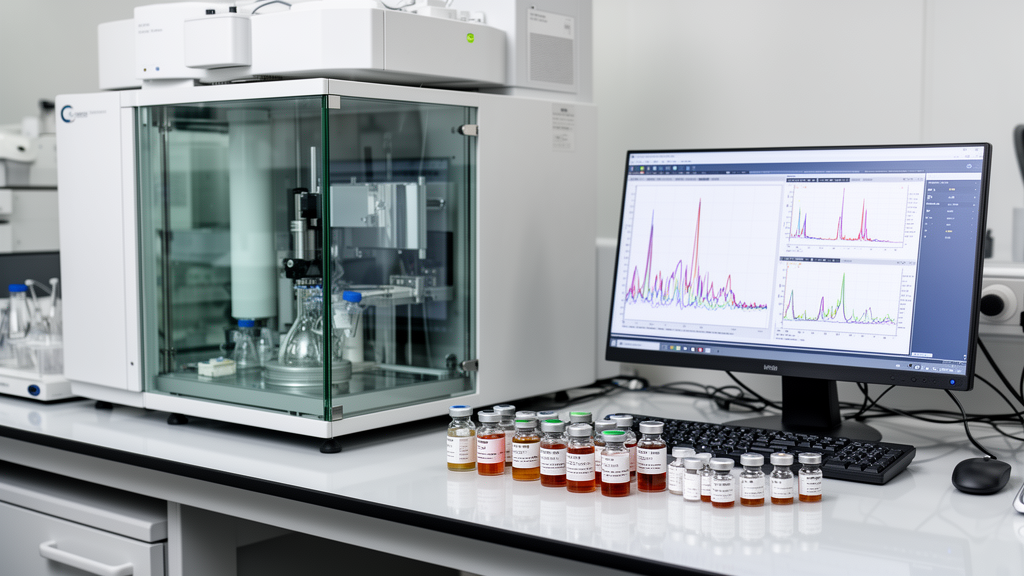
A comprehensive critical evaluation of fifty-five analytical methodologies published between 2000 and March 2025 demonstrates that quantifying neomycin across biological, food, environmental, and pharmaceutical samples is fundamentally governed by the drug’s distinctive polycationic and hydrophilic architecture. Synthesizing data across chromatography, electrochemistry, and spectroscopy, the investigation establishes liquid chromatography coupled with tandem mass spectrometry as the benchmark platform meeting stringent residue limits and bioanalytical standards. While recent technological advances have expanded field-deployable sensors and spectroscopic probes, neomycin’s structural properties continue to impose severe obstacles during sample preparation, separation, and detection. The comparative study reveals that analytical success depends not merely on detector sensitivity, but on implementing tailored purification workflows that mitigate severe ion suppression and adsorption losses.
Neomycin is a broad-spectrum aminoglycoside antibiotic produced through fermentation of Streptomyces fradiae that has played an enduring role in clinical practice and veterinary medicine. Commercial neomycin is not a single pure compound, but rather a stereoisomeric mixture consisting predominantly of neomycin B as the principal active constituent alongside minor proportions of neomycin C and related congeners. The base molecule possesses the formula C23H46N6O13, a molecular weight of approximately 614.6 grams per mole, an octanol-water partition coefficient of minus 7.6, and multiple protonatable amino groups with dissociation constants between 6 and 7. Pharmacologically, the drug exerts bactericidal activity against aerobic Gram-negative bacilli and selected Gram-positive pathogens by binding to the 30S ribosomal subunit. However, severe systemic toxicities, including ototoxicity, nephrotoxicity, and neuromuscular blockade, restrict clinical administration to localized oral, topical, ophthalmic, and otic formulations.
Because neomycin is widely administered in livestock production to treat gastrointestinal infections, residual quantities can persist in animal tissues, dairy streams, and secondary food products. Following oral administration, the compound exhibits minimal gastrointestinal absorption below ten percent in healthy animals, with the unabsorbed fraction excreted in feces and the absorbed portion eliminated rapidly and largely unchanged through renal pathways. To protect consumers against chronic exposure, allergic reactions, and antimicrobial resistance, international public health authorities have codified strict maximum residue limits. In the European Union, mandatory limits restrict neomycin concentrations to 500 micrograms per kilogram in muscle, fat, and milk, 1,500 micrograms per kilogram in liver, and 5,000 micrograms per kilogram in kidney. Enforcing these thresholds demands analytical workflows capable of achieving sensitive, dependable trace-level quantification across diverse biological and food matrices.
The physicochemical attributes that confer antibacterial potency upon neomycin simultaneously create profound complications during routine laboratory quantification. Under typical analytical acidity, the multiple primary and secondary amino groups distributed across the molecule’s sugar rings become fully protonated, producing a densely polycationic and polar structure. As a direct consequence, neomycin exhibits negligible hydrophobic retention on conventional reversed-phase columns, frequently eluting near the solvent front alongside unretained polar matrix constituents. Furthermore, the strong positive charge density promotes extensive secondary electrostatic interactions with residual silanols on stationary phases and metallic hardware, causing peak tailing, adsorption losses, and degraded reproducibility. Compounding these separation difficulties, neomycin lacks an intrinsic ultraviolet-absorbing chromophore or fluorophore, rendering direct optical detection largely insensitive and prone to baseline drift unless researchers introduce complex chemical derivatization protocols that increase analytical variability.
Matrix complexity represents the primary operational barrier across biological and agricultural testing applications. Because neomycin carries a robust net positive charge, it readily engages in strong electrostatic binding with negatively charged endogenous macromolecules, including structural proteins, membrane phospholipids, nucleic acids, and acidic polysaccharides. In untreated tissue homogenates, raw milk, and viscous honey, non-covalent matrix binding severely restricts the extractable fraction, leading to variable recoveries and systematic analyte underestimation if extraction conditions are inadequate. During liquid chromatography-tandem mass spectrometry, endogenous co-extracted constituents entering the electrospray ionization interface compete with neomycin for surface charge and droplet evaporation space. This competition triggers extensive matrix-induced ion suppression that can entirely mask analyte signals at regulatory residue thresholds. Furthermore, resolving neomycin B and neomycin C requires highly tuned chromatographic selectivity because both congeners share nearly identical masses and polarities.
Given the severity of matrix interferences, sample preparation serves as the primary determinant of analytical reliability rather than a preliminary cleanup step. For protein-rich animal tissues such as muscle, liver, and kidney, basic protein precipitation fails to eliminate interfering phospholipids, necessitating strong cation-exchange solid-phase extraction. The ionized amino groups of neomycin bind strongly to sulfonic acid ligands on cation-exchange sorbents, permitting rigorous aqueous washing steps that remove neutral and acidic contaminants before selective elution. In contrast, honey presents distinct challenges dominated by extreme carbohydrate concentrations and natural pigments, requiring targeted aqueous dilution followed by solid-phase extraction or antibody-based immunoaffinity columns to prevent chromatographic fouling. For environmental matrices, including municipal wastewater containing dissolved organic matter and humic acids, mixed-mode and hydrophilic-lipophilic balanced sorbents concurrently achieve essential analyte preconcentration and matrix cleanup.
Across the reviewed literature, liquid chromatography-tandem mass spectrometry operating with positive electrospray ionization emerged as the superior platform for trace-level biological and residue monitoring. Mass spectrometric detection predominantly isolates the protonated precursor ion at a mass-to-charge ratio of 615 for neomycin B, monitoring multiple reaction monitoring transitions to product ions at mass-to-charge ratios of 161 and 293. In bovine edible tissues and milk, this methodology achieved limits of detection of 10 micrograms per kilogram and limits of quantification of 20 micrograms per kilogram across dynamic working ranges spanning 20 to 1,000 nanograms per milliliter, with run times of six minutes. Similar configurations applied to serum demonstrated robust quantification limits of 0.20 micrograms per milliliter. Although high-resolution Orbitrap systems provide accurate mass confirmation for untargeted screening, triple quadrupole instrumentation remains the workhorse of quantitative compliance.
In contrast to mass spectrometry, conventional high-performance liquid chromatography configurations paired with optical or physical detectors exhibit severe limitations that restrict their utility to concentrated pharmaceutical preparations. Standard ultraviolet and photodiode array detection systems typically report inferior limits of detection exceeding 10 micrograms per milliliter, reflecting the absence of a native conjugated chromophore and confining their deployment to quality control testing of bulk drug powders, topical ointments, and veterinary creams. Universal detection approaches, such as evaporative light scattering detection, eliminate chemical derivatization but still deliver modest limits of quantification ranging from 39.15 to 122.47 micrograms per milliliter in formulations and dairy matrices. While pulsed amperometric detection on anion-exchange columns demonstrates impressive sensitivity down to 0.21 picomoles for neomycin B in creams, practical adoption is constrained by lengthy chromatographic run times extending between 27 and 50 minutes.
Electroanalytical methodologies have emerged as prominent, cost-effective alternatives that exploit neomycin’s strong polycationic surface affinity without requiring chromatographic separation. By implementing modified working electrodes incorporating molecularly imprinted polymers, carbon nanotubes, functionalized aptamers, or specific antibodies, researchers have achieved exceptional sensitivity across differential pulse, square-wave, and cyclic voltammetry modes. In tap and river water, a differential pulse sensor utilizing silver nanoparticles achieved a detection limit of 0.0061 micromolar, whereas a dual-screen-printed carbon electrode operating in square-wave adsorptive stripping mode achieved an extraordinary environmental detection limit of 0.035 picograms per milliliter. Similarly, a gold electrode modified with molecularly imprinted polymers demonstrated a detection limit of 7.63 nanomolar in milk and honey. Despite these remarkable sensitivities, electroanalytical platforms remain susceptible to progressive electrode fouling from non-specific protein adsorption, suffer from limited long-term stability, and cannot differentiate between neomycin congeners.
Spectroscopic techniques provide simple operational workflows for routine neomycin screening, though performance remains sharply divided between classical absorption assays and advanced photoluminescence systems. Traditional colorimetric and ultraviolet-visible spectrophotometric methods relying on ninhydrin derivatization or charge-transfer complexation exhibit poor sensitivity, with reported detection limits reaching 1,000 micrograms per milliliter in commercial dosage formulations. Conversely, modern functionalized fluorescent probes and nanomaterial-assisted sensing systems achieve dramatic sensitivity improvements by translating neomycin binding into distinct optical signals. For instance, fluorescence restoration mechanisms based on iron-mediated graphene quantum dot displacement have enabled neomycin quantification down to 0.78 nanomolar in aqueous solutions and 0.03 nanomolar in liquid milk. Nevertheless, because these optical transducers respond broadly to polycationic binding events rather than intrinsic molecular mass transitions, spectroscopic assays remain vulnerable to optical background quenching and cannot fulfill confirmatory regulatory standards.
A multi-dimensional synthesis of analytical performance parameters establishes a clear operational hierarchy structured around matrix complexity and regulatory objectives rather than individual instrument specifications. Liquid chromatography coupled to tandem mass spectrometry stands as the definitive standard for residue enforcement, animal pharmacokinetic investigations, and multi-matrix surveillance programs due to its unmatched molecular specificity, sub-microgram sensitivity, and rapid sample throughput. Universal liquid chromatography techniques utilizing evaporative light scattering or ultraviolet detection remain reliable, cost-effective workhorses specifically for pharmaceutical facilities conducting release testing on clean finished formulations. Concurrently, electrochemical biosensors and fluorescence sensing assemblies represent promising tools for decentralized field screening, rapid point-of-care diagnostics, and preliminary environmental monitoring, provided positive results undergo confirmatory mass spectrometric verification. Validated regulatory compliance across all platforms fundamentally necessitates matrix-matched calibrations and stable isotope-labeled internal standards to counteract variable recovery.
Looking toward future methodological developments, the review highlights crucial opportunities to resolve persistent analytical bottlenecks through green chemistry principles and automated computational workflows. Future chromatographic investigations are increasingly shifting away from toxic perfluorinated ion-pairing additives and corrosive acidic modifiers in favor of hydrophilic interaction liquid chromatography, mixed-mode stationary phases, and highly end-capped column chemistries designed to preserve mass spectrometer cleanliness. Furthermore, integrating artificial intelligence and machine learning algorithms offers transformative potential for modeling chromatographic retention surfaces, predicting matrix-dependent electrospray suppression patterns, and optimizing multi-variable extraction parameters. Coupled with advances in reusable magnetic nanomaterial sorbents and standardized inter-laboratory validation protocols, these multidisciplinary innovations will ensure that analytical laboratories maintain robust, sustainable, and legally defensible surveillance of neomycin residues across the global food supply and environmental reservoirs.
Subject of Research: Analytical techniques and matrix-specific methodologies for quantifying the aminoglycoside antibiotic neomycin
Article Title: Critical insights into analytical techniques for the quantification of neomycin across various matrices
Article References: Barzani, H. A. H., Omer, R. A., Barzani, K. I. S., Muhammad, H. Y., Sulaiman, S. H., Ashfaq, M., Smerat, A., Lee, I. E., Wali, Q., & Akhtaruzzaman, M. (2026). Critical insights into analytical techniques for the quantification of neomycin across various matrices. Chemical Physics Impact, 13, Article 101147. https://doi.org/10.1016/j.chphi.2026.101147
Image Credits: AI Generated
DOI: 10.1016/j.chphi.2026.101147
Keywords: neomycin, aminoglycoside antibiotics, LC-MS/MS, mass spectrometry, solid-phase extraction, maximum residue limits, food safety, matrix effects, electrochemical sensors, fluorescence spectroscopy, sample preparation, environmental monitoring, veterinary drug residues, hydrophilic interaction chromatography, high-performance liquid chromatography, biosensors, ion suppression
News Source: Bethany Barker. (November 25, 2026). Mass Spectrometry Benchmark Leads Neomycin Trace Quantification Across Complex Food Matrices. Scienmag.