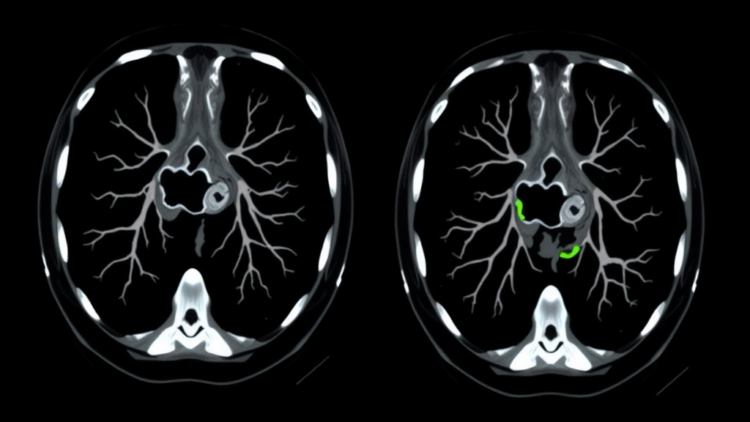
Few figures in the history of American neurology straddled the worlds of clinical practice, scientific investigation and medical publishing as completely as Theodore H. Weisenburg, whose life and career are the subject of a new historical profile published in the Journal of Neurology. Written by Lazaros C. Triarhou of the Aristotelian University of Thessaloniki as part of the journal’s long-running Pioneers in Neurology series, the profile reconstructs the trajectory of a physician born in 1876 who died in 1934, at the height of his intellectual powers, leaving behind a body of work that still shapes how clinicians think about aphasia, cerebellar function and cranial nerve pain. Drawing on obituaries by his contemporaries, his own landmark papers and archival correspondence held at McGill University’s Osler Library of the History of Medicine, the article restores to view a scientist whose name is less familiar today than his contributions deserve.
Weisenburg’s most cited early achievement came in 1910, when he published in the Journal of the American Medical Association a detailed case report of a cerebello-pontile tumor that had been misdiagnosed for six years as tic douloureux, the severe facial pain syndrome now more commonly called trigeminal neuralgia. The case was remarkable not only for its diagnostic detective work but for its systematic description of irritation symptoms affecting the ninth and twelfth cranial nerves, the glossopharyngeal and hypoglossal. By carefully correlating the patient’s paroxysmal pain in the throat and tongue regions with the anatomical course of these nerves, Weisenburg effectively provided one of the earliest clinical characterizations of glossopharyngeal neuralgia, an entity that later reviewers would trace directly back to his report. The lesson he drew, that structural lesions of the posterior fossa can masquerade for years as functional pain syndromes, remains embedded in modern differential diagnosis.
That paper illustrated a methodological habit that defined Weisenburg’s entire career: an insistence that clinical observation be anchored in meticulous anatomical correlation and, wherever possible, quantitative comparison. His interest in localization did not stop at the cranial nerves. In 1927 he contributed to a symposium on the cerebellum in the journal Brain, presenting an extended analysis of cerebellar localization and its symptomatology. At a time when the cerebellum was still often treated as a black box concerned vaguely with coordination, Weisenburg synthesized the available physiological and pathological evidence to argue for a more differentiated map of cerebellar function, connecting specific symptom complexes to specific cerebellar regions. The symposium paper became a reference point for subsequent work on cerebellar signs, including the subtleties of dyssynergia, dysmetria and the variability of clinical expression in cerebellar disease.
Yet it is in the study of aphasia, the devastating loss or impairment of language following brain injury, that Weisenburg made his most enduring scientific mark. In the late 1920s and early 1930s he directed an ambitious research program on language disorders, culminating in the Charles K. Mills memorial lecture delivered before the Philadelphia Neurological Society and published in 1934 in the Archives of Neurology and Psychiatry under the title A Study of Aphasia. The lecture was not a single case report but a synthesis of a large, systematically assembled series of aphasic patients, examined with a battery of tests that Weisenburg and his collaborators designed to probe language function along multiple dimensions: comprehension, repetition, naming, reading and writing. He had presented an early version of this testing framework at the First International Neurological Congress in Berne in 1931, where he also reported on the status of neurology in the United States, signaling his dual commitment to research infrastructure and scientific measurement.
What made the aphasia work genuinely innovative was its insistence on the study of normals. In a 1929 paper in the Journal of the American Medical Association, Weisenburg argued that no account of pathological language could be interpreted correctly without a rigorous description of normal variation in linguistic and intellectual ability across the healthy population. This was a strikingly modern methodological position, decades before the formalization of standardized neuropsychological norms. His group tested control subjects on the same instruments applied to aphasic patients, allowing deficits to be measured against the actual distribution of intact performance rather than against idealized expectations. Contemporary historians of neuropsychology have noted that this concern with defining the normal baseline, and the methodological puzzles it raised about intelligence testing in brain-damaged populations, anticipated debates that continue in the literature on aphasia assessment to this day.
The Mills memorial lecture, published in the opening issue of the Archives of Neurology and Psychiatry for 1934, condensed this program into thirty-three pages that ran counter to the rigid classification schemes then dominant in aphasiology. Weisenburg emphasized the heterogeneity of aphasic syndromes and the partial dissociations among language modalities, resisting the temptation to force every patient into a small number of canonical categories. His quantitative, multi-dimensional approach foreshadowed the psychometric tradition that would later flourish in mid-century neuropsychology, and his collaborators carried the framework forward after his death. In an era when much of aphasiology was fought out between anatomical reductionists and holistic skeptics, Weisenburg’s data-driven middle path proved remarkably prescient.
Weisenburg was also a builder of institutions. He served as editor of the Archives of Neurology and Psychiatry, one of the leading neurological journals in the English-speaking world, shaping the publication record of American neurology during a period of rapid growth. A poignant artifact of that role survives in the Wilder Penfield Digital Collection at McGill: a letter typed on Archives of Neurology and Psychiatry publication office letterhead, dated February 20, 1934, addressed to Wilder Penfield, the pioneering neurosurgeon then transforming the surgical treatment of epilepsy in Montreal. The letter, written just months before Weisenburg’s death, captures the network of correspondence through which the leading neurologists and neurosurgeons of the era exchanged findings, manuscripts and professional judgments. Triarhou’s profile uses such archival traces to situate Weisenburg not as an isolated genius but as a node in a dense transatlantic scientific community that included Penfield, Tilney, McConnell and the heirs of Charles K. Mills.
The circumstances of his death at fifty-eight prompted immediate tributes from colleagues. Frederick Tilney, the Columbia neurologist and himself a distinguished scholar, authored an obituary in the Archives of Neurology and Psychiatry spanning pages 842 to 849 of volume 32, a length that testifies to the esteem in which Weisenburg was held. James McConnell published a parallel memorial in the Journal of Nervous and Mental Disease. Both accounts portray a clinician of unusual diagnostic acuity, a demanding but generous teacher and a researcher who elevated the evidentiary standards of his specialty. Their combined testimony, mined anew by Triarhou, offers modern readers a portrait of what academic neurology looked like in the United States between the world wars: small departments, personal correspondence networks, journals that doubled as scientific forums and a growing awareness that neurology needed its own rigorous psychology.
The reappraisal of Weisenburg’s career comes at a moment when several of his themes have returned to prominence. The study of healthy control populations as an essential complement to patient research, the multidimensional assessment of language, and the careful anatomical dissection of cranial nerve syndromes are all live issues in contemporary neuroscience and neurology. Glossopharyngeal neuralgia, first given clinical definition in his 1910 report, is now routinely treated with microvascular decompression procedures of the kind Penfield’s generation helped to pioneer. Aphasia testing, descendants of whose logic appear in modern standardized batteries, remains central to stroke rehabilitation. And the cerebellum, whose functional organization Weisenburg helped to clarify, has re-emerged as a major focus of research into cognition as well as movement. Triarhou’s profile, published as volume 273, article number 614 of the Journal of Neurology, thus does more than commemorate an anniversary; it demonstrates how the methodological instincts of an early twentieth-century clinician, his demand for baselines, his suspicion of tidy categories and his fusion of bedside observation with quantitative test data, continue to define good practice nearly a century later.
Subject of Research: Historical profile of neurologist Theodore H. Weisenburg and his contributions to aphasia research, cerebellar symptomatology and cranial nerve pain syndromes
Article Title: Theodore H. Weisenburg (1876–1934)
Article References: Triarhou, L. C. (2026). Theodore H. Weisenburg (1876–1934). Journal of Neurology, 273(10), Article 614. https://doi.org/10.1007/s00415-026-14120-5
Image Credits: AI Generated
DOI: 10.1007/s00415-026-14120-5
Keywords: Theodore H. Weisenburg, aphasia, neurology history, glossopharyngeal neuralgia, cerebellar localization, cranial nerves, neuropsychology, Journal of Neurology, Lazaros C. Triarhou, Charles K. Mills memorial lecture, Archives of Neurology and Psychiatry, pioneers in neurology
Cite Scienmag News
APA MLA Chicago
Cassandra Pierce. (September 23, 2026). Theodore H. Weisenburg: The Neurologist Who Redefined Aphasia Research. Scienmag. https://scienmag.com/theodore-h-weisenburg-the-neurologist-who-redefined-aphasia-research/
Cassandra Pierce. “Theodore H. Weisenburg: The Neurologist Who Redefined Aphasia Research.” Scienmag, 23 September 2026, https://scienmag.com/theodore-h-weisenburg-the-neurologist-who-redefined-aphasia-research/. Accessed 23 September 2026.
Cassandra Pierce. “Theodore H. Weisenburg: The Neurologist Who Redefined Aphasia Research.” Scienmag. September 23, 2026. https://scienmag.com/theodore-h-weisenburg-the-neurologist-who-redefined-aphasia-research/
Copy citation Download RIS
Tags: aphasiaAphasia research historyarchival medical correspondenceArchives of Neurology and Psychiatrycerebellar function in neurologycerebellar localizationcerebello-pontine tumorsCharles K. Mills memorial lecturecranial nerve pain mechanismscranial nervesglossopharyngeal neuralgiahistory of American neurologyhistory of stroke and brain injuryJournal of NeurologyLazaros C. Triarhoumedical publishing in neurologyneurological case studiesneurological clinical practiceneurological pioneersNeurology historyneuropsychologypioneers in neurologyTheodore H. WeisenburgTheodore H. Weisenburg contributionstrigeminal neuralgia diagnostics