• HOME
  • NEWS
  • EXPLORE
    • CAREER
      • Companies
      • Jobs
    • EVENTS
    • iGEM
      • News
      • Team
    • PHOTOS
    • VIDEO
    • WIKI
  • BLOG
  • COMMUNITY
    • FACEBOOK
    • INSTAGRAM
    • TWITTER
Wednesday, July 8, 2026
BIOENGINEER.ORG
No Result
View All Result
  • Login
  • HOME
  • NEWS
  • EXPLORE
    • CAREER
      • Companies
      • Jobs
        • Lecturer
        • PhD Studentship
        • Postdoc
        • Research Assistant
    • EVENTS
    • iGEM
      • News
      • Team
    • PHOTOS
    • VIDEO
    • WIKI
  • BLOG
  • COMMUNITY
    • FACEBOOK
    • INSTAGRAM
    • TWITTER
  • HOME
  • NEWS
  • EXPLORE
    • CAREER
      • Companies
      • Jobs
        • Lecturer
        • PhD Studentship
        • Postdoc
        • Research Assistant
    • EVENTS
    • iGEM
      • News
      • Team
    • PHOTOS
    • VIDEO
    • WIKI
  • BLOG
  • COMMUNITY
    • FACEBOOK
    • INSTAGRAM
    • TWITTER
No Result
View All Result
Bioengineer.org
No Result
View All Result
Home NEWS Science News Biology

The wildlife trade encompasses all major branches of the biological tree of life

Bioengineer by Bioengineer
May 26, 2020
in Biology
Reading Time: 3 mins read
0
IMAGE
Share on FacebookShare on TwitterShare on LinkedinShare on RedditShare on Telegram

IMAGE

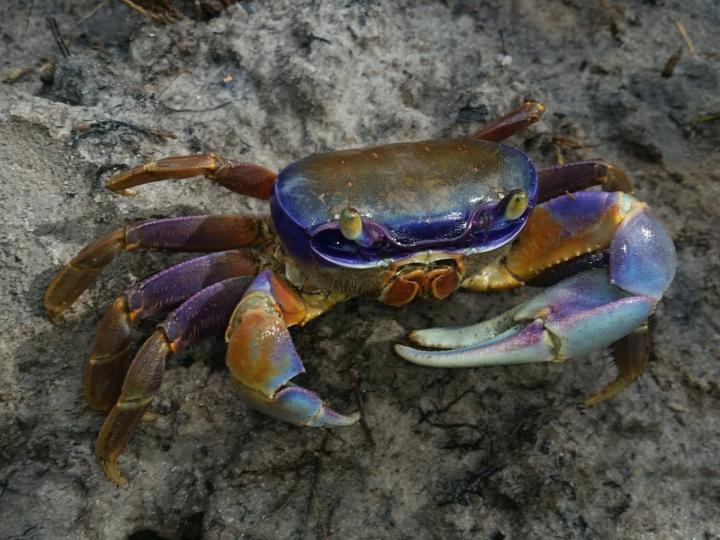
Credit: Marco Antonio de Freitas.

Besides being a major threat to biodiversity, the wildlife trade can be a cause of global public health issues and hundreds of billions of dollars of economic damage around the world from disease outbreaks, as might be the case for COVID-19. Despite its major ecological and socio-economic importance, no comprehensive analysis has been made of the global patterns of the wildlife trade.

“The illegal wildlife trade often has connections with organised crime. Criminal groups involved in drug trafficking, fraud and other illegal businesses are also active in the wildlife trade along routes used for other types of illicit products, and can combine this with different illegal activities, such as trafficking animals and drugs,” points out Caroline Fukushima, researcher at the Finnish Museum of Natural History (Luomus), University of Helsinki. Based on such concerns, a group of researchers sought to describe the importance of all major groups of organisms in the global wildlife trade and called for more research on neglected groups.

“To us, it is evident that the phenomenon of the global wildlife trade is much more complex and widespread than previously acknowledged,” says Stefano Mammola, researcher at the Italian National Research Council, as well as one of the authors. “Even though the wildlife trade permeates all branches of the tree of life – from fungi to plants, from small marine species to big terrestrial mammals – more attention is given to the trade of a small selection of charismatic species, preventing the development of comprehensive and effective conservation strategies.”

Even the smallest, apparently insignificant organisms are traded

The research group found that trade is common among many different organisms, from mushrooms to large vertebrates. Sea cucumbers, anemones and corals in particular have extremely large proportions of threatened species being traded worldwide.

Additionally, when considering legal wildlife commerce on the global scale, the timber trade is the most relevant in monetary value, and plants emerged as the most traded group in sheer numbers of individuals.

Extensive data is needed on the trade and its consequences

Due to the obvious illegality of much of wildlife trafficking, it is difficult to obtain systematic and reliable data. For some groups such as invertebrates, the species listed in CITES or the IUCN Red List of Threatened Species are just the tip of the iceberg. The numbers of traded taxa in such databases are a gross underestimation of what is actually traded, as most species have never even been assessed for their relevance in the trade business.

“We are facing a biodiversity crisis. We need to be fast and effective in filling our gaps in knowledge, especially about non-vertebrate species. In this way, we can achieve a deep understanding of global trading patterns across the full canopy of the tree of life, and not just its most appealing twig,” says Pedro Cardoso, at the Finnish Museum of Natural History.

The future challenge for conservation biologists is now to map global trade across all living beings, know what drives such trade and find ways to fight traffic that might put both wildlife species and human health in danger. A major consequence of the widespread trade are disease outbreaks, as might be the case for the possible origin of COVID-19 from wildlife markets. It is urgent to take these matters seriously, as their consequences reach far beyond wildlife species survival.

###

Media Contact
Caroline Fukushima
[email protected]

Original Source

https://www.helsinki.fi/en/news/life-science-news/the-wildlife-trade-encompasses-all-major-branches-of-the-biological-tree-of-life-but-still-largely-remains-a-mystery

Related Journal Article

http://dx.doi.org/10.1016/j.biocon.2020.108503

Tags: BiodiversityBiologyEcology/EnvironmentPopulation Biology
Share12Tweet8Share2ShareShareShare2

Related Posts

Here are a few rewritten headlines for a science magazine post, each with a slightly different tone: Intriguing & poetic: How do organs sculpt themselves? Sea stars hold the secret Direct & research-focused: Sea stars reveal the hidden rules of organ formation Metaphorical & inviting: Tiny architects beneath the waves: What sea stars teach us about building organs Short & punchy: Star-shaped clues to how our organs take shape Question-led: Could a sea star show us how organs form? Elegant & feature-style: The body’s blueprint, glimpsed in a sea star’s arm

July 6, 2026
Bacteria evolve faster with unconventional gene copies — Biology

Bacteria evolve faster with unconventional gene copies

July 6, 2026

Neighbours rewire soil feedback via root microbiome shifts

July 6, 2026

Evolution-Inspired Biosensors Revolutionize Lipid Tracking in Real Time

July 2, 2026
Please login to join discussion

POPULAR NEWS

  • Detection of EDCs in Breast Milk and Infant Urine Up to Six Months Highlights Early Exposure Risks

    77 shares
    Share 31 Tweet 19
  • New Drug Candidate Developed at McMaster Shows Potential for Treating Brain Cancer

    58 shares
    Share 23 Tweet 15
  • Saying Goodbye to PGY-6: Pediatric Fellowship Realities

    103 shares
    Share 41 Tweet 26
  • KTU Researchers Explore Ultrasound’s Role in Enhancing Blood Flow Beyond Diagnostics

    53 shares
    Share 21 Tweet 13

About

We bring you the latest biotechnology news from best research centers and universities around the world. Check our website.

Follow us

Recent News

Flame retardant BDE-209 targets molecularly linked to ulcerative colitis

Ultra-high frequency particle impacts mimic rockbursts to shatter hard rock

Kidney transplant outcomes in older adults studied by German researchers

Subscribe to Blog via Email

Success! An email was just sent to confirm your subscription. Please find the email now and click 'Confirm' to start subscribing.

Join 83 other subscribers
  • Contact Us

Bioengineer.org © Copyright 2023 All Rights Reserved.

Welcome Back!

Login to your account below

Forgotten Password?

Retrieve your password

Please enter your username or email address to reset your password.

Log In
No Result
View All Result
  • Homepages
    • Home Page 1
    • Home Page 2
  • News
  • National
  • Business
  • Health
  • Lifestyle
  • Science

Bioengineer.org © Copyright 2023 All Rights Reserved.