• HOME
  • NEWS
  • EXPLORE
    • CAREER
      • Companies
      • Jobs
    • EVENTS
    • iGEM
      • News
      • Team
    • PHOTOS
    • VIDEO
    • WIKI
  • BLOG
  • COMMUNITY
    • FACEBOOK
    • INSTAGRAM
    • TWITTER
Saturday, February 7, 2026
BIOENGINEER.ORG
No Result
View All Result
  • Login
  • HOME
  • NEWS
  • EXPLORE
    • CAREER
      • Companies
      • Jobs
        • Lecturer
        • PhD Studentship
        • Postdoc
        • Research Assistant
    • EVENTS
    • iGEM
      • News
      • Team
    • PHOTOS
    • VIDEO
    • WIKI
  • BLOG
  • COMMUNITY
    • FACEBOOK
    • INSTAGRAM
    • TWITTER
  • HOME
  • NEWS
  • EXPLORE
    • CAREER
      • Companies
      • Jobs
        • Lecturer
        • PhD Studentship
        • Postdoc
        • Research Assistant
    • EVENTS
    • iGEM
      • News
      • Team
    • PHOTOS
    • VIDEO
    • WIKI
  • BLOG
  • COMMUNITY
    • FACEBOOK
    • INSTAGRAM
    • TWITTER
No Result
View All Result
Bioengineer.org
No Result
View All Result
Home NEWS Science News Chemistry

The University of Cordoba guides plants towards obtaining iron

Bioengineer by Bioengineer
May 29, 2019
in Chemistry
Reading Time: 2 mins read
0
IMAGE
Share on FacebookShare on TwitterShare on LinkedinShare on RedditShare on Telegram

IMAGE

Credit: University of Córdoba

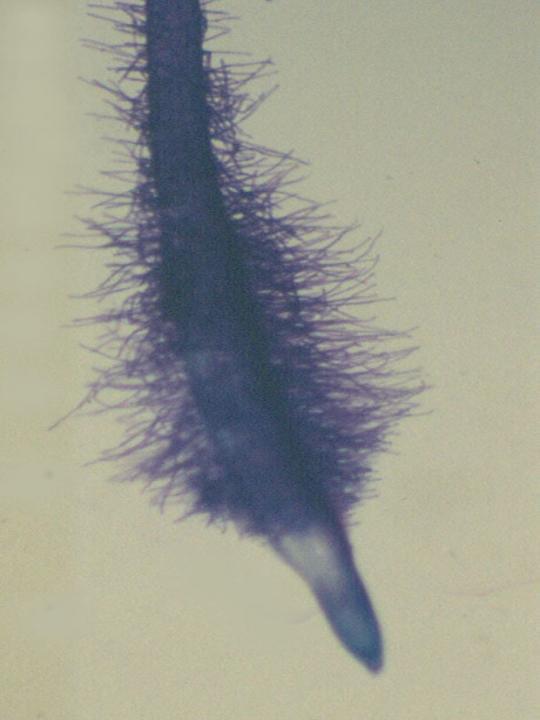
The calcareous soils that pervade the southern region of the country pose a challenge for plants: though iron is abundant in the soil, plants are unable to acquire it due to the high pH levels in said soil, making iron only slightly soluble and, therefore, hard to absorb. To tackle this iron deficiency, plants activate a series of responses, such as developing new roots to span more soil or freeing protons to acidify or solubilize iron.

Depending on their needs, plants activate and deactivate these responses by means of a strictly regulated process in which hormones such as ethylene participate actively. Ethylene is also involved in other stress processes like phosphorus deficiency and pathogen attack.

With a lengthy track record of studying responses to iron deficiency that plants carry out, a research team, including Agronomy Professor Francisco Javier Romera at the University of Cordoba, has found a relationship between iron deficiency responses and the response caused by certain beneficial microorganisms, so that the latter can foster iron uptake.

Certain rhizosphere microorganisms (found in contact with the surface of the roots) cause a kind of Induced Systemic Resistance (or ISR) in plants. In other words, the plant detects a certain amount of these kinds of organisms and, perceiving them as enemies, initiates a defense strategy throughout the whole plant (systemic). However, upon perceiving that these organisms are friendly, the defense strategy is blocked but it remains ready to act systemically and rapidly once a real pathogen comes along.

The relationship that exists between this induced systemic resistance (ISR) and the responses to iron deficiency lies in the presence of the ethylene hormone in both processes. As a consequence of the common action of this hormone, proof has been found that applying these rhizosphere microorganisms so benefical to plants can induce responses to iron deficiency and hence, improve the plant’s uptake of iron on land that, like calcareous land, poses quite a challenge in this context.

The challenge for the research team now lies in identifying which species of rhizosphere microorganisms are more effective for each kind of crop and under what kinds of conditions. The biggest issues with iron deficiency facing peach trees and olive trees in the area have become the main research focus for this research group. What is more, the negative effects of calcareous soils are greater in dicots (plants that have two main leaves upon germination) such as tomatoes, green beans, cucumbers and the abovementioned woody crops, meaning they will also benefit from these kinds of studies.

###

Romera Francisco J., García María J., Lucena Carlos, Martínez-Medina Ainhoa, Aparicio Miguel A., Ramos José, Alcántara Esteban, Angulo Macarena, Pérez-Vicente Rafael. Induced Systemic Resistance (ISR) and Fe Deficiency Responses in Dicot Plants. Frontiers in Plant Science vol. 10 (2019) pag 287 DOI=10.3389/fpls.2019.00287

Media Contact
Elena Lázaro Real
[email protected]

Related Journal Article

http://dx.doi.org/10.3389/fpls.2019.00287

Tags: Chemistry/Physics/Materials SciencesFertilizers/Pest ManagementPlant Sciences
Share12Tweet8Share2ShareShareShare2

Related Posts

blank

Breakthrough in Environmental Cleanup: Scientists Develop Solar-Activated Biochar for Faster Remediation

February 7, 2026
blank

Cutting Costs: Making Hydrogen Fuel Cells More Affordable

February 6, 2026

Scientists Develop Hand-Held “Levitating” Time Crystals

February 6, 2026

Observing a Key Green-Energy Catalyst Dissolve Atom by Atom

February 6, 2026
Please login to join discussion

POPULAR NEWS

  • Robotic Ureteral Reconstruction: A Novel Approach

    Robotic Ureteral Reconstruction: A Novel Approach

    82 shares
    Share 33 Tweet 21
  • Digital Privacy: Health Data Control in Incarceration

    63 shares
    Share 25 Tweet 16
  • Study Reveals Lipid Accumulation in ME/CFS Cells

    57 shares
    Share 23 Tweet 14
  • Breakthrough in RNA Research Accelerates Medical Innovations Timeline

    53 shares
    Share 21 Tweet 13

About

We bring you the latest biotechnology news from best research centers and universities around the world. Check our website.

Follow us

Recent News

Neg-Entropy: The Key Therapeutic Target for Chronic Diseases

Multidisciplinary Evidence-Based Guidelines for Therapeutic Drug Monitoring of Biologics in Inflammatory Bowel Disease

Early Tuberculosis Treatment Lowers Sepsis Mortality in People with HIV

Subscribe to Blog via Email

Enter your email address to subscribe to this blog and receive notifications of new posts by email.

Join 73 other subscribers
  • Contact Us

Bioengineer.org © Copyright 2023 All Rights Reserved.

Welcome Back!

Login to your account below

Forgotten Password?

Retrieve your password

Please enter your username or email address to reset your password.

Log In
No Result
View All Result
  • Homepages
    • Home Page 1
    • Home Page 2
  • News
  • National
  • Business
  • Health
  • Lifestyle
  • Science

Bioengineer.org © Copyright 2023 All Rights Reserved.