• HOME
  • NEWS
  • EXPLORE
    • CAREER
      • Companies
      • Jobs
    • EVENTS
    • iGEM
      • News
      • Team
    • PHOTOS
    • VIDEO
    • WIKI
  • BLOG
  • COMMUNITY
    • FACEBOOK
    • INSTAGRAM
    • TWITTER
Thursday, May 14, 2026
BIOENGINEER.ORG
No Result
View All Result
  • Login
  • HOME
  • NEWS
  • EXPLORE
    • CAREER
      • Companies
      • Jobs
        • Lecturer
        • PhD Studentship
        • Postdoc
        • Research Assistant
    • EVENTS
    • iGEM
      • News
      • Team
    • PHOTOS
    • VIDEO
    • WIKI
  • BLOG
  • COMMUNITY
    • FACEBOOK
    • INSTAGRAM
    • TWITTER
  • HOME
  • NEWS
  • EXPLORE
    • CAREER
      • Companies
      • Jobs
        • Lecturer
        • PhD Studentship
        • Postdoc
        • Research Assistant
    • EVENTS
    • iGEM
      • News
      • Team
    • PHOTOS
    • VIDEO
    • WIKI
  • BLOG
  • COMMUNITY
    • FACEBOOK
    • INSTAGRAM
    • TWITTER
No Result
View All Result
Bioengineer.org
No Result
View All Result
Home NEWS Science News Biology

The sicker the better

Bioengineer by Bioengineer
May 1, 2019
in Biology
Reading Time: 3 mins read
0
IMAGE
Share on FacebookShare on TwitterShare on LinkedinShare on RedditShare on Telegram

Parasites help beetle hosts function more effectively
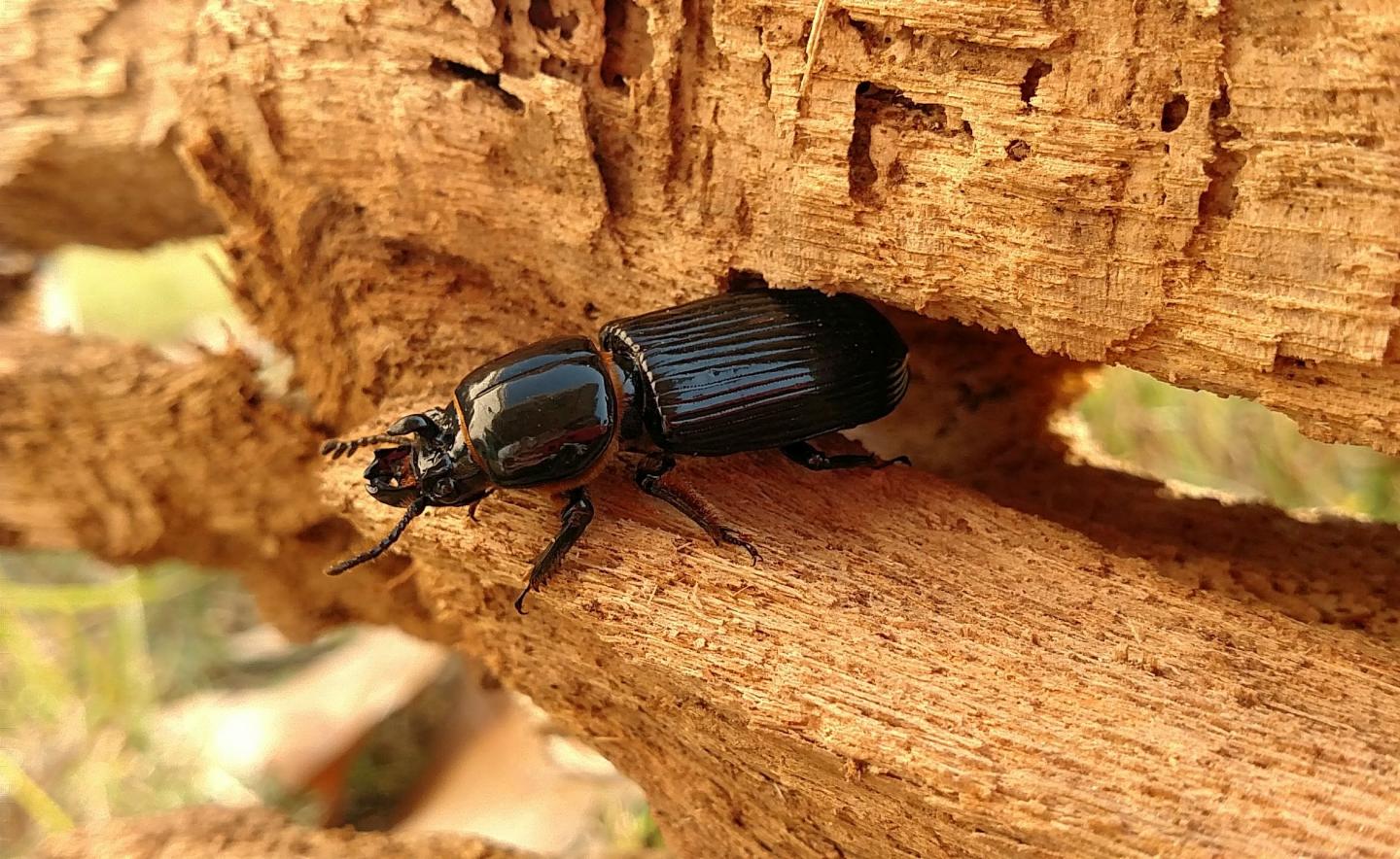
IMAGE

Credit: Andy K. Davis

Athens, Ga. – A common woodland beetle that plays an important role in the decomposition of fallen trees may be getting a boost from a surprising source: parasites.

New research from the University of Georgia found that horned passalus beetles infected with a nematode parasite are able to process wood 15% faster than uninfected beetles. The study, by Andy K. Davis, a research scientist in the Odum School of Ecology, and undergraduate ecology student Cody Prouty, was just published in Biology Letters. It contributes to a growing understanding that parasites play important–and not always negative–roles in ecosystems.

“What this means is that parasitized beetles are more effective at breaking down logs, so that they provide a more effective ecosystem service,” said Davis. “In other words, this parasite could be considered beneficial to the forest ecosystem.”

Horned passalus beetles, also known as bess beetles, are common in eastern U.S. forests. They live in decaying logs, which they help break down by eating and making tunnels, speeding up decomposition and the return of the logs’ nutrients to the soil.

Davis had previously found that many of these beetles are infected with a naturally occurring nematode parasite. He and Prouty noticed that infected beetles appeared to suffer no ill effects from their parasites; in fact, previous studies showed that some infected beetles were larger than uninfected ones. The researchers suspected that the infected beetles might be eating more to compensate for the nutrients they were losing to the parasites, and they devised a laboratory experiment to find out.

They started by collecting 113 horned passalus beetles from a wooded area near the UGA campus. They placed each beetle in an individual container with a piece of intact wood from the same log where it was found. After three months, the researchers examined what was left of the wood, measuring how much had been broken down into fine material. This allowed them to calculate how much wood each beetle processed per day.

Next they examined the beetles, determining weight, sex and whether parasites were present.

They found that approximately 70% of the beetles were infected with the parasites–a typical rate of prevalence–and that parasitized beetles were 6% heavier than their uninfected counterparts. Furthermore, the parasitized beetles processed wood about 15% more quickly.

“It is interesting to think that although the beetle and nematode have a parasitic relationship, the ecosystem benefits from not only the beetle performing its function, but the parasite increasing the efficiency of the beetle,” said Prouty. “Over the course of a few years the parasitized beetles could process many more logs than unparasitized beetles, and lead to an increase of organic matter in soils.”

###

The paper, “The sicker the better: nematode-infected passalus beetles provide enhanced ecosystem services,” is available online at https://royalsocietypublishing.org/doi/10.1098/rsbl.2018.0842

Media Contact
Beth Gavrilles
[email protected]

Original Source

https://news.uga.edu/parasites-help-beetle-hosts-function-effectively/

Related Journal Article

http://dx.doi.org/10.1098/rsbl.2018.0842

Tags: BiologyEcology/EnvironmentEvolutionParasitology
Share13Tweet8Share2ShareShareShare2

Related Posts

UMass Chan Scientists Pioneer Gene Editing Technology That Rewrites Entire Genome Chapters — Biology

UMass Chan Scientists Pioneer Gene Editing Technology That Rewrites Entire Genome Chapters

May 13, 2026
Scientists Observe Rice Plants Capturing and Eliminating Fall Armyworm Caterpillars — Biology

Scientists Observe Rice Plants Capturing and Eliminating Fall Armyworm Caterpillars

May 13, 2026

Study Finds Genetic Risk for Schizophrenia Emerges in Early Adolescence

May 13, 2026

How Water Fleas Sense Their Predators: A Scientific Insight

May 13, 2026
Please login to join discussion

POPULAR NEWS

  • Research Indicates Potential Connection Between Prenatal Medication Exposure and Elevated Autism Risk

    842 shares
    Share 337 Tweet 211
  • New Study Reveals Plants Can Detect the Sound of Rain

    729 shares
    Share 291 Tweet 182
  • Salmonella Haem Blocks Macrophages, Boosts Infection

    62 shares
    Share 25 Tweet 16
  • Breastmilk Balances E. coli and Beneficial Bacteria in Infant Gut Microbiomes

    57 shares
    Share 23 Tweet 14

About

We bring you the latest biotechnology news from best research centers and universities around the world. Check our website.

Follow us

Recent News

Mapping Protein Energy Landscapes at Scale

New Review Reveals Alcohol Linked to Numerous Health Harms, Some of Which Are Reversible

Revolutionary Magnet Technology: Thicker, Cooler, and Transforming Next-Gen Motors

Subscribe to Blog via Email

Enter your email address to subscribe to this blog and receive notifications of new posts by email.

Join 82 other subscribers
  • Contact Us

Bioengineer.org © Copyright 2023 All Rights Reserved.

Welcome Back!

Login to your account below

Forgotten Password?

Retrieve your password

Please enter your username or email address to reset your password.

Log In
No Result
View All Result
  • Homepages
    • Home Page 1
    • Home Page 2
  • News
  • National
  • Business
  • Health
  • Lifestyle
  • Science

Bioengineer.org © Copyright 2023 All Rights Reserved.