• HOME
  • NEWS
  • EXPLORE
    • CAREER
      • Companies
      • Jobs
    • EVENTS
    • iGEM
      • News
      • Team
    • PHOTOS
    • VIDEO
    • WIKI
  • BLOG
  • COMMUNITY
    • FACEBOOK
    • INSTAGRAM
    • TWITTER
Thursday, June 25, 2026
BIOENGINEER.ORG
No Result
View All Result
  • Login
  • HOME
  • NEWS
  • EXPLORE
    • CAREER
      • Companies
      • Jobs
        • Lecturer
        • PhD Studentship
        • Postdoc
        • Research Assistant
    • EVENTS
    • iGEM
      • News
      • Team
    • PHOTOS
    • VIDEO
    • WIKI
  • BLOG
  • COMMUNITY
    • FACEBOOK
    • INSTAGRAM
    • TWITTER
  • HOME
  • NEWS
  • EXPLORE
    • CAREER
      • Companies
      • Jobs
        • Lecturer
        • PhD Studentship
        • Postdoc
        • Research Assistant
    • EVENTS
    • iGEM
      • News
      • Team
    • PHOTOS
    • VIDEO
    • WIKI
  • BLOG
  • COMMUNITY
    • FACEBOOK
    • INSTAGRAM
    • TWITTER
No Result
View All Result
Bioengineer.org
No Result
View All Result
Home NEWS Science News Biology

The problem with promoting ‘responsible dog ownership’

Bioengineer by Bioengineer
September 24, 2019
in Biology
Reading Time: 2 mins read
0
IMAGE
Share on FacebookShare on TwitterShare on LinkedinShare on RedditShare on Telegram

IMAGE

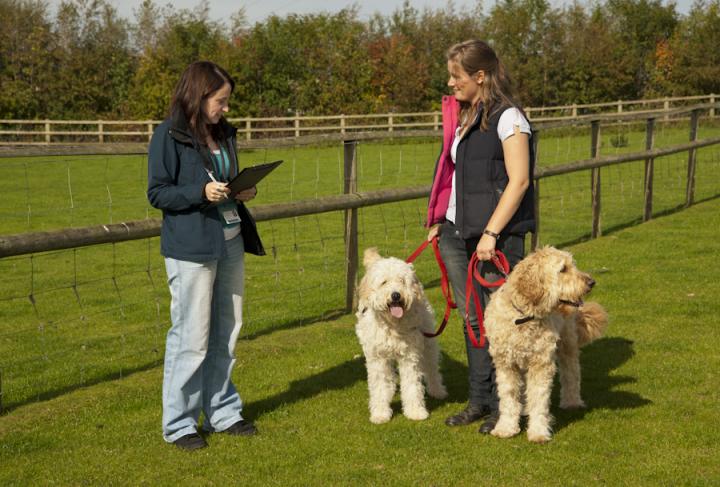
Credit: University of Liverpool

Dog welfare campaigns that tell people to be ‘responsible owners’ don’t help to promote behaviour change, a new University of Liverpool report suggests.

Dog owners interviewed for a study published in Anthrozoös all considered themselves to be responsible owners, despite there being great variation in key aspects of their dog-owning behaviour.

“Policy and campaigning messages related to dog ownership and welfare tend to focus on the concept of being a responsible owner. However, while ‘responsible dog ownership’ has considerable appeal as a concept, how it is perceived and interpreted has not been studied in-depth,” explains lead researcher Dr Carri Westgarth, a dog behaviour expert at the University of Liverpool.

In order to better understand beliefs and views about responsibility in dog ownership, the researchers carried out in-depth interviews with dog-owning households and shorter interviews with dog owners while walking their dogs or representing their breed at a dog show. The interviews focused on dog walking, an issue perceived to be a component of responsible dog ownership, as well as other aspects of campaign messages, such as dog fouling, aggression and neutering.

Dr Westgarth also reflected on her own experiences of walking her three dogs, and on her many conversations with other owners over the two-year study period.

Dr Westgarth said: “It’s clear from our research that responsible dog ownership means different things to different people at different times. It emerges from a blurred intersection of the needs of dogs, owners, and others, where often the dog comes first.

“Dog owners do what they perceive to be best for their individual dog, even if this goes against general advice given such as how often dogs need walking or neutering campaigns.

“Yet this perception may be different from what others feel is best for that dog, or how people who are impacted by the dog want the dog and their owner to behave.

“Therefore, simply telling owners that they should ‘be responsible’ is of limited use as a message to promote behaviour change because they already believe that they are. Any educational messages for dog owners need to be specific what they want owners to do and explain why that is in the best interest of the dog that they love so much.”

The report authors say that further research is now required in order to understand the implications for wider aspects of responsible dog ownership practices.

###

The research was funded by a Medical Research Council Population Health Scientist Fellowship held by Dr Westgarth.

Media Contact
Nicola Frost
[email protected]

Original Source

https://news.liverpool.ac.uk/2019/09/24/the-problem-with-promoting-responsible-dog-ownership/

Related Journal Article

http://dx.doi.org/10.1080/08927936.2019.1645506

Tags: Pets/EthologyPolicy/EthicsSocial/Behavioral Science
Share12Tweet8Share2ShareShareShare2

Related Posts

This Famous Butterfly Revealed: Three Distinct Species Hidden in One

June 25, 2026

Scientists Attack Soybean Cyst Nematode by Starving Its Food Source

June 25, 2026

Decoding the Secret Code of a Crucial Immune Sensor

June 24, 2026

Decades of Data Reveal Which Orcas Call Puget Sound Home

June 24, 2026
Please login to join discussion

POPULAR NEWS

  • Saying Goodbye to PGY-6: Pediatric Fellowship Realities

    103 shares
    Share 41 Tweet 26
  • Multi-Hospital Study Reveals Long Covid Burden Is Twice as High as Current Estimates

    92 shares
    Share 36 Tweet 23
  • Detection of EDCs in Breast Milk and Infant Urine Up to Six Months Highlights Early Exposure Risks

    77 shares
    Share 31 Tweet 19
  • New Drug Candidate Developed at McMaster Shows Potential for Treating Brain Cancer

    58 shares
    Share 23 Tweet 15

About

We bring you the latest biotechnology news from best research centers and universities around the world. Check our website.

Follow us

Recent News

Energy-Saving Membrane Technology Developed by KAIST and Georgia Tech Enables Crude Oil Separation Without Boiling

Cracking the Code: How Cancer Evades Antibody-Drug Conjugates and New Strategies to Overcome Resistance

Chiral Laser Gyroscopes Surpass Lock-In Limit

Subscribe to Blog via Email

Enter your email address to subscribe to this blog and receive notifications of new posts by email.

Join 82 other subscribers
  • Contact Us

Bioengineer.org © Copyright 2023 All Rights Reserved.

Welcome Back!

Login to your account below

Forgotten Password?

Retrieve your password

Please enter your username or email address to reset your password.

Log In
No Result
View All Result
  • Homepages
    • Home Page 1
    • Home Page 2
  • News
  • National
  • Business
  • Health
  • Lifestyle
  • Science

Bioengineer.org © Copyright 2023 All Rights Reserved.