• HOME
  • NEWS
  • EXPLORE
    • CAREER
      • Companies
      • Jobs
    • EVENTS
    • iGEM
      • News
      • Team
    • PHOTOS
    • VIDEO
    • WIKI
  • BLOG
  • COMMUNITY
    • FACEBOOK
    • INSTAGRAM
    • TWITTER
Tuesday, July 7, 2026
BIOENGINEER.ORG
No Result
View All Result
  • Login
  • HOME
  • NEWS
  • EXPLORE
    • CAREER
      • Companies
      • Jobs
        • Lecturer
        • PhD Studentship
        • Postdoc
        • Research Assistant
    • EVENTS
    • iGEM
      • News
      • Team
    • PHOTOS
    • VIDEO
    • WIKI
  • BLOG
  • COMMUNITY
    • FACEBOOK
    • INSTAGRAM
    • TWITTER
  • HOME
  • NEWS
  • EXPLORE
    • CAREER
      • Companies
      • Jobs
        • Lecturer
        • PhD Studentship
        • Postdoc
        • Research Assistant
    • EVENTS
    • iGEM
      • News
      • Team
    • PHOTOS
    • VIDEO
    • WIKI
  • BLOG
  • COMMUNITY
    • FACEBOOK
    • INSTAGRAM
    • TWITTER
No Result
View All Result
Bioengineer.org
No Result
View All Result
Home NEWS Science News

The potential of solar cars in the world

Bioengineer by Bioengineer
September 22, 2023
in Science News
Reading Time: 2 mins read
0
Radiation sensor on top of a vehicle
Share on FacebookShare on TwitterShare on LinkedinShare on RedditShare on Telegram

A new study, modeling the potential of solar-powered vehicles in the urban context in 100 cities across the world, shows that solar energy provides a range between 11 and 29 km per day, reducing charging needs by half.
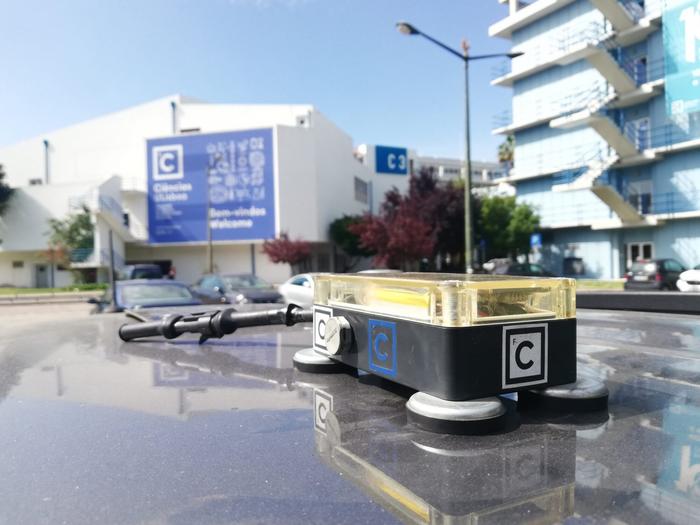
Radiation sensor on top of a vehicle

Credit: Miguel Centeno Brito.

A new study, modeling the potential of solar-powered vehicles in the urban context in 100 cities across the world, shows that solar energy provides a range between 11 and 29 km per day, reducing charging needs by half.

Despite the rapid adoption of electric vehicles, the transport sector is still responsible for around a third of global carbon dioxide (CO2) emissions worldwide. Therefore, to achieve decarbonization targets, it is required to significantly decrease the emissions associated with mobility.

Integrating photovoltaic modules into electric vehicles, solar cars, can contribute to this goal, reducing CO2 emissions associated with electricity generation and the charging costs and frequency, with benefits for users and the electrical grid itself.

“Cities are today the main market for electric vehicles and, due to the relatively small travelled distances, are particularly interesting for solar-powered vehicles. However, in urban areas, we have buildings, trees and other obstacles casting shadows onto the roads thus limiting the solar potential of driving or parked vehicles. The purpose of the work was to assess if the impact of these shadows is a significant limitation to the potential of solar cars”, explains Miguel Centeno Brito, first author of this study, researcher at Instituto Dom Luiz – IDL, at the Faculty of Sciences of the University of Lisbon (Ciências ULisboa) (Portugal).

The study also finds that the most favorable locations for solar-powered vehicles are cities in Africa, the Middle East, southern Europe and Southeast Asia, although the potential is interesting in other geographies, including China, North America and Australia. Losses associated with shading in the city are around 25%, and therefore relevant, but not an impediment to the large-scale dissemination of this solution.

Meanwhile, the research team launched an experimental campaign with citizen scientists to experimentally validate the model.

With growing urban populations and concerns about environmental sustainability becoming increasingly urgent, solar-powered vehicles could not come at a more opportune time. “Our results can help establish a roadmap for policymakers and the automotive industry to accelerate the transition to a more sustainable and environmentally friendly urban future”, concludes Miguel Centeno Brito.

This worldwide study was developed by researchers from Ciências ULisboa (Portugal), in collaboration with partners in France (Mines Paris – PSL) and Luxembourg (LIST).


DOI

10.1002/pip.3737

Article Title

Effect of urban shadowing on the potential of solar-powered vehicles

Article Publication Date

10-Sep-2023

Share12Tweet8Share2ShareShareShare2

Related Posts

Flame retardant BDE-209 targets molecularly linked to ulcerative colitis

July 6, 2026
Ultra-high frequency particle impacts mimic rockbursts to shatter hard rock

Ultra-high frequency particle impacts mimic rockbursts to shatter hard rock

July 6, 2026

Kidney transplant outcomes in older adults studied by German researchers

July 6, 2026

Embodied cognition yields interpretable trajectory predictions for autonomous systems.

July 6, 2026

POPULAR NEWS

  • Detection of EDCs in Breast Milk and Infant Urine Up to Six Months Highlights Early Exposure Risks

    77 shares
    Share 31 Tweet 19
  • New Drug Candidate Developed at McMaster Shows Potential for Treating Brain Cancer

    58 shares
    Share 23 Tweet 15
  • Saying Goodbye to PGY-6: Pediatric Fellowship Realities

    103 shares
    Share 41 Tweet 26
  • KTU Researchers Explore Ultrasound’s Role in Enhancing Blood Flow Beyond Diagnostics

    53 shares
    Share 21 Tweet 13

About

We bring you the latest biotechnology news from best research centers and universities around the world. Check our website.

Follow us

Recent News

Flame retardant BDE-209 targets molecularly linked to ulcerative colitis

Ultra-high frequency particle impacts mimic rockbursts to shatter hard rock

Kidney transplant outcomes in older adults studied by German researchers

Subscribe to Blog via Email

Enter your email address to subscribe to this blog and receive notifications of new posts by email.

Join 83 other subscribers
  • Contact Us

Bioengineer.org © Copyright 2023 All Rights Reserved.

Welcome Back!

Login to your account below

Forgotten Password?

Retrieve your password

Please enter your username or email address to reset your password.

Log In
No Result
View All Result
  • Homepages
    • Home Page 1
    • Home Page 2
  • News
  • National
  • Business
  • Health
  • Lifestyle
  • Science

Bioengineer.org © Copyright 2023 All Rights Reserved.