A sprawling new review has pulled together a decade of research on one of the world’s most paradoxical plants: Jatropha curcas L., the physic nut, a drought-hardy shrub that can heal wounds and lower blood sugar in the laboratory yet carries seeds toxic enough to kill. The review, published in Discover Chemistry by a team at Guru Ghasidas Vishwavidyalaya in India, synthesizes literature from 2014 to 2024, supplemented by older foundational studies, and maps the plant’s chemistry, pharmacology, and safety profile in unprecedented detail. Drawing on more than 2,600 screened publications from the Scopus database, the authors argue that this unassuming Euphorbiaceae member deserves far more attention as a source of bioactive molecules, provided its dark side is taken seriously.
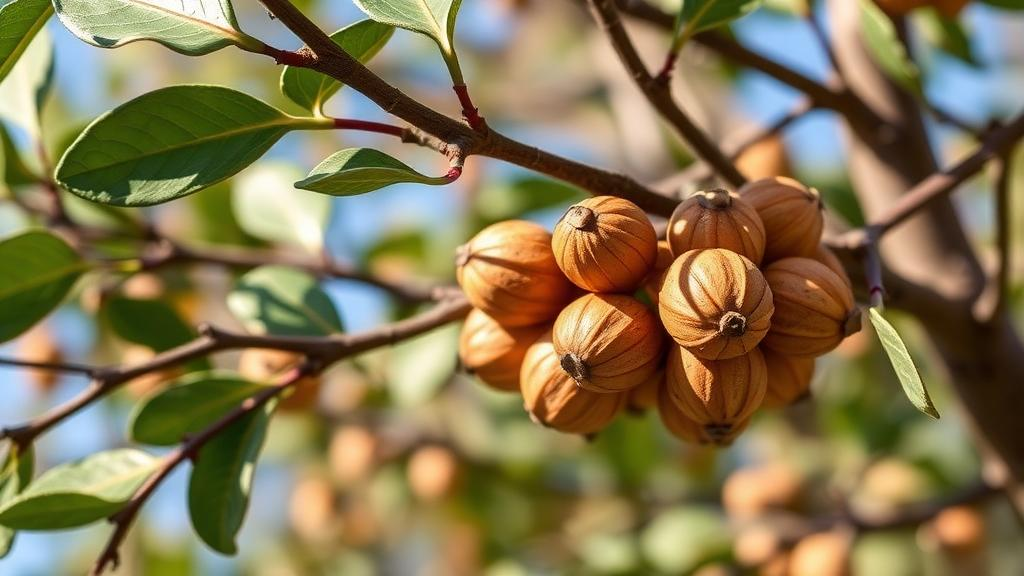
The plant itself is a study in versatility. Native to tropical America and now naturalized across Asia, Africa, and beyond, Jatropha curcas is a diploid shrub or small tree that typically grows three to six meters tall, though it can reach ten meters under ideal conditions. It tolerates temperatures from 15 to 40 degrees Celsius, thrives in degraded soils with pH between 6.0 and 8.0, and survives on as little as 600 millimeters of annual rainfall. Its deep and lateral root systems stabilize soil and reduce erosion, which is why farmers have long planted it as a living fence. The genus name itself hints at its reputation: it derives from the Greek words iatros, meaning doctor, and trophe, meaning food. Monoecious greenish-yellow flowers, pollinated mainly by moths and bees, give way to trilocular fruits containing black seeds whose oil content ranges from roughly 13 to 42 percent, rich in unsaturated fatty acids such as oleic and linoleic acid.
Chemically, the plant is a treasure chest whose contents vary by organ, geography, growth stage, and extraction method. Polar solvents such as methanol, ethanol, and water efficiently pull out phenolics and flavonoids, including apigenin, vitexin, isovitexin, quercetin, luteolin, catechin, and gallic acid, while non-polar solvents like hexane and chloroform better recover fatty acids, sterols, and terpenoids. The stem bark is particularly rich in triterpenes and sterols such as amyrins, sitosterol, and taraxerol. The latex contains curcain, a proteolytic cyclic octapeptide, and curcacycline A, another cyclic peptide with immunosuppressive interest. Seeds harbor lipase, lectins, the ribosome-inactivating protein curcin, and the notorious phorbol esters. The defatted meal is strikingly protein-rich at 58 to 66 percent, though it also carries 9 to 11 percent phytate, saponins, and trypsin inhibitors that complicate any nutritional use.
The pharmacological evidence assembled in the review is remarkably broad. Antioxidant assays tell a consistent story: methanolic leaf extracts scavenged DPPH radicals with an IC50 of about 45 micrograms per milliliter, comparable to ascorbic acid, while ethanolic stem bark extracts showed moderate ABTS scavenging and aqueous leaf extracts displayed ferric reducing power near 390 micromolar iron equivalents per gram. Anti-inflammatory activity has been demonstrated in TPA-induced ear edema in mice and carrageenan-induced paw edema in rats, with methanolic root fractions reducing prostaglandin synthesis through interference with the cyclooxygenase pathway and limiting leukocyte migration and granuloma formation.
Wound healing results are among the most clinically suggestive. In an excision wound model in albino rats, ointments containing methanolic leaf extract at 1.5 grams per 10 grams of base achieved full wound closure by day 21 and shortened the epithelialization period to 14.8 days versus 18.8 days in controls, matching the performance of 1 percent gentamicin ointment. Anti-ulcer activity followed a similar pattern: oral doses of 100 and 200 milligrams per kilogram in pylorus-ligated and aspirin-challenged Wistar rats reduced gastric volume, acidity, and ulcer index, with the higher dose rivaling ranitidine and histopathology confirming preserved mucosal integrity. The authors attribute these gastroprotective effects to cytoprotective and antioxidant constituents in the leaves.
Antimicrobial and antiparasitic findings extend the plant’s promise into infectious disease. Extracts from leaves, bark, roots, seeds, seed cake, and latex, prepared with aqueous and organic solvents alike, inhibited both Gram-positive and Gram-negative bacteria and fungi. Methanolic root extracts were the standouts, producing inhibition zones of 35.1, 30.0, and 29.6 millimeters against Pasteurella multocida, Escherichia coli, and Staphylococcus aureus respectively, with minimum inhibitory concentrations between 12.5 and 30.8 milligrams per milliliter. Fresh latex blocked the development and hatching of Ascaris lumbricoides and Necator americanus eggs over 21 days of exposure and significantly slowed mosquito larval growth, while seed oil and seed cake extracts suppressed plant-pathogenic fungi including Colletotrichum coccodes, Pythium ultimum, Phytophthora capsici, Rhizoctonia solani, Bipolaris oryzae, and Fusarium fujikuroi.
Metabolic and organ-protective effects round out the pharmacological picture. In alloxan-induced diabetic Wistar rats, a 50 percent ethanolic leaf extract lowered blood glucose in a dose-dependent fashion, from 219.5 to 116.5 milligrams per deciliter at 250 milligrams per kilogram and from 237.0 to 98.83 at 500 milligrams per kilogram, the latter comparable to the standard drug glibenclamide. Acute toxicity testing under OECD Guideline 423 yielded an LD50 of 2500 milligrams per kilogram, suggesting a relatively safe profile for the leaf preparation. Separately, an ethanolic root extract protected rats against acetaminophen-induced liver injury, significantly reducing serum ALT, AST, alkaline phosphatase, and bilirubin while restoring protein and albumin levels and preserving hepatocyte architecture, an effect credited to flavonoids, phenolics, tannins, saponins, and alkaloids with free radical scavenging capacity. Methanolic leaf extracts also produced dose-dependent analgesia in tail-flick, hot plate, and acetic acid writhing tests, acting on both central and peripheral pain pathways at levels comparable to aspirin.
Two findings illustrate the plant’s chemical double edge. Its latex both promotes and delays blood clotting depending on dose and fraction: ethyl acetate fractions showed procoagulant activity at low doses, shortening human clotting times, while butanol fractions prolonged clotting and produced the strongest anticoagulant effect. And fruit extracts given to pregnant rats between the sixth and eighth days of gestation caused fetal resorption, indicating abortifacient activity at an early post-implantation stage, consistent with the plant’s traditional use as a contraceptive. Meanwhile, the methanolic root extract showed genuine anticancer potential against HT-29 human colon adenocarcinoma cells, with an IC50 of 18.3 micrograms per milliliter, comfortably below the National Cancer Institute’s 30 microgram threshold, and comparatively lower toxicity toward normal Chang liver cells at 33.3 micrograms per milliliter, though latex itself proved considerably toxic to normal liver cells.
Beyond medicine, the review highlights environmental applications that could prove equally consequential. Seed oil and seed extracts, driven mainly by phorbol esters, killed agricultural insect pests, inhibited their feeding, reduced oviposition, and impaired larval development across contact toxicity, antifeedant, larvicidal, ovicidal, fumigation, and repellency bioassays, positioning the plant as an eco-friendly alternative to synthetic insecticides. Seed-derived protein coagulants also clarified water: NaCl-based extraction yielded the most active coagulating compounds and superior turbidity removal across a broad range of conditions, including synthetic wastewater at 770 NTU, and ultrasound-assisted extraction shortened processing time, though conventional extraction remained more cost-effective.
The toxicity section is where enthusiasm meets caution. Phorbol esters, tetracyclic diterpenoids that activate protein kinase C by mimicking diacylglycerol, are the principal toxic agents, oil-soluble and distributed through kernels, leaves, bark, and stems but absent from latex. When researchers dissected kernels into their component tissues, the endosperm concentrated 96.5 percent of the phytate, 95.3 percent of trypsin inhibitor activity, and 85.7 percent of the phorbol esters. Acute LD50 values for phorbol ester fractions in mammals fall between 27 and 29 milligrams per kilogram, and chronic studies add further warnings: 28-day dosing of seed oil in mice caused growth retardation only at the highest dose of 500 milligrams per kilogram per day, but a 45-day leaf extract study killed 21 of 30 mice, though phorbol ester content was never measured, limiting interpretation. Detoxification efforts have so far met limited success, yet the same compounds that make the seeds dangerous also show antimicrobial, antitumor, insecticidal, and molluscicidal activity, suggesting biopesticide applications. The review’s verdict is measured: Jatropha curcas is a genuine repository of drug-like chemistry with proven effects spanning antioxidant, anti-inflammatory, antimicrobial, anticancer, antidiabetic, hepatoprotective, wound-healing, analgesic, and coagulation-modulating activities, but translating any of it into safe herbal medicines will require rigorous compound identification, improved extraction methods, and well-designed animal and clinical studies to establish where healing ends and harm begins.
Subject of Research: Phytochemistry and pharmacological bioactivities of the medicinal plant Jatropha curcas L.
Article Title: A comprehensive review on the phytochemical constituents and bioactivities of Jatropha curcas L.
Article References: Singh, M., Chandra, P., Kanti, Bisen, V., Namdeo, K. P., & Beck, N. R. (2026). A comprehensive review on the phytochemical constituents and bioactivities of Jatropha curcas L.. Discover Chemistry, 3(1), Article 578. https://doi.org/10.1007/s44371-026-01017-5
Image Credits: AI Generated
DOI: 10.1007/s44371-026-01017-5
Keywords: Jatropha curcas, phytochemistry, phorbol esters, antimicrobial activity, anticancer, antidiabetic, wound healing, antioxidant, biopesticide, toxicity, Euphorbiaceae, natural products
News Source: Bethany Barker. (October 14, 2026). The Physic Nut Tree: A Toxic Healer Packed with Drug-Like Chemistry. Scienmag.