• HOME
  • NEWS
  • EXPLORE
    • CAREER
      • Companies
      • Jobs
    • EVENTS
    • iGEM
      • News
      • Team
    • PHOTOS
    • VIDEO
    • WIKI
  • BLOG
  • COMMUNITY
    • FACEBOOK
    • INSTAGRAM
    • TWITTER
Wednesday, July 15, 2026
BIOENGINEER.ORG
No Result
View All Result
  • Login
  • HOME
  • NEWS
  • EXPLORE
    • CAREER
      • Companies
      • Jobs
        • Lecturer
        • PhD Studentship
        • Postdoc
        • Research Assistant
    • EVENTS
    • iGEM
      • News
      • Team
    • PHOTOS
    • VIDEO
    • WIKI
  • BLOG
  • COMMUNITY
    • FACEBOOK
    • INSTAGRAM
    • TWITTER
  • HOME
  • NEWS
  • EXPLORE
    • CAREER
      • Companies
      • Jobs
        • Lecturer
        • PhD Studentship
        • Postdoc
        • Research Assistant
    • EVENTS
    • iGEM
      • News
      • Team
    • PHOTOS
    • VIDEO
    • WIKI
  • BLOG
  • COMMUNITY
    • FACEBOOK
    • INSTAGRAM
    • TWITTER
No Result
View All Result
Bioengineer.org
No Result
View All Result
Home NEWS Science News Biology

The first endemic Baltic Sea fish species received its name

Bioengineer by Bioengineer
July 11, 2018
in Biology
Reading Time: 2 mins read
0
Share on FacebookShare on TwitterShare on LinkedinShare on RedditShare on Telegram
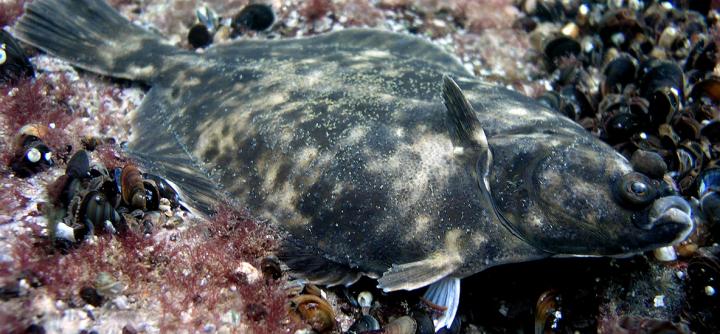
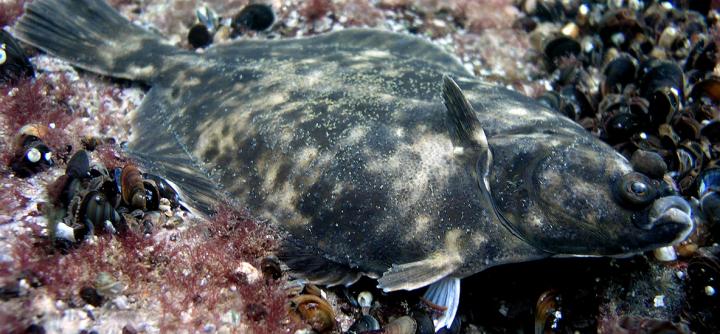
IMAGE

Credit: Mats Westerbom

The "Baltic flounder" Platichthys solemdali is the first fish species shown to be native only to the Baltic Sea, i.e. the first endemic fish described from the area and one of the only two known endemic species when considering any organism. The fact that a new vertebrate species is found and described from European waters, and especially from the species-poor Baltic Sea still after more than a century of biological research in the area, makes this finding significant.

"The reason why this species has not been recognized before is that it appears to be near to identical to the other flounder species, the European flounder, Platichthys flesus, also occurring in the Baltic Sea," says professor Juha Merila, one of the authors behind the article, from the Faculty of Biological and Environmental Sciences.

Currently the two species can be distinguished only with genetic methods, or by studying their eggs and sperm. The species also differ in their interaction with the environment: the newly described Baltic flounder lays sinking eggs on the sea floor in coastal areas while the European flounder spawns buoyant eggs in deep areas out in the open sea. The new species is more abundant in the Gulf of Finland while the distribution of the European flounder is centered to the central and southern Baltic Sea.

Previous research by the same research group uncovered the ecological speciation process that drove the evolution of these flounders, which is rarely witnessed in the marine environment and had occurred at record speed in evolutionary time scales. However, the two flounders can officially be considered separate species only now after the new species has been formally described.

"Because the definition of a species and the binomial scientific name in connection to that are central concepts and entities of biology in general and in biological taxonomy in particular, the formal description and naming of a species still constitute an important part in the understanding of biological order," states Merilä.

The official separation of the flounders into two distinct species through a formal description and naming procedure is essential for conducting more accurate stock assessments and highly relevant to the management and conservation of the species that in many areas constitute mixed stocks.

The commercial fishing of flounders in the Baltic Sea has been partially based on the wrong assumption that stocks consist of a single species, while the two flounder species may co-occur in several locations. As fisheries might currently be targeting both flounders species, this poses the danger of unknowingly over-exploiting the species that constitute the weaker component of a mixed-stock.

###

Media Contact

Juha Merila
[email protected]
358-504-160-561
@helsinkiuni

http://www.helsinki.fi/university/

Original Source

https://www.helsinki.fi/en/news/life-science/researchers-described-and-named-the-first-endemic-baltic-sea-fish-species http://dx.doi.org/10.3389/fmars.2018.00225

Share12Tweet8Share2ShareShareShare2

Related Posts

New Fungal Species Named After Sweden’s King Unveiled

New Fungal Species Named After Sweden’s King Unveiled

July 15, 2026
Targeted Nanoparticles Make Tumors’ Copper Into a Lethal Weapon

Targeted Nanoparticles Make Tumors’ Copper Into a Lethal Weapon

July 15, 2026

Kansas City University Review Identifies Astrocytes as Drivers of Chronic Traumatic Encephalopathy

July 15, 2026

Elephants Use Ground Vibrations for Communication via Specialized Middle Ear Anatomy

July 15, 2026
Please login to join discussion

POPULAR NEWS

  • New Drug Candidate Developed at McMaster Shows Potential for Treating Brain Cancer

    58 shares
    Share 23 Tweet 15
  • A varied menu

    51 shares
    Share 22 Tweet 12
  • 研究人员开发认知工具包,实现阿尔茨海默症早期检测

    50 shares
    Share 20 Tweet 13
  • Porcine Heart Transplant

    50 shares
    Share 20 Tweet 13

About

We bring you the latest biotechnology news from best research centers and universities around the world. Check our website.

Follow us

Recent News

Older Adults’ Hip Abduction and Ankle Dorsiflexion Differences After Falls

GPS satellite data calibrated for improved space weather research

New Inhibitors Could Enhance Chemotherapy’s Attack on Resistant Cancer Cells

Subscribe to Blog via Email

Enter your email address to subscribe to this blog and receive notifications of new posts by email.

Join 85 other subscribers
  • Contact Us

Bioengineer.org © Copyright 2023 All Rights Reserved.

Welcome Back!

Login to your account below

Forgotten Password?

Retrieve your password

Please enter your username or email address to reset your password.

Log In
No Result
View All Result
  • Homepages
    • Home Page 1
    • Home Page 2
  • News
  • National
  • Business
  • Health
  • Lifestyle
  • Science

Bioengineer.org © Copyright 2023 All Rights Reserved.