• HOME
  • NEWS
  • EXPLORE
    • CAREER
      • Companies
      • Jobs
    • EVENTS
    • iGEM
      • News
      • Team
    • PHOTOS
    • VIDEO
    • WIKI
  • BLOG
  • COMMUNITY
    • FACEBOOK
    • INSTAGRAM
    • TWITTER
Wednesday, August 19, 2026
BIOENGINEER.ORG
No Result
View All Result
  • Login
  • HOME
  • NEWS
  • EXPLORE
    • CAREER
      • Companies
      • Jobs
        • Lecturer
        • PhD Studentship
        • Postdoc
        • Research Assistant
    • EVENTS
    • iGEM
      • News
      • Team
    • PHOTOS
    • VIDEO
    • WIKI
  • BLOG
  • COMMUNITY
    • FACEBOOK
    • INSTAGRAM
    • TWITTER
  • HOME
  • NEWS
  • EXPLORE
    • CAREER
      • Companies
      • Jobs
        • Lecturer
        • PhD Studentship
        • Postdoc
        • Research Assistant
    • EVENTS
    • iGEM
      • News
      • Team
    • PHOTOS
    • VIDEO
    • WIKI
  • BLOG
  • COMMUNITY
    • FACEBOOK
    • INSTAGRAM
    • TWITTER
No Result
View All Result
Bioengineer.org
No Result
View All Result
Home NEWS Science News

The complete epigenomes of the most frequent tumors, unveiled

Bioengineer by Bioengineer
June 6, 2017
in Science News
Reading Time: 2 mins read
0
Share on FacebookShare on TwitterShare on LinkedinShare on RedditShare on Telegram
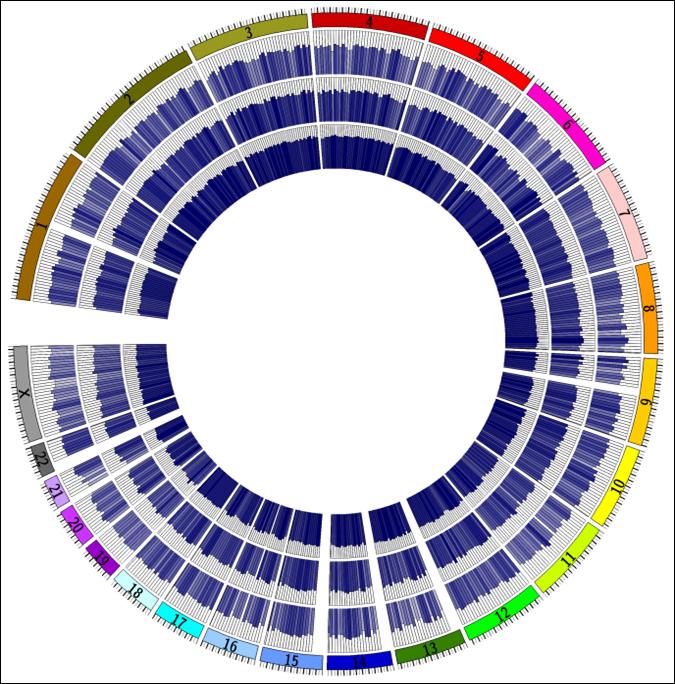
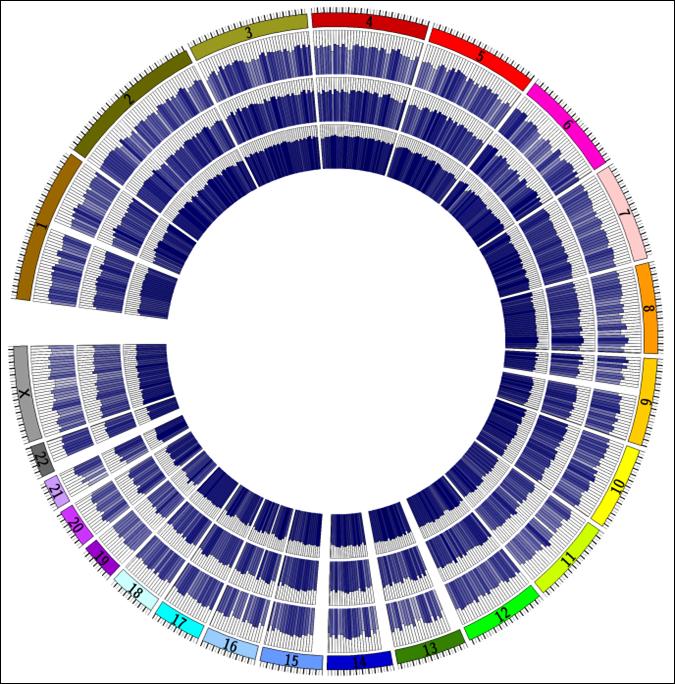
IMAGE

Credit: IDIBELL

A research team from the Bellvitge Biomedical Research Institute (IDIBELL) has managed to characterize the complete epigenomes of the most frequent tumors, including those of colon, lung and breast cancer. Their work, published in Oncogene, was led by Dr. Manel Esteller, Director of the Epigenetics and Cancer Biology Program at IDIBELL, ICREA Researcher and Professor of Genetics at the University of Barcelona, and represents a big step in the study of origin and progression of these tumors.

"Our analysis has allowed us to get a first unbiased look at all the tumor cell methylomes in solid tumors," says group leader Dr. Manel Esteller. "We have not only found that many anti-cancer genes specifically slow down their activity. in the cancer-affected organs, but we have also shown that there are other alterations in distant chromosomal regions that affect these organs, since in the three-dimensional world of the cells these sequences are in very close relative positions."

Tumor inhibitory genes are known to lose their protective function if a certain chemical modification ("epi-genetic", that is, over the gene) is added. The main modification is usually a stop signal called DNA methylation. The human genome has 28,000 million candidate points to be regulated by this modification, but the most used techniques only allow researchers to study 1 million points. The IDIBELL study overcomes this barrier.

At the same time, the research shows that sometimes there are long DNA fragments in which all neighboring genes undergo alterations of their chemical signals, as if they were blocks simultaneously altered in an epigenetic way.

"This is just the very beginning", says Dr. Esteller. "All the data obtained in this study are now publicly accessible and will allow new bioinformatic analyses that will surely provide us with more clues as to the origin and progression of these tumors."

###

Media Contact

Gemma Fornons
[email protected]
34-638-685-074
@idibell_en

Inicio

Original Source

http://www.idibell.cat/modul/news/en/1001/the-complete-epigenomes-of-the-most-frequent-tumors-unveiled http://dx.doi.org/10.1038/onc.2017.176

############

Story Source: Materials provided by Scienmag

Share12Tweet8Share2ShareShareShare2

Related Posts

Core-Shell Nanofiber Separators Boost Heat Resistance and Stretchability in Lithium-Ion Batteries

Core-Shell Nanofiber Separators Boost Heat Resistance and Stretchability in Lithium-Ion Batteries

August 19, 2026
New Delivery Vehicle Advances Next-Generation mRNA Therapeutics

New Delivery Vehicle Advances Next-Generation mRNA Therapeutics

August 19, 2026

Evidence of vacuum-enhanced superconductivity discovered in NbSe2

August 19, 2026

Feed-Forward Photonic Meshes Enable Programmable Optical Filters

August 19, 2026
Please login to join discussion

POPULAR NEWS

  • Core-Shell Nanofiber Separators Boost Heat Resistance and Stretchability in Lithium-Ion Batteries

    29 shares
    Share 12 Tweet 7
  • New Delivery Vehicle Advances Next-Generation mRNA Therapeutics

    29 shares
    Share 12 Tweet 7
  • Evidence of vacuum-enhanced superconductivity discovered in NbSe2

    29 shares
    Share 12 Tweet 7
  • Feed-Forward Photonic Meshes Enable Programmable Optical Filters

    29 shares
    Share 12 Tweet 7

About

We bring you the latest biotechnology news from best research centers and universities around the world. Check our website.

Follow us

Recent News

Core-Shell Nanofiber Separators Boost Heat Resistance and Stretchability in Lithium-Ion Batteries

New Delivery Vehicle Advances Next-Generation mRNA Therapeutics

Evidence of vacuum-enhanced superconductivity discovered in NbSe2

Subscribe to Blog via Email

Enter your email address to subscribe to this blog and receive notifications of new posts by email.

Join 85 other subscribers
  • Contact Us

Bioengineer.org © Copyright 2023 All Rights Reserved.

Welcome Back!

Login to your account below

Forgotten Password?

Retrieve your password

Please enter your username or email address to reset your password.

Log In
No Result
View All Result
  • Homepages
    • Home Page 1
    • Home Page 2
  • News
  • National
  • Business
  • Health
  • Lifestyle
  • Science

Bioengineer.org © Copyright 2023 All Rights Reserved.