• HOME
  • NEWS
  • EXPLORE
    • CAREER
      • Companies
      • Jobs
    • EVENTS
    • iGEM
      • News
      • Team
    • PHOTOS
    • VIDEO
    • WIKI
  • BLOG
  • COMMUNITY
    • FACEBOOK
    • INSTAGRAM
    • TWITTER
Sunday, August 2, 2026
BIOENGINEER.ORG
No Result
View All Result
  • Login
  • HOME
  • NEWS
  • EXPLORE
    • CAREER
      • Companies
      • Jobs
        • Lecturer
        • PhD Studentship
        • Postdoc
        • Research Assistant
    • EVENTS
    • iGEM
      • News
      • Team
    • PHOTOS
    • VIDEO
    • WIKI
  • BLOG
  • COMMUNITY
    • FACEBOOK
    • INSTAGRAM
    • TWITTER
  • HOME
  • NEWS
  • EXPLORE
    • CAREER
      • Companies
      • Jobs
        • Lecturer
        • PhD Studentship
        • Postdoc
        • Research Assistant
    • EVENTS
    • iGEM
      • News
      • Team
    • PHOTOS
    • VIDEO
    • WIKI
  • BLOG
  • COMMUNITY
    • FACEBOOK
    • INSTAGRAM
    • TWITTER
No Result
View All Result
Bioengineer.org
No Result
View All Result
Home NEWS Science News Biology

The chemical controlling life and death in hair follicles

Bioengineer by Bioengineer
July 25, 2022
in Biology
Reading Time: 3 mins read
0
Bald man
Share on FacebookShare on TwitterShare on LinkedinShare on RedditShare on Telegram

A single chemical is key to controlling when hair follicle cells divide, and when they die. This discovery could not only treat baldness, but ultimately speed wound healing because follicles are a source of stem cells.
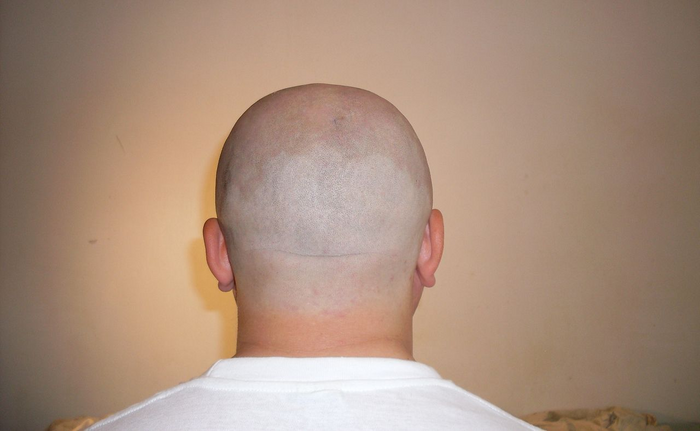
Bald man

Credit: Helpaeatcontu

A single chemical is key to controlling when hair follicle cells divide, and when they die. This discovery could not only treat baldness, but ultimately speed wound healing because follicles are a source of stem cells.

Most cells in the human body have a specific form and function determined during embryonic development that does not change. For example, a blood cell cannot turn into a nerve cell, or vice versa. Stem cells, however, are like the blank tiles in a game of Scrabble; they can turn into other types of cells. 

Their adaptability makes them useful for repairing damaged tissue or organs. 

“In science fiction when characters heal quickly from injuries, the idea is that stem cells allowed it,” said UC Riverside mathematical biologist and study co-author Qixuan Wang. 

“In real life, our new research gets us closer to understanding stem cell behavior, so that we can control it and promote wound healing,” Wang said. This research is detailed in a recent Biophysical Journal article.

The liver and stomach regenerate themselves in response to wounds. However, Wang’s team studied hair follicles because they’re the only organ in humans that regenerates automatically and periodically, even without injury. 

The researchers determined how a type of protein, TGF-beta, controls the process by which cells in hair follicles, including stem cells, divide and form new cells, or orchestrate their own death — eventually leading to the death of the whole hair follicle. 

“TGF-beta has two opposite roles. It helps activate some hair follicle cells to produce new life, and later, it helps orchestrate apoptosis, the process of cell death,” Wang said. 

As with many chemicals, it is the amount that makes the difference. If the cell produces a certain quantity of TGF-beta, it activates cell division. Too much of it causes apoptosis. 

No one is entirely sure why follicles kill themselves. Some hypotheses suggest it is an inherited trait from animals shedding fur to survive hot summer temperatures or trying to camouflage. 

“Even when a hair follicle kills itself, it never kills its stem cell reservoir. When the surviving stem cells receive the signal to regenerate, they divide, make new cell and develop into a new follicle,” Wang said. 

If scientists can determine more precisely the way TGF-beta activates cell division, and how the chemical communicates with other important genes, it might be possible to activate follicle stem cells and stimulate hair growth. 

Because many animals, including humans, possess skin covered with hair, perfect wound healing would require regeneration of hair follicles. Being able to more precisely control levels of TGF-beta could also one day cure baldness, which bothers millions of people all over the world.  

“Potentially our work could offer something to help people suffering from a variety of problems,” Wang said. 


Journal

Biophysical Journal

DOI

10.1016/j.bpj.2022.05.035

Subject of Research

Cells

Article Title

A probabilistic Boolean model on hair follicle cell fate regulation by TGF-β

Article Publication Date

16-Jun-2022

Share12Tweet8Share2ShareShareShare2

Related Posts

Nationwide Study Tracks Hepatitis B Reactivation and Liver Dysfunction During Infliximab Treatment

Nationwide Study Tracks Hepatitis B Reactivation and Liver Dysfunction During Infliximab Treatment

August 1, 2026
Imaging Reveals How Brain–Body Interactions Shape Systemic Disease

Imaging Reveals How Brain–Body Interactions Shape Systemic Disease

August 1, 2026

Targeting Vascular–Musculoskeletal Links May Treat Sarcopenia and Osteoporosis

August 1, 2026

Supergene solves evolutionary mystery by controlling mirror-image flower development

August 1, 2026

POPULAR NEWS

  • Older Adults’ Views on Managing Chronic Pain in Primary Care

    29 shares
    Share 12 Tweet 7
  • Bentham Science Launches International Journal of Wireless and Communication Engineering Innovation

    29 shares
    Share 12 Tweet 7
  • Study explores long-term care residents’ experiences transitioning to emergency departments

    29 shares
    Share 12 Tweet 7
  • KAIST develops treatment targeting cancer cachexia, a debilitating wasting syndrome

    29 shares
    Share 12 Tweet 7

About

We bring you the latest biotechnology news from best research centers and universities around the world. Check our website.

Follow us

Recent News

Older Adults’ Views on Managing Chronic Pain in Primary Care

Bentham Science Launches International Journal of Wireless and Communication Engineering Innovation

Study explores long-term care residents’ experiences transitioning to emergency departments

Subscribe to Blog via Email

Enter your email address to subscribe to this blog and receive notifications of new posts by email.

Join 85 other subscribers
  • Contact Us

Bioengineer.org © Copyright 2023 All Rights Reserved.

Welcome Back!

Login to your account below

Forgotten Password?

Retrieve your password

Please enter your username or email address to reset your password.

Log In
No Result
View All Result
  • Homepages
    • Home Page 1
    • Home Page 2
  • News
  • National
  • Business
  • Health
  • Lifestyle
  • Science

Bioengineer.org © Copyright 2023 All Rights Reserved.