The European Liver Transplant Registry has become one of the longest-running transplant registries in the world, now holding data on more than 200,000 liver transplants performed at 174 centres across 32 countries. Its history is the subject of a personal retrospective by Henri Bismuth, who traces the registry from a handful of pioneering European centres in the 1970s to its creation through meetings, paper questionnaires and an agreement to share clinical experience. The account documents how an informal French prototype became a European network, how common definitions were established, and how the accumulated records contributed to evidence on survival, hepatitis B recurrence and indications for transplantation.
When Bismuth performed his first liver transplant at Paul Brousse in Villejuif in 1974, that single operation represented 25% of the reported European experience. At that stage, transplantation was concentrated at a very small number of centres. Cambridge, under Roy Calne, and Hannover, under Rudolph Pichlmayr, were the dominant units. Vienna, Paul Brousse, Innsbruck and Groningen had performed more modest numbers, and some of the available experience was anecdotal. Before 1984, 17 European centres had performed liver transplantation, with 147 cases at Cambridge and 109 at Hannover. Paul Brousse recorded 17 transplants before 1984, while Birmingham, Rome, Helsinki, Berlin, Brussels, Milan, Bern and several other centres entered the field later in the decade or early 1980s.
The clinical climate offered little encouragement. Patients were referred for transplantation only as a last resort, and mortality was substantial. Sheila Sherlock had written that a recipient could be regarded as fortunate if he or she survived six months after surgery and that the operation was not justified when the natural course of disease offered a longer life. In July 1980, Thomas Starzl published data documenting a decline in survival after transplantation, reinforcing the prevailing scepticism. Two events in 1983 then changed the landscape. The Washington Consensus Development Conference concluded that liver transplantation was a promising alternative to current therapy in the late phase of several serious liver diseases and had the potential to become a clinical service rather than remain experimental. The clinical introduction of cyclosporine through Calne’s pioneering work also transformed immunosuppressive management and markedly improved outcomes. Annual transplant activity rose from single figures to two-digit numbers within a short period.
The immediate precursor to the European registry was an informal French collaboration. By 1984, the Paul Brousse experience remained limited to 19 cases over ten years. Other French centres subsequently joined the group, including Strasbourg, Rennes, Bordeaux, Cochin and Saint-Antoine. The teams worked in relative isolation within their hospitals, most hepatologists showed little interest, and the literature was scarce and largely experimental. They began holding regular meetings to discuss their patients. To prepare and structure those discussions, Bismuth proposed compiling cases in advance in a simple registry that circulated before each meeting. It contained basic information including the cause of liver disease, the type of transplant and important complications. This French registry served as the direct model for the European system that followed.
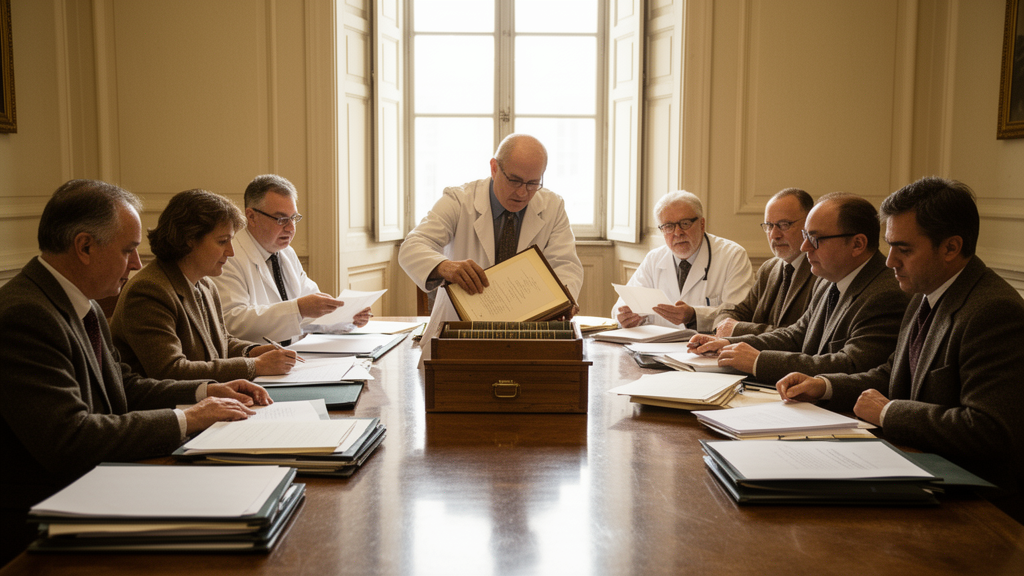
European collaboration became explicit in 1985. At the inaugural congress of the European Society for Organ Transplantation in Zurich in 1983, only two presentations concerned liver transplantation, but the meeting gave European transplant surgeons their first opportunity to gather as a distinct group. They decided to convene a dedicated liver-transplantation session at the society’s second congress in Munich in late November 1985, with Rudolf Pichlmayr organising the session. One month before that congress, Pichlmayr convened a preparatory meeting in Hannover on 16 October 1985. He was joined by Roy Calne, Carl Groth, Maarten Sloof and Henri Bismuth, five participants in total. Bismuth proposed extending the French registry to a European level, and the group accepted the idea immediately. At the Munich meeting on 27 November 1985, Bismuth presented the concept and distributed a circular inviting centres to participate in what was described as the first collaborative exchange of European liver-grafting groups. This was the first document to carry the name European Liver Transplant Registry.
A coordinating committee was established with Bo-Göran Ericzon, Jean-Bernard Otte, Burckhardt Ringe, Keith Rolles and Maarten Sloof. The first formal ELTR meeting took place in Paris on 7 January 1986, where the registry’s objectives were defined. From the outset, Bismuth insisted that the questionnaire remain deliberately simple so that contributing centres would comply. Coverage was intended to include all liver transplants performed in Europe, creating a comprehensive population for descriptive and statistical analysis. Agreement by Cambridge and Hannover, the two largest units, helped secure participation from smaller centres. Updates were planned every quarter. With neither practical personal computers nor internet access available, hundreds of completed paper questionnaires were sent to Paul Brousse, where they were entered and analysed. Bismuth credited Denis Castaing’s management of data entry and statistical analysis as indispensable to the registry’s early operation. Vincent Karam joined the team in September 1995, beginning the move toward a fully professional secretariat that included biostatistician Valérie Cailliez and secretary Eva Cochet.
Early record keeping also exposed a consequential methodological problem. When Paul Brousse submitted a case of intraoperative death from haemorrhage, it became apparent that other centres had excluded comparable events because transplantation had not been completed. The discrepancy prompted debate over when a transplant should be considered to have occurred: at anaesthetic induction, laparotomy, hepatectomy, graft implantation or vascular declamping. The centres agreed that transplantation was complete, and a patient therefore registrable, when the graft was declamped and first became functional. This definition has remained in use, although Bismuth acknowledged its imperfections. In hepatic resection, deaths at any point in the procedure are attributed to the operation, whereas the transplant definition does not fully reproduce that standard.
Data collection began in 1986, and ELTR’s first report appeared in The Lancet in September 1987. Based on 1,218 patients assembled from centres across Europe, it was at the time the largest liver-transplant series in the world. One-year patient survival was 44%, and two-year survival was 41%. These observed results rebutted the earlier pessimism surrounding the procedure and supported liver transplantation as a valid therapeutic option for end-stage liver disease. The registry subsequently made possible research that individual centres could not conduct with adequate sample sizes. During work on preventing hepatitis B virus recurrence after transplantation, investigators used the ELTR network to identify centres with the largest numbers of affected recipients, distributed an extended questionnaire and assembled a collaborative dataset. The resulting 1993 New England Journal of Medicine publication established prophylactic immunoglobulin as the standard of care for hepatitis B-infected transplant recipients, according to Bismuth’s account of the registry’s scientific legacy.
ELTR evidence also supported more precise decisions about which patients should undergo transplantation. In June 1993, an international panel met in Paris for a second Consensus Development Conference, exactly ten years after the Washington conference. The earlier meeting had asked whether transplantation was a therapeutic procedure; this one asked, “To which patient?” Drawing on the registry database, an international panel including Thomas Starzl, Ronald Busuttil, Nancy Ascher, Roy Calne, Roger Williams, Rudolf Pichlmayr, Carl Groth, Bo-Göran Ericzon, Jean-Pierre Benhamou, Maarten Sloof, Jean-Bernard Otte and Paul McMaster developed a consensus statement on indications for liver transplantation. Published in a special issue of Hepatology, the Paris Consensus influenced clinical practice globally for years. René Adam took over stewardship in 1997 and guided the registry through consolidation and expansion. Audit visits to contributing centres began in 1998 under Vincent Karam, with a multinational team verifying data accuracy and completeness, and a formal quality-control programme reported in 2003 supported the registry’s credibility as a representative record of European transplant practice.
The registry’s present scale also reflects its role beyond individual studies. ELTR preceded the European Liver and Intestine Transplant Association and may have helped create conditions for that organisation’s formation. Its pan-European reach offered an early example of scientific cooperation crossing national boundaries, while its continuity has depended on successive custodians, ELITA board members, contributing transplant centres and organ-sharing organisations. More than 114 peer-reviewed publications have drawn on its dataset, and registry data have underpinned models for predicting liver-transplant outcomes. The retrospective account’s central historical observation is that the system began with five surgeons agreeing to work collectively rather than an abstract research plan. Regular meetings, short questionnaires, common definitions and sustained participation supplied the infrastructure. What started as a circulated French list built around 19 cases at Paul Brousse became a shared European record encompassing more than 200,000 transplants, with the trust between contributing teams sustaining the registry through four decades.
Subject of Research: Origins, methods and scientific contributions of the European Liver Transplant Registry
Article Title: The birth of the European Liver transplant registry
Article References: Bismuth, H. (2026). The birth of the European Liver transplant registry. Transplant International, 39, Article 17721. https://doi.org/10.3389/ti.2026.17721
Image Credits: AI Generated
Keywords: European Liver Transplant Registry, liver transplantation, ELTR, clinical registries, patient survival, hepatitis B, transplant outcomes, European collaboration, medical history, consensus conference, birth, European
News Source: Drew Townsend. (October 22, 2026). The birth of the European Liver transplant registry. Scienmag.