A humble rice variety developed under the Royal Initiative in southern Thailand is now at the center of an intriguing laboratory investigation into cancer biology. Yoom Noon rice, a strain long prized for its rich flavonoid content and strong antioxidant properties, has never before been examined for anti-cancer activity. That gap is what motivated a team of Thai researchers from the University of Phayao, Mahidol University, and Walailak University to test whether extracts of this grain could fight colorectal cancer cells while leaving healthy cells unharmed. Their findings, published in BMC Complementary Medicine and Therapies, suggest that both polished and unpolished forms of the rice carry measurable anti-cancer and DNA-protective potential, at least within the controlled environment of the cell culture dish.
The researchers prepared extracts from both polished and unpolished Yoom Noon rice and applied them to two well-established colorectal cancer cell lines, HCT116 and HT29. These lines are staples of colon cancer research because they differ in their genetic backgrounds and behavior, giving scientists a way to gauge whether an effect is broad or limited to one tumor type. The team measured cell viability using the MTS assay, a colorimetric technique in which metabolically active cells convert a chemical substrate into a colored product, allowing researchers to quantify how many cells survive after treatment. Trypan blue exclusion, a classic dye-based test that marks dead cells with compromised membranes, provided an independent check on cell survival.
The results revealed a striking difference between the two cancer cell lines. Against HCT116 cells, the polished rice extract achieved a half-maximal inhibitory concentration, or IC50, of 626.74 micrograms per milliliter at 48 hours, while the unpolished extract reached an IC50 of 736.85 micrograms per milliliter. In plain terms, these concentrations were sufficient to cut the viability of HCT116 cells in half within two days. The HT29 line proved more resistant, with both extracts requiring concentrations above 1000 micrograms per milliliter to achieve the same effect. This kind of selectivity between cell lines is common in natural product research and often reflects differences in how tumor cells metabolize compounds or regulate their own survival machinery.
Beyond short-term viability, the investigators probed whether the rice extracts could undermine the long-term proliferative capacity of the cancer cells. They used a clonogenic assay, sometimes called a self-renewal assay, which challenges surviving cells to divide repeatedly and form visible colonies over days to weeks. Cancer cells that retain their ability to seed new colonies are the ones most likely to drive regrowth after treatment. Both polished and unpolished Yoom Noon rice extracts demonstrated a potent anti-proliferative ability against HCT116 and HT29 cells in this assay, indicating that the extracts do not merely slow the cells temporarily but impair their capacity for sustained self-renewal.
Perhaps the most clinically relevant findings concerned metastasis, the process by which cancer cells spread from the original tumor to distant organs and which accounts for the majority of colorectal cancer deaths. The team used wound healing assays, in which a scratch is made across a confluent cell layer and researchers track how quickly cells migrate to close the gap, along with transwell migration assays, in which cells are challenged to move through a porous membrane toward a chemical attractant. At doses that were not cytotoxic, meaning they did not kill the cells outright, the Yoom Noon rice extracts significantly suppressed both the migration and the invasion of HCT116 cells. This distinction matters because it suggests the rice compounds may interfere with the motility machinery of cancer cells at concentrations that would be safer for normal tissue.
To understand the cellular mechanisms driving the suppression of proliferation, the researchers turned to flow cytometry, a technique that passes thousands of individual cells through a laser and quantifies their characteristics one by one. Using Annexin V and propidium iodide staining, they found that treatment with the rice extracts increased apoptotic cell death in both HCT116 and HT29 cells in a dose-dependent manner. Apoptosis is the body’s programmed cell death pathway, a controlled form of cellular suicide that, unlike necrosis, avoids triggering inflammation. Many chemotherapy drugs work by pushing cancer cells into apoptosis, so a food-derived extract that promotes this pathway is of considerable interest for chemoprevention research.
Flow cytometric cell cycle analysis added a second mechanistic layer. The extracts arrested HCT116 cells at the S phase, the stage of the cell cycle during which DNA is replicated. Blocking cells at this checkpoint prevents them from progressing to mitosis and dividing, effectively putting the brakes on tumor growth. The combination of apoptosis induction and S phase arrest suggests the rice extracts act through multiple complementary routes, a pattern often seen with complex botanical mixtures that contain many bioactive compounds working in concert rather than a single isolated molecule.
Just as important as what the extracts did to cancer cells is what they did not do to healthy ones. Using a cytokinesis-blocked micronucleus assay on V79 lung fibroblast cells, the team evaluated genotoxicity, the potential to damage DNA. Micronuclei are small fragments of genetic material that break away from the main nucleus when chromosomes are damaged or missegregated during cell division, and their frequency is a sensitive indicator of DNA harm. The Yoom Noon rice extracts at concentrations of 250 to 750 micrograms per milliliter did not increase the number of micronuclei compared with untreated controls after 24 hours of exposure, indicating the extracts themselves are not genotoxic under these conditions.
The anti-genotoxic results may prove to be the study’s most provocative contribution. When the researchers co-treated the fibroblast cells with the rice extracts and Mitomycin C, a well-known mutagen, they observed a significant reduction in the frequency of micronucleated cells compared with cells exposed to the mutagen alone. In other words, the rice extracts appeared to shield DNA from a known damaging agent. This antimutagenic effect, if it holds up in further studies, would position Yoom Noon rice not only as a possible source of anti-cancer compounds but also as a candidate for chemoprevention, the strategy of using dietary or medicinal agents to stop cancer before it starts.
The authors are careful to frame this as an in vitro study, and the usual caveats apply. Extract concentrations in the hundreds of micrograms per milliliter cannot be directly translated into dietary recommendations, and compounds that survive the digestive system, cross the intestinal barrier, and reach tumor tissue in sufficient quantities remain an open question. Clinical effects would require animal studies and eventually human trials. Nevertheless, the research, supported by the Office of the Royal Development Projects Board of Thailand, establishes a credible first link between a locally significant rice strain and a suite of desirable biological activities: selective inhibition of colorectal cancer cell growth, suppression of migration and invasion, induction of apoptosis, cell cycle arrest, and protection of DNA from mutagenic damage. For a grain developed through a royal agricultural initiative in southern Thailand, Yoom Noon rice has now earned a place in the growing catalogue of natural products under scrutiny for cancer prevention and therapy.
Subject of Research: Anti-cancer and anti-genotoxic effects of Yoom Noon rice extracts on colorectal cancer cells in vitro
Article Title: Anti-cancer and anti- genotoxic potential of Yoom Noon rice: induction of apoptosis, cell cycle arrest, and inhibiting migration and invasion in vitro
Article References: Praphasawat, R., Payuhakrit, W., Surachaijarin, C., Yana, B., & Palipoch, S. (2026). Anti-cancer and anti- genotoxic potential of Yoom Noon rice: induction of apoptosis, cell cycle arrest, and inhibiting migration and invasion in vitro. BMC Complementary Medicine and Therapies. https://doi.org/10.1186/s12906-026-05613-x
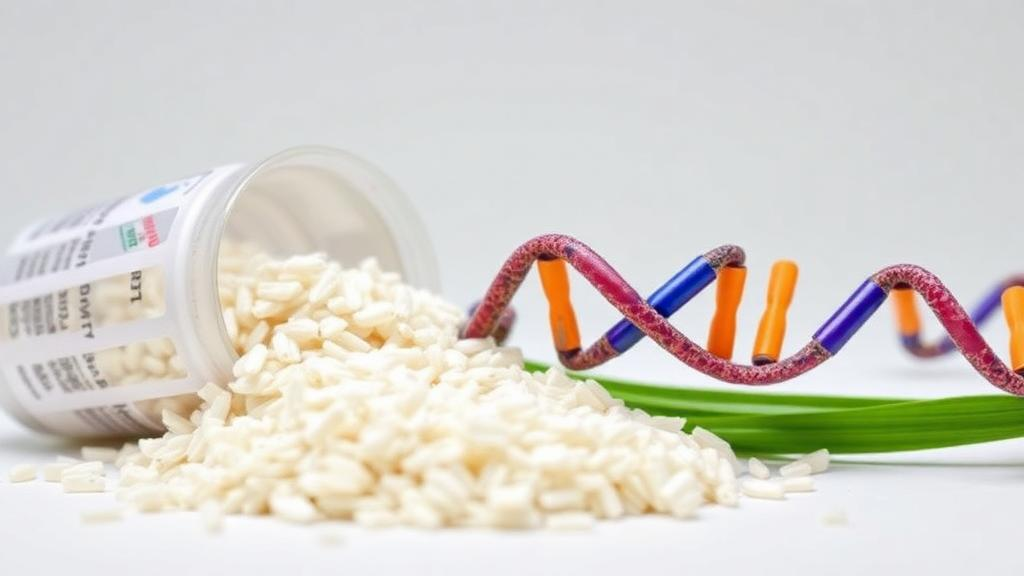
Image Credits: AI Generated
DOI: 10.1186/s12906-026-05613-x
Keywords: Yoom Noon rice, colorectal cancer, apoptosis, cell cycle arrest, S phase, micronucleus assay, genotoxicity, antimutagenicity, flavonoids, rice extract, chemoprevention, in vitro
News Source: Nathaniel Bowman. (October 7, 2026). Thai Yoom Noon Rice Extracts Show Anti-Cancer and DNA-Protective Effects in Lab Tests. Scienmag.