In the evolving landscape of neuromodulation, achieving precise stimulation of deep brain regions has presented a formidable challenge to neuroscientists and clinicians alike. Historically, deep brain stimulation (DBS) has relied on invasive surgical techniques to target areas such as the hippocampus and striatum, essential for regulating movement, emotion, and memory. These invasive procedures, while effective, carry inherent risks including infection, hemorrhage, and other surgical complications. The demand for a safer, non-invasive alternative capable of high focality deep brain stimulation has driven innovation in this field, culminating in the advent of temporal interference stimulation (tTIS).
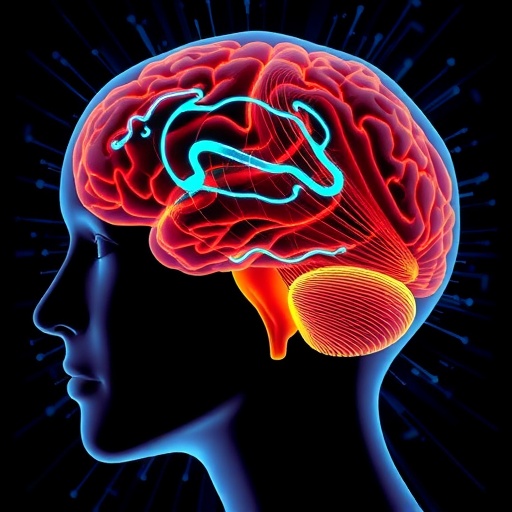
Temporal interference stimulation is a breakthrough non-invasive technique where two or more high-frequency electrical currents intersect within the brain to create a low-frequency envelope that selectively stimulates neurons deep within the brain tissue. This method bypasses the skull’s filtering effect that has limited the efficacy of conventional transcranial electrical stimulation approaches, which often lack the precision to reach subcortical targets without affecting overlying cortical structures. By leveraging the physics of interference patterns, tTIS forms a spatially confined electric field that focuses stimulation deep within the brain without invasive probes, heralding a new era for brain modulation.
The genesis of tTIS lies in computational modeling and experimental validation in rodent models, where precise control of stimulation patterns was demonstrated. The intersecting high-frequency currents form an interference pattern that can modulate neural activity in target regions, while minimizing unintended effects on surrounding tissues. These findings established a proof-of-concept that has propelled the technique toward translational research. Today, tTIS is entering clinical domains through rigorous human studies aimed at both understanding its neuromodulatory mechanisms and harnessing its therapeutic potential in neuropsychiatric disorders.
Understanding the biophysical mechanisms underlying tTIS requires delving into the interaction of electric fields with neuronal membranes. Neurons act as non-linear electrical elements, responding preferentially to low-frequency signals. High-frequency currents (>1 kHz) typically do not elicit neuronal firing due to membrane properties acting as low-pass filters. However, when two high-frequency stimuli with slightly different frequencies intersect, the interference creates an amplitude-modulated envelope signal at a much lower frequency within the target region. This low-frequency envelope is capable of evoking neural responses, allowing selective activation of deep brain tissue while sparing superficial layers.
Initial clinical investigations have focused on validating safety profiles alongside neurophysiological assessments. Early results indicate that tTIS is well tolerated in adult human participants, without significant discomfort or adverse effects commonly associated with invasive implants. Neuroimaging modalities such as functional MRI and EEG have been employed in conjunction with tTIS to objectively monitor brain responses, revealing promising modulation patterns that mirror those seen in traditional DBS but without surgical intervention. Such findings ignite enthusiasm for expanding applications across a spectrum of neurological and psychiatric conditions.
The hippocampus, a deep brain structure central to learning and memory, serves as a prime target for tTIS evaluation. Disorders like Alzheimer’s disease and epilepsy, where hippocampal dysfunction is prominent, stand to benefit significantly from non-invasive stimulation strategies. Recent human trials utilizing tTIS have demonstrated modulation of hippocampal oscillations associated with memory formation, opening avenues for cognitive enhancement therapies. Likewise, the striatum, fundamental to motor control and reward processing, is being explored as a candidate for tTIS in addressing movement disorders such as Parkinson’s disease and psychiatric conditions including addiction and obsessive-compulsive disorder.
Despite these advances, challenges remain in optimizing the spatial resolution and intensity of tTIS. The brain’s heterogeneous conductivity and complex anatomy necessitate sophisticated computational models to predict electric field distributions accurately. Developing individualized stimulation protocols tailored to patient-specific neuroanatomy is paramount for maximizing efficacy. Additionally, the precise neural populations targeted and the resultant behavioral effects require further elucidation through combined neurophysiological recording and behavioral paradigms.
Future directions call for multidisciplinary collaborations integrating neuroscience, engineering, and clinical expertise. Progress in electrode design, electrode placement strategies, and real-time feedback systems will enhance the delivery and monitoring of tTIS. Integrating machine learning algorithms to adapt stimulation parameters dynamically based on ongoing brain activity holds promise for personalized neuromodulation therapies. Moreover, longitudinal studies are essential to assess lasting clinical benefits, potential neuroplastic changes, and the long-term safety of repeated sessions.
Fundamental neuroscience stands to gain remarkable insights from tTIS technology. By providing a reversible and controlled method to manipulate deep brain circuits, researchers can causally link specific neural structures to cognitive and emotional processes. Such causal inference is instrumental in understanding brain function more precisely than correlation-based neuroimaging techniques alone. Consequently, tTIS may become a pivotal tool in unraveling the neural underpinnings of complex behaviors and neuropsychiatric phenotypes.
From a therapeutic viewpoint, tTIS represents a paradigm shift, challenging the notion that deep brain targets require invasive approaches. Neuropsychiatric disorders that have traditionally been refractory to medications or psychotherapy might find new treatment avenues via targeted neuromodulation. Importantly, the non-invasive nature of tTIS could increase treatment accessibility and reduce barriers associated with surgical interventions. However, rigorous clinical trials are needed to establish standardized protocols, dose-response relationships, and comparative efficacy versus existing neuromodulation techniques.
The technological ecosystem surrounding tTIS is rapidly evolving. Beyond electrical stimulation, integrating multimodal neuromodulation approaches such as combining tTIS with pharmacology or neurofeedback could amplify therapeutic outcomes. Advances in wearable and portable stimulation devices might soon enable at-home interventions, promoting continuity of care and patient autonomy in managing chronic brain disorders. Such developments will necessitate sophisticated safety monitoring and regulatory frameworks to ensure responsible deployment.
Ethical considerations are intrinsic to neuromodulation technologies, particularly those capable of manipulating deep brain circuits non-invasively. Issues of consent, potential personality or cognitive alterations, and long-term impacts on brain integrity must be thoroughly addressed. Transparency in patient education and safeguards against misuse of neuromodulation are critical as tTIS transitions from research laboratories to clinical practice. Multidisciplinary discourse and governance will guide the ethical integration of this transformative technology.
In conclusion, temporal interference stimulation stands at the forefront of a new frontier in brain science and medicine. Its ability to non-invasively deliver targeted electrical signals to deep brain structures holds immense promise for both understanding brain function and treating complex neuropsychiatric disorders. While challenges remain in optimizing and standardizing the technology, ongoing research efforts are rapidly advancing its clinical translation. The combined momentum of technological innovation, foundational neuroscience, and clinical application heralds a future where tTIS could become a mainstay in precision brain therapy, reshaping the landscape of neuromodulation.
Subject of Research: Neuromodulation through temporal interference stimulation for deep brain targets in humans.
Article Title: Temporal interference stimulation for deep brain neuromodulation in humans.
Article References:
Vassiliadis, P., Beanato, E., Wessel, M.J. et al. Temporal interference stimulation for deep brain neuromodulation in humans. Nat. Biomed. Eng (2026). https://doi.org/10.1038/s41551-026-01665-z
Image Credits: AI Generated
DOI: https://doi.org/10.1038/s41551-026-01665-z
Tags: advances in neuromodulation technologybrain stimulation without surgerycomputational modeling in neuromodulationdeep brain neuromodulation techniquesdeep brain region targetinghigh focality brain stimulationhippocampus and striatum neuromodulationnon-invasive deep brain stimulationselective neuronal activationsubcortical neuron stimulationtemporal interference stimulationtranscranial electrical stimulation limitations