


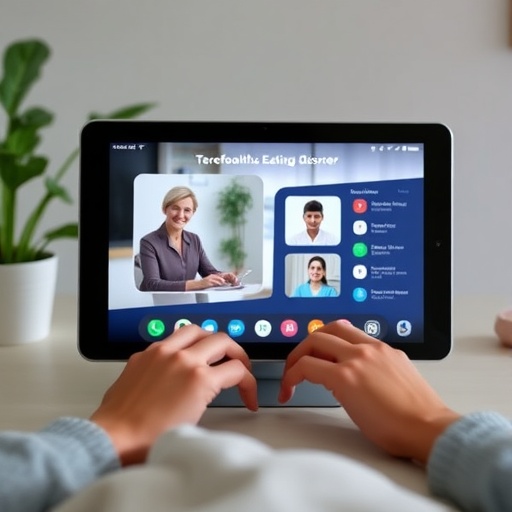
The landscape of healthcare has significantly transformed in recent years, with telehealth emerging as a vital component in the treatment of various conditions, including eating disorders. As we delve deeper into the real-world patient outcomes associated with remote eating disorder treatment, it becomes imperative to understand the nuances and intricacies that define patient experiences and clinical efficacy. A recent scoping review authored by Wolfe, Shepherd, Lee, and their colleagues provides pivotal insights into this domain.
The study meticulously examines the potential benefits and challenges faced by patients engaging with telehealth services. Notably, it underscores the intricacies of individual journeys through recovery, emphasizing how remote treatment pathways can either facilitate or hinder progress. Telehealth offers unique advantages such as flexibility and reduced stigma, which are crucial for individuals grappling with eating disorders. Patients can access care from the comfort of their homes, which eliminates many of the barriers associated with traditional face-to-face treatment.
The COVID-19 pandemic accelerated the adoption of telehealth, compelling many healthcare providers to pivot their treatment methodologies. As a result, a wealth of data has emerged regarding the effectiveness of virtual treatment modalities. The scoping review highlights a series of case studies that illustrate positive patient outcomes, revealing a general trend of satisfaction with virtual care. Patients report feeling more secure engaging in therapy sessions without the pressure of physical attendance, fostering an environment of openness and honesty.
However, the review does not shy away from addressing the limitations inherent in telehealth delivery systems. Technical difficulties, variations in internet accessibility, and the need for self-discipline are critical factors that can affect treatment continuity. The scoping review emphasizes that while telehealth can serve as a lifeline for many, it is not a one-size-fits-all solution. The nuances of each individual’s experience necessitate a tailored approach to remote care.
Moreover, the integration of technology in mental health treatment offers a dual-edged sword—while it has the potential to expand access, disparities in technological literacy and access to devices can create barriers for some patient populations. The findings from Wolfe and colleagues urge healthcare practitioners to consider these disparities carefully, highlighting the importance of equitable access to telehealth resources, particularly for underserved communities.
Given the complexities involved in eating disorder treatment, the review finds that comprehensive support systems beyond clinical intervention are vital. Family involvement and peer support can significantly enhance treatment outcomes. Telehealth enables these networks to remain engaged in the recovery process, providing crucial emotional and psychological support. As patients navigate their battles, having a built-in support system can often determine the trajectory of their recovery.
The scoping review also closely examines various telehealth platforms utilized in treating eating disorders, shedding light on their effectiveness. Different approaches can lead to varying levels of engagement and efficacy, and understanding these distinctions can guide clinicians in making informed decisions about treatment plans. While some platforms focus solely on therapeutic interventions, others incorporate a holistic approach, combining physical health assessments with psychological support.
As researchers and practitioners continue to explore the breadth of telehealth’s impact on eating disorder treatment, it becomes increasingly important for future studies to focus on long-term outcomes. The initial positive results indicated in the current scoping review warrant further investigation into the sustainability of treatment benefits over extended periods. Understanding these long-term dynamics can help shape future telehealth programs to better serve patients.
The authors of the scoping review advocate for a multidisciplinary approach to telehealth interventions. Involving various professionals, such as dietitians, psychologists, and medical doctors, can create a more robust support system that comprehensively addresses the diverse needs of individuals undergoing treatment for eating disorders. This collaborative framework is believed to yield more favorable outcomes by providing patients with a well-rounded care experience.
One noteworthy aspect of the study lies in its emphasis on patient engagement and empowerment. To foster greater involvement in their recovery process, patients must be equipped with the right tools and resources. The review suggests that telehealth platforms should prioritize providing educational content about eating disorders, coping strategies, and self-monitoring techniques. An informed patient is often more engaged, leading to better health outcomes.
The scoping review also points out the need for standardized protocols in telehealth settings. Establishing clear guidelines for practice can enhance the quality of care provided and ensure consistency across different treatment platforms. By setting benchmarks for success, practitioners can identify what works, refining their approaches to achieve the best results for their patients.
In summary, the exploration of telehealth-delivered eating disorder treatment reveals promising outcomes while simultaneously underlining significant challenges that merit attention. The scoping review by Wolfe, Shepherd, Lee, and colleagues serves as a crucial foundation for future inquiries into the intersection of technology and mental health care. As the field continues to evolve, both patients and clinicians are tasked with navigating this complex landscape armed with knowledge and a commitment to improving the effectiveness of telehealth interventions.
The ongoing investigation into the efficacy of telehealth for eating disorder treatment will inevitably lead to advancements in care delivery, ultimately benefitting patients. With a focus on accessibility, equity, and patient-centered approaches, the future of telehealth in this specialized field looks promising.
Subject of Research: Telehealth-delivered eating disorder treatment outcomes.
Article Title: Real-world patient outcomes for telehealth-delivered, remote eating disorder treatment: a scoping review.
Article References: Wolfe, H., Shepherd, C.B., Lee, R. et al. Real-world patient outcomes for telehealth-delivered, remote eating disorder treatment: a scoping review. J Eat Disord 13, 259 (2025). https://doi.org/10.1186/s40337-025-01441-5
Image Credits: AI Generated
DOI: https://doi.org/10.1186/s40337-025-01441-5
Keywords: Telehealth, eating disorders, remote treatment, patient outcomes, scoping review.
Tags: barriers to traditional eating disorder treatmentchallenges of virtual treatmentCOVID-19 impact on telehealth adoptionflexibility in eating disorder therapyindividual recovery journeys in telehealthonline mental health supportpatient outcomes in telehealthremote healthcare benefitsscoping review on telehealth efficacystigma reduction through telehealthtelehealth in eating disorder treatmentvirtual treatment case studies



