In a groundbreaking development that could redefine the treatment landscape for multiple myeloma, teclistamab, a novel bispecific antibody, has demonstrated remarkable efficacy in patients whose disease has relapsed after initial therapy. This advancement, emerging from the phase 3 MajesTEC-9 clinical trial, offers new hope to a population that has historically faced significant challenges in managing their cancer with conventional chemotherapy and immune therapies.
Multiple myeloma is a complex hematologic malignancy characterized by the proliferation of malignant plasma cells within the bone marrow. Despite advances in treatment, relapsed myeloma patients often encounter resistance to standard-of-care therapies such as proteasome inhibitors, immunomodulatory drugs, and monoclonal antibodies like daratumumab. The urgent need for innovative approaches has paved the way for immunotherapy modalities that harness and direct the body’s immune system to target myeloma cells more effectively.
Teclistamab represents a paradigmatic shift in the modality of treatment. As a bispecific antibody, it simultaneously binds to two distinct antigens: the B-cell maturation antigen (BCMA) found on malignant myeloma cells, and CD3 receptors on T cells. This dual binding mechanism redirects cytotoxic T cells to engage and eliminate myeloma cells with precision, overcoming some immune evasion tactics employed by cancer cells. This targeted immunological attack is designed to enhance tumor killing while minimizing damage to healthy tissues.
The MajesTEC-9 trial enrolled 593 patients across 24 countries, each with multiple myeloma that had progressed following one to three prior lines of therapy. Importantly, a significant proportion of these individuals had become refractory to existing therapies—including lenalidomide and daratumumab—underscoring the urgent unmet need for more potent treatment options. The study rigorously compared teclistamab monotherapy against standard care regimens currently available in clinical practice.
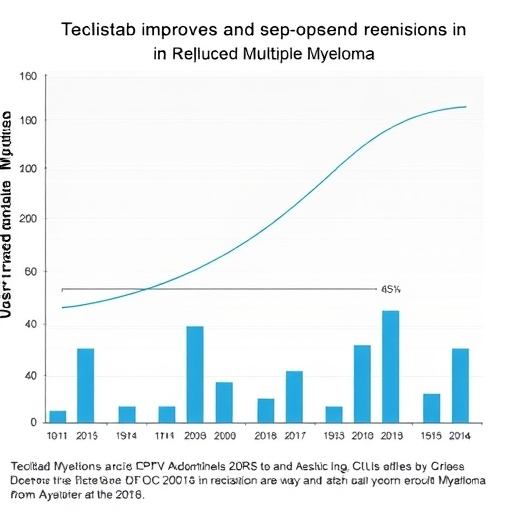
Results from this robust international study were striking. Nearly 70% of patients administered teclistamab remained progression-free at 18 months, a substantial improvement over the 27% progression-free rate observed in the standard therapy cohort. Beyond mere disease stabilization, approximately two-thirds of teclistamab-treated patients achieved complete remission. Of critical importance, many patients reached minimal residual disease negativity, as defined by highly sensitive detection methodologies, indicating an unprecedented depth of response.
These outcomes are not only statistically significant but translate into meaningful clinical benefit for patients. Extended remission duration can alleviate the symptom burden associated with multiple myeloma, including bone pain, anemia, and renal insufficiency, thereby substantially improving quality of life. Prolonged disease control also reduces the likelihood of rapid relapse and the need for multiple sequential lines of toxic chemotherapy, which can diminish functional status and survival.
However, the powerful immunostimulatory effects of teclistamab do present therapeutic challenges. Activation of the immune system can simultaneously impair normal protective mechanisms, resulting in a higher incidence of infections during the initial six months of treatment. Clinical teams mitigate this risk by vigilant monitoring and implementing prophylactic antiviral and antibiotic regimens. Additionally, patients may receive immunoglobulin infusions to bolster their defenses if antibody levels drop below critical thresholds.
This trial not only solidifies teclistamab’s potential in later lines of therapy but opens avenues for investigating bispecific antibodies earlier in the treatment paradigm. Administering immunotherapy at earlier stages may capitalize on more intact immune systems, potentially enhancing efficacy and moving closer to the goal of durable disease eradication or functional cure.
Dr. C. Ola Landgren, chief of the Sylvester Myeloma Institute, emphasizes the transformational nature of this therapy. His insight reflects decades of evolution in myeloma care, progressing from reliance on cytotoxic chemotherapy to sophisticated immune-based strategies that leverage molecular targeting and immunologic precision. The journey towards curative regimens for multiple myeloma is accelerating, and teclistamab stands at the forefront of this revolution.
The convergence of cutting-edge antibody engineering and immuno-oncology exemplified by teclistamab heralds a new era of personalized treatment for myeloma patients. This progress also exemplifies the critical importance of international collaboration in clinical research, bringing together diverse populations and expertise to rigorously evaluate novel agents and translate findings into clinical practice.
As the scientific community continues to unravel the intricate biology of myeloma and immune interactions, agents like teclistamab are poised to fundamentally alter disease trajectories and patient outcomes. Future investigations will determine optimal combinations, sequencing, and patient selection to maximize therapeutic index while maintaining safety.
In summary, the successful demonstration of teclistamab’s efficacy in heavily pre-treated multiple myeloma patients represents a landmark achievement. By delivering potent, targeted immunotherapy without reliance on traditional chemotherapy, it offers not only hope for longer survival but a pathway to deeper, sustained remissions that could redefine standards of care worldwide. Ongoing research efforts inspired by these results promise to extend these benefits to patients at various stages of the disease continuum, moving closer to the long-sought goal of a cure.
Subject of Research: Teclistamab immunotherapy in relapsed multiple myeloma
Article Title: Teclistamab Monotherapy in Multiple Myeloma with 1-3 Prior Lines of Therapy
News Publication Date: May 29, 2026
Web References: http://dx.doi.org/10.1056/NEJMoa2603870
Image Credits: Sylvester Comprehensive Cancer Center
Keywords: Multiple myeloma, Teclistamab, bispecific antibody, immunotherapy, BCMA, T cells, hematologic malignancy, minimal residual disease, clinical trial, cancer immunotherapy, chemotherapy-free treatment, ASCO Annual Meeting
Tags: BCMA targeted immunotherapyCD3 T cell engagementdeep remission in multiple myelomahematologic malignancy advancesimmunomodulatory drug alternativesMajesTEC-9 phase 3 trial resultsmonoclonal antibody refractory myelomanovel cancer immunotherapy approachesovercoming chemotherapy resistancerelapsed multiple myeloma treatmentsurvival improvement in relapsed myelomateclistamab bispecific antibody therapy