

• HOME
  • NEWS
  • EXPLORE
    • CAREER
      • Companies
      • Jobs
    • EVENTS
    • iGEM
      • News
      • Team
    • PHOTOS
    • VIDEO
    • WIKI
  • BLOG
  • COMMUNITY
    • FACEBOOK
    • INSTAGRAM
    • TWITTER
Friday, July 10, 2026
BIOENGINEER.ORG
No Result
View All Result
  • Login
  • HOME
  • NEWS
  • EXPLORE
    • CAREER
      • Companies
      • Jobs
        • Lecturer
        • PhD Studentship
        • Postdoc
        • Research Assistant
    • EVENTS
    • iGEM
      • News
      • Team
    • PHOTOS
    • VIDEO
    • WIKI
  • BLOG
  • COMMUNITY
    • FACEBOOK
    • INSTAGRAM
    • TWITTER
  • HOME
  • NEWS
  • EXPLORE
    • CAREER
      • Companies
      • Jobs
        • Lecturer
        • PhD Studentship
        • Postdoc
        • Research Assistant
    • EVENTS
    • iGEM
      • News
      • Team
    • PHOTOS
    • VIDEO
    • WIKI
  • BLOG
  • COMMUNITY
    • FACEBOOK
    • INSTAGRAM
    • TWITTER
No Result
View All Result
Bioengineer.org
No Result
View All Result
Home NEWS Science News Biology

Technique speeds chemical screening to prioritize toxicity testing

Bioengineer by Bioengineer
August 22, 2017
in Biology
Reading Time: 2 mins read
0
Share on FacebookShare on TwitterShare on LinkedinShare on RedditShare on Telegram
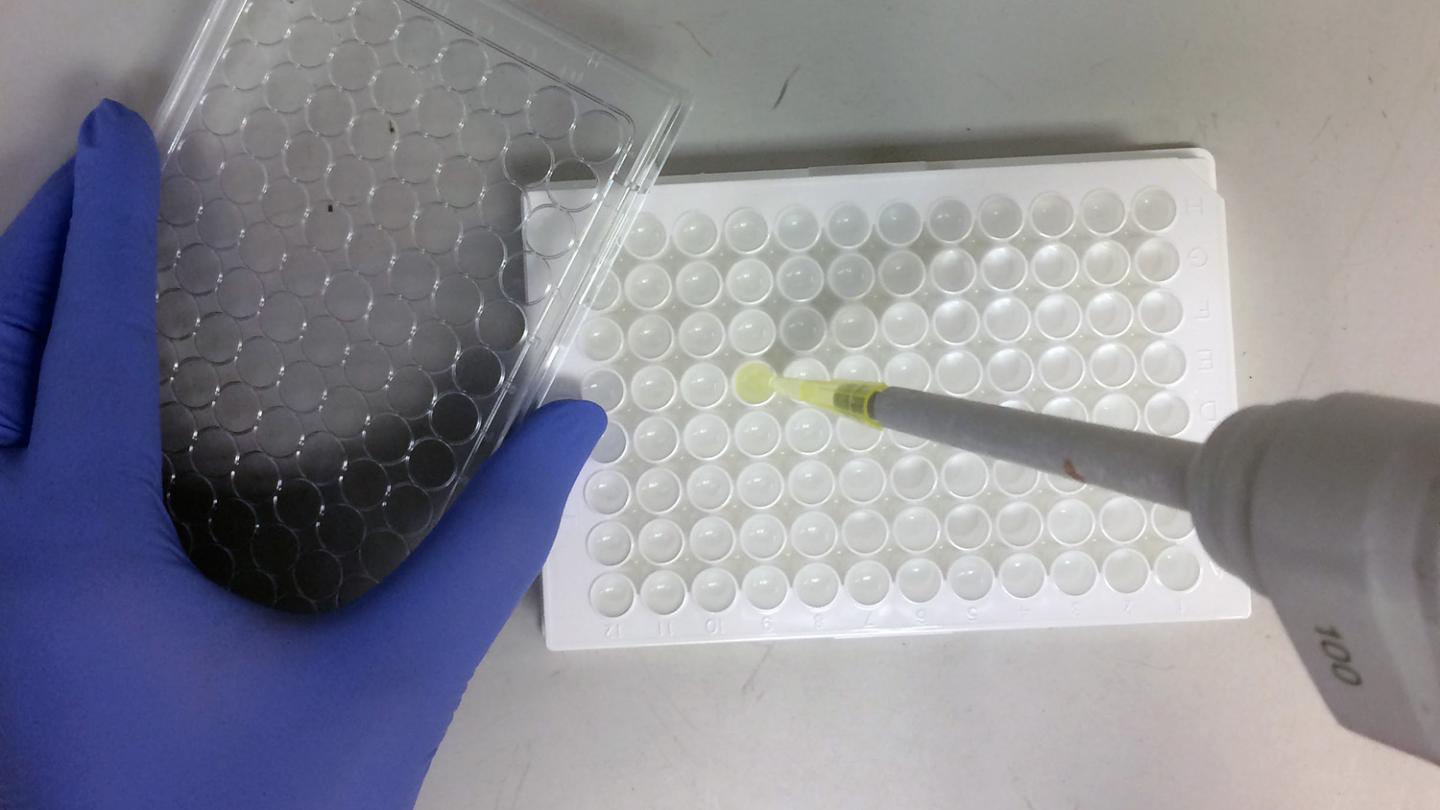
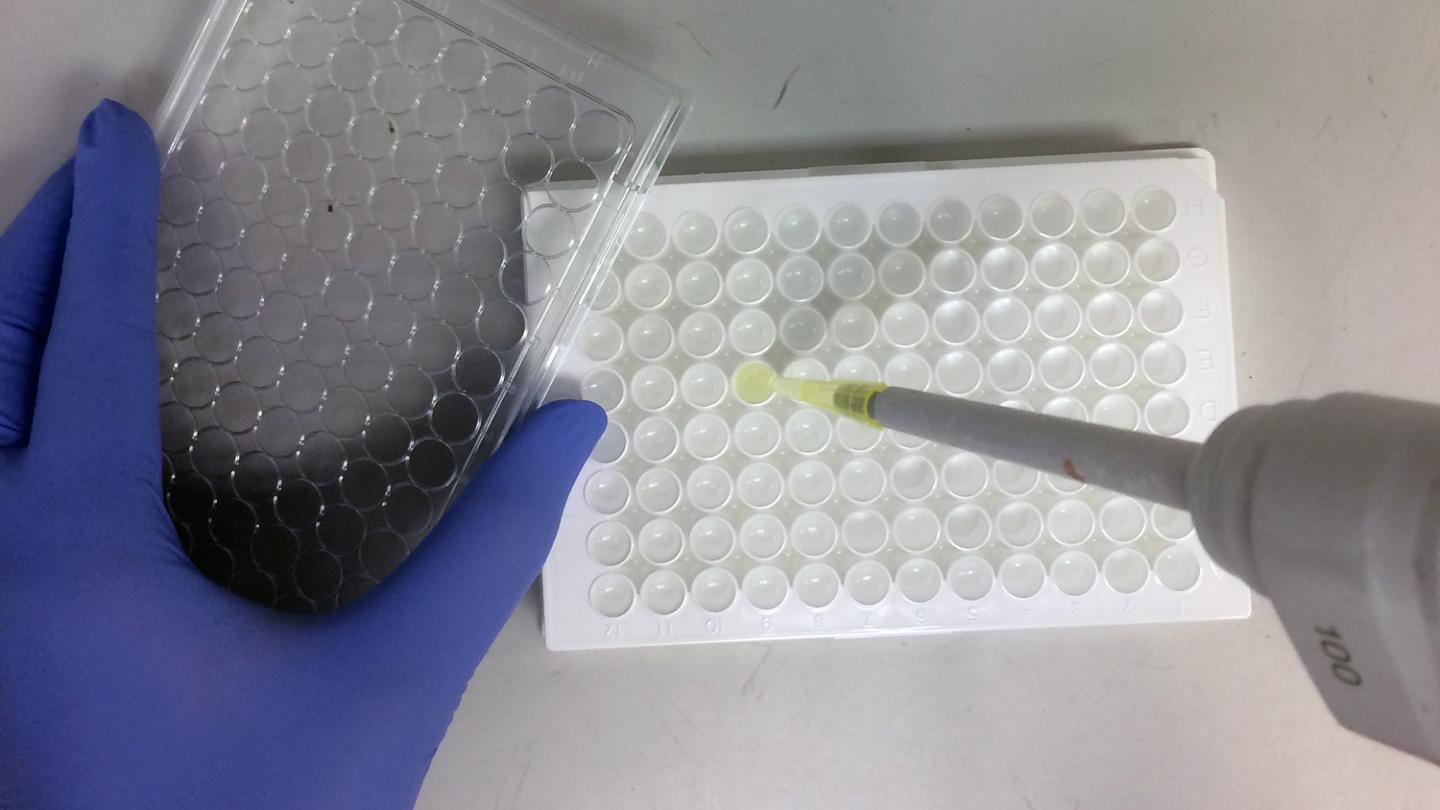
IMAGE

Credit: NC State University

Researchers from North Carolina State University have developed a high-throughput technique that can determine if a chemical has the potential to activate key genes in seconds rather than the typical 24 hours or more. The technique can be used to prioritize chemicals for in-depth testing to determine their toxicity.

There is a large backlog of chemicals awaiting toxicity testing, which is both time consuming and expensive," says Gerald LeBlanc, head of the Department of Biological Sciences at NC State and corresponding author of two papers on the work. "This new approach can help us identify chemicals that are more likely to pose an environmental hazard and, therefore, should be prioritized for testing. And this technique could also be used to assess and prioritize chemicals for human toxicity testing."

Currently, high-throughput techniques rely on "reporter genes." This means that chemicals are introduced into a cell and, if they activate the reporter gene, a measurable response can be observed in a day or so.

But the new approach works much more quickly by making use of the fact that the first step in triggering a cellular response is for the chemical to bind target proteins, which cause the target proteins to recruit other proteins.

Specifically, the NC State researchers modified two proteins: Met, which is a target protein, and SRC, which is the protein that Met recruits when it is bound by the chemical.

The modified Met emits light at a wavelength of 535 nanometers when it recruits the modified SRC. And that light is a signal that can be easily monitored and measured.

"If we introduce a chemical to the system, we can tell almost instantaneously whether the chemical has stimulated the recruitment of SRC to Met," LeBlanc says. "And by measuring the intensity of the light, we can also assess the potency of the chemical to activate this pathway.

"Because the Met-SRC complex regulates a gene that controls reproductive development in crustaceans, we know that such activity means there is a significant likelihood of environmental toxicity – enough to make it a priority for in-depth toxicity testing," LeBlanc says. "This is an approach that could be applied to a wide variety of potential target proteins for virtually any species, and could significantly expedite screening of chemicals for prioritization."

The most recent paper, "Ligand-Mediated Receptor Assembly as an End Point for High-Throughput Chemical Toxicity Screening," is published in the journal Environmental Science & Technology. Lead author of the paper is Elizabeth Medlock Kakaley, a former Ph.D. student at NC State. The paper was co-authored by Stephanie Eytcheson, a Ph.D. student at NC State.

The earlier paper, "Agonist-mediated assembly of the crustacean methyl farnesoate receptor," was published in the open-access journal Scientific Reports. Medlock Kakaley was lead author. The paper was co-authored by Helen Y. Wang, a former research associate at NC State.

The work was done with support from the U.S. Environmental Protection Agency under grant RD-835165.

###

Media Contact

Matt Shipman
[email protected]
919-515-6386
@NCStateNews

Why Not Us?

Original Source

https://news.ncsu.edu/2017/08/speeding-up-toxicity-screening-2017/ http://dx.doi.org/10.1021/acs.est.7b02882


Share12Tweet7Share2ShareShareShare1

Related Posts

Study Challenges Rising Global Trade in Critically Endangered Sand Tiger Sharks

Study Challenges Rising Global Trade in Critically Endangered Sand Tiger Sharks

July 10, 2026
Drosophila as a Key Genetic Model for Studying Extracellular Vesicles

Drosophila as a Key Genetic Model for Studying Extracellular Vesicles

July 10, 2026

BU receives $4.6M grant to advance lung science research training

July 10, 2026

Unmedicated Depressed Women Show Reduced Heat Tolerance Compared to SSRI Users

July 10, 2026
Please login to join discussion

POPULAR NEWS

  • Detection of EDCs in Breast Milk and Infant Urine Up to Six Months Highlights Early Exposure Risks

    77 shares
    Share 31 Tweet 19
  • New Drug Candidate Developed at McMaster Shows Potential for Treating Brain Cancer

    58 shares
    Share 23 Tweet 15
  • KTU Researchers Explore Ultrasound’s Role in Enhancing Blood Flow Beyond Diagnostics

    53 shares
    Share 21 Tweet 13
  • 高齢者の骨粗鬆症治療の持続性比較

    51 shares
    Share 20 Tweet 13

About

We bring you the latest biotechnology news from best research centers and universities around the world. Check our website.

Follow us

Recent News

New Gene Promoter Offers Hope for Treating Drug-Resistant Epilepsy

New Method Shows Promise Against Drug-Resistant Deadly Brain Cancer

Pre-cooked seafood meals may absorb chemicals during packaging and processing

Subscribe to Blog via Email

Enter your email address to subscribe to this blog and receive notifications of new posts by email.

Join 84 other subscribers
  • Contact Us

Bioengineer.org © Copyright 2023 All Rights Reserved.

Welcome Back!

Login to your account below

Forgotten Password?

Retrieve your password

Please enter your username or email address to reset your password.

Log In
No Result
View All Result
  • Homepages
    • Home Page 1
    • Home Page 2
  • News
  • National
  • Business
  • Health
  • Lifestyle
  • Science

Bioengineer.org © Copyright 2023 All Rights Reserved.