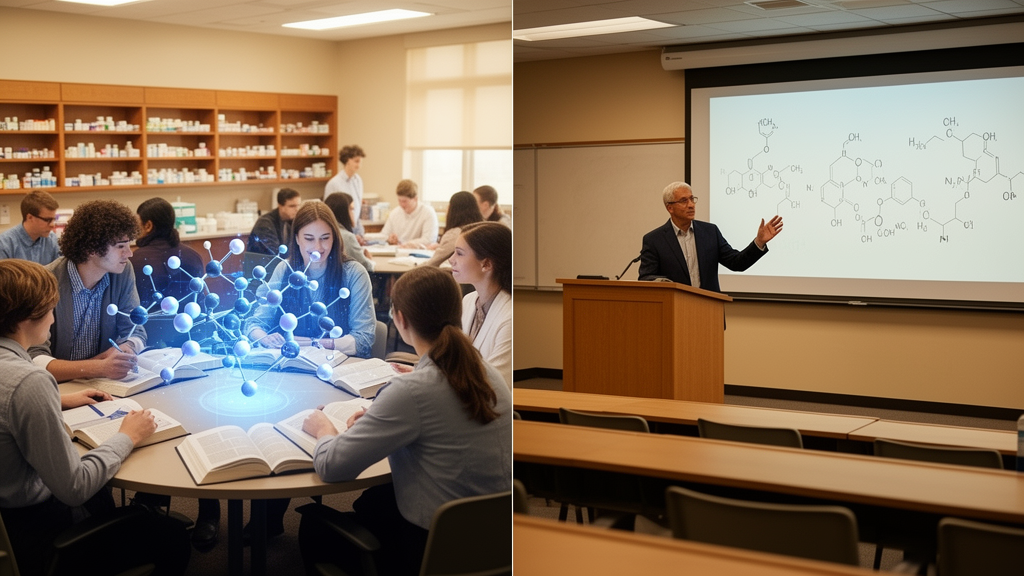
A quasi-experimental study conducted among fourth-year medical students in Saudi Arabia found that team-based learning and traditional didactic lectures produced statistically similar improvements in immediate pharmacology knowledge. Published in Frontiers in Medicine, the research examined whether active learning approaches, specifically team-based learning, offered measurable advantages over conventional lectures in terms of short-term learning gains and student perceptions. The study involved 137 students who completed both instructional formats, providing a direct within-subject comparison of the two pedagogical methods. The findings suggest that while students generally preferred the collaborative nature of team-based learning, this preference did not translate into significantly higher test scores compared to traditional instruction.
The investigation took place at the College of Medicine, King Saud Bin Abdulaziz University for Health Sciences, during the 2024–2025 academic year. The researchers selected fourth-year Bachelor of Medicine, Bachelor of Surgery students from the Preclinical Phase II for participation. This cohort was chosen because students at this stage possess sufficient academic experience to meaningfully engage with and evaluate different teaching and learning approaches. A total of 223 students met the inclusion criteria, but only 137 voluntarily participated and completed all required assessments and questionnaires. The sample comprised 76 female and 61 male students, reflecting the gender-segregated educational setting mandated by the Ministry of Education in Saudi Arabia.
The study design utilized a repeated-measures framework, meaning the same group of students experienced both the team-based learning and traditional didactic lecture conditions. Four instructional sessions were conducted, including two for each method, covering topics within the Gastroenterology and Nutrition, Endocrine and Mental Health, and Genitourinary System blocks. To ensure comparability, both instructional formats were aligned with identical learning objectives, content coverage, assessment criteria, teaching materials, and faculty involvement. This standardization was critical for minimizing instructor-related bias and allowing for a fair comparison of the instructional methods themselves rather than variations in content or delivery quality.
Assessment was conducted using topic-specific 10-item multiple-choice tests administered immediately before and after each session. For the team-based learning sessions, the individual readiness assurance test served as the pre-test, while a separate individual post-test was administered at the end of the session. In the traditional didactic lecture sessions, standard pre- and post-tests were used. The learning gain for each student was calculated by subtracting the pre-test score from the post-test score. This immediate assessment approach allowed the researchers to measure short-term knowledge acquisition directly linked to the specific instructional session, although it does not account for long-term retention or the transfer of knowledge to clinical reasoning.
Statistical analysis revealed that assessment scores improved significantly from pre-test to post-test in both groups, with a p-value of less than 0.001. Under team-based learning, the mean score increased from 5.87 to 8.81, while under traditional didactic lectures, scores rose from 3.95 to 6.63. Although the mean learning gain was numerically slightly greater for team-based learning at 2.95 points compared to 2.68 points for traditional lectures, the difference between the two approaches was not statistically significant. The method-by-time interaction in the repeated-measures analysis of variance was not significant, with a p-value of 0.145, indicating that the magnitude of improvement did not differ significantly between the two instructional approaches.
The study also examined whether gender influenced learning outcomes or student perceptions. The researchers found no statistically significant differences in learning gains between male and female students for either instructional method. In the team-based learning condition, female students had a slightly higher mean gain than male students, but this variation did not attain statistical significance. Similarly, in the traditional didactic lecture group, learning gains were comparable between genders. The three-way interaction of method, time, and gender was also not significant, suggesting that the pattern of change over time across the two instructional approaches did not differ by gender. These findings indicate that, within the context of this specific study, gender was not associated with differences in immediate learning gains or a relative benefit of one instructional approach over the other.
Student perceptions of the instructional approaches were evaluated using a 29-item Likert-scale questionnaire administered after the completion of all study procedures. The questionnaire comprised three domains: teamwork and engagement, learning effectiveness and preparation, and satisfaction and preference. Students reported generally positive perceptions across all three domains, with the highest mean score observed for teamwork and engagement at 4.48 on a five-point scale. Satisfaction and preference followed closely with a mean of 4.38, while learning effectiveness and preparation had a mean of 4.30. The internal consistency of the questionnaire subscales was strong, with Cronbach’s alpha values ranging from 0.833 to 0.935, indicating reliable measurement of student attitudes.
Despite the favorable ratings for team-based learning, the study found no significant association between student perceptions and the relative difference in learning gains between the two methods. Spearman’s rank-order correlations showed that none of the three perception subscales was significantly associated with the within-student difference in learning gain. This suggests that subjective evaluations of the learning experience and objective knowledge gains may represent distinct dimensions of educational outcomes. Students may value features such as collaboration, discussion, and active participation without necessarily demonstrating greater immediate, topic-specific knowledge gains compared to traditional lectures. The strong positive correlations among the perception domains themselves indicate that students who reported positive experiences in one area tended to report favorable perceptions in others, but this overall positivity did not predict superior test performance.
The limitations of the study are important for interpreting the results. The quasi-experimental design and lack of randomization may be subject to residual confounding, although efforts were made to standardize instructional conditions. The assessments were administered immediately before and after each session, meaning the observed gains reflect short-term, topic-specific changes in knowledge rather than long-term retention or clinical application. The study was conducted within a single institutional setting and focused on one discipline, pharmacology, which may restrict the generalizability of the outcomes to other educational contexts or subjects. Additionally, the voluntary nature of participation may have introduced selection bias, although a substantial proportion of the eligible cohort was included in the final analysis.
The findings contribute to the ongoing debate in medical education regarding the efficacy of active learning strategies. While team-based learning is widely recognized for promoting engagement and collaborative skills, this study provides evidence that it does not necessarily outperform traditional didactic lectures in terms of immediate knowledge acquisition in pharmacology. The results suggest that educators should consider the broader educational goals of their courses, as team-based learning may offer benefits in areas such as teamwork and student satisfaction that are not captured by short-term test scores. Further research using larger samples, longer follow-up periods, and assessments of knowledge retention and clinical reasoning is needed to clarify the sustained educational value of team-based learning and its potential advantages beyond immediate, topic-specific learning.
In the classroom implementation, the two instructional formats followed distinct structural preparations. For the team-based learning modules, students received comprehensive study packets at least one week in advance through the Blackboard learning management system, including slide decks, learning objectives, essential reading, textbook chapters, videos, and sample questions. In contrast, lecture materials for the didactic format were made accessible on the platform only two days beforehand without mandatory readiness requirements. During the two-hour team sessions, students were organized into small groups of nine to ten members, stratified by prior grade-point averages to balance academic capabilities across teams. Each session progressed through an initial 15-minute individual readiness assurance test, followed by a 20-minute team test where groups re-examined the same questions, 20 minutes of immediate instructor feedback, and approximately 40 minutes devoted to collaborative clinical case scenarios before the final individual assessment.
The 29-item perception survey, evaluated on a five-point scale, captured detailed student feedback across three specific dimensions while accounting for response directionality. Analysts reverse-coded the 23rd survey item, which was phrased negatively, so that higher values consistently indicated more favorable attitudes toward the educational experience. Although overall ratings remained high across all cohorts, item-level responses revealed notable practical tensions within self-directed learning. Specifically, while participants agreed that readiness assurance tests and case exercises supported their learning, responses regarding the completion of assigned pre-class readings were noticeably less positive. The author observed that fulfilling substantial preparatory reading demands can pose a time-consuming challenge for medical trainees, demonstrating that general enthusiasm for collaborative learning can coexist with compliance difficulties during independent study phases.
Beyond the immediate assessment findings, the study author emphasized methodological considerations that warrant cautious interpretation. The absence of a separate comparator cohort receiving instruction in a different semester limited the ability to isolate instructional methodology from specific pharmacology subject matter. Because pre- and post-tests were tailored to individual block objectives, subtle variations in question difficulty and cognitive demand across sessions could have influenced baseline and post-intervention scores. To address these constraints, the paper recommends future multi-institutional investigations comparing cohort outcomes across alternating semesters, evaluating long-term retention beyond immediate testing sessions, and examining whether team dynamics and facilitation fidelity influence broader clinical reasoning competencies.
Subject of Research: Comparison of team-based learning and traditional didactic lectures in pharmacology education among medical students
Article Title: Team-based learning in pharmacology: insights into student perceptions and assessment outcomes from a quasi-experimental study
Article References: Alasmari, M. M. (2026). Team-based learning in pharmacology: insights into student perceptions and assessment outcomes from a quasi-experimental study. Frontiers in Medicine, 13, Article 1964796. https://doi.org/10.3389/fmed.2026.1964796
Image Credits: AI Generated
DOI: 10.3389/fmed.2026.1964796
Keywords: team-based learning, traditional didactic lectures, pharmacology education, medical students, quasi-experimental study, learning gains, student perceptions, active learning, pre-test post-test, gender differences, King Saud Bin Abdulaziz University, Frontiers in Medicine, collaborative learning, educational outcomes, Likert-scale questionnaire, repeated-measures ANOVA, short-term knowledge, Saudi Arabia, fourth-year MBBS, instructional methods
News Source: Louis Brooks. (November 17, 2026). Team-Based Learning Matches Traditional Lectures in Pharmacology Knowledge Gains. Scienmag.