



• HOME
  • NEWS
  • EXPLORE
    • CAREER
      • Companies
      • Jobs
    • EVENTS
    • iGEM
      • News
      • Team
    • PHOTOS
    • VIDEO
    • WIKI
  • BLOG
  • COMMUNITY
    • FACEBOOK
    • INSTAGRAM
    • TWITTER
Tuesday, September 1, 2026
BIOENGINEER.ORG
No Result
View All Result
  • Login
  • HOME
  • NEWS
  • EXPLORE
    • CAREER
      • Companies
      • Jobs
        • Lecturer
        • PhD Studentship
        • Postdoc
        • Research Assistant
    • EVENTS
    • iGEM
      • News
      • Team
    • PHOTOS
    • VIDEO
    • WIKI
  • BLOG
  • COMMUNITY
    • FACEBOOK
    • INSTAGRAM
    • TWITTER
  • HOME
  • NEWS
  • EXPLORE
    • CAREER
      • Companies
      • Jobs
        • Lecturer
        • PhD Studentship
        • Postdoc
        • Research Assistant
    • EVENTS
    • iGEM
      • News
      • Team
    • PHOTOS
    • VIDEO
    • WIKI
  • BLOG
  • COMMUNITY
    • FACEBOOK
    • INSTAGRAM
    • TWITTER
No Result
View All Result
Bioengineer.org
No Result
View All Result
Home NEWS Science News Biology

Tarloxitinib puts tumor-seeking tail on anti-EGFR drug to precisely target lung cancer

Bioengineer by Bioengineer
October 24, 2017
in Biology
Reading Time: 3 mins read
0
Share on FacebookShare on TwitterShare on LinkedinShare on RedditShare on Telegram
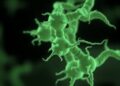
IMAGE

Credit: University of Colorado Cancer Center

EGFR is a common genetic target in lung cancer, but not all EGFR mutations are created equal. Patients with a type of EGFR anomaly called an "EGFR exon 20 insertion" often fail to respond to existing drugs targeting EGFR. Previous work shows this is because it simply takes a much higher concentration of anti-EGFR drugs to combat the exon 20 form of the mutation – and at the concentration needed to be effective, these drugs are too toxic to use in human patients.

A University of Colorado Cancer Center Study presented today at the AACR-NCI-EORTC International Conference on Molecular Targets 2017 proposes a unique way to reach the concentration of anti-EGFR drug needed to fight exon 20 insertions without harming healthy tissues: By pairing an anti-EGFR drug with a "tail" that only activates the drug when it is very near tumor cells, tarloxitinib brings the drug to tumors while keeping concentrations safe in surrounding tissues.

Tarloxitinib is one in a class of new medicines called "prodrugs" that are introduced into the body in an inactive form and then depend on changes within the body to activate their effects. In this case, the prodrug is composed of two pieces: A drug that attaches to and blocks EGFR receptor activity, and another piece that only activates the drug in the absence of oxygen. Because tumors grow so fast, they often outpace the development of blood vessels that deliver oxygen and so survive in low-oxygen conditions called "hypoxia". When tarloxitinib reaches a hypoxic tumor, the tail cleaves from the drug, activating the drug against EGFR receptors in the nearby tumor.

"The problem is that in order to treat patients with these mutations you would have to give existing drugs at levels that would be too toxic. With the prodrug, you can get those high doses but localized in the tumor," says Adriana Estrada, PhD, research instructor at CU School of Medicine and the paper's first author. Estrada worked in the lab of CU Cancer Center principal investigator Robert C. Doebele, MD, PhD.

One hurdle in testing tarloxitinib against lung cancer cells with EGFR exon 20 insertions was the fact that no patient-derived cell lines existed with this kind of mutation.

"We've known about the mutation from patient biopsies, but previous teams have studied exon 20 insertions by placing the mutation into cells or other artificial techniques. Our group was the first to isolate and maintain cell lines from patient samples that express exon 20 insertion," says Estrada.

In fact, the group isolated three cell lines, each with a slightly different form of EGFR exon 20 insertion, allowing the researchers to test tarloxitinib against a range of related alterations.

The group saw significant response in cells and when they tested the drug in mice, "the results are really promising," says Estrada.

About 15 percent of lung cancers are caused by EGFR mutation. About 5-10 percent of these EGFR cancers are the subtype that depends on exon 20 insertions. The group now hopes to use their promising results with cells and mice to lay the groundwork for clinical trials of tarloxitinib specifically targeting lung cancers with EGFR exon 20 insertions.

###

Media Contact

Garth Sundem
[email protected]
@CUAnschutz

http://www.ucdenver.edu

Original Source

http://www.coloradocancerblogs.org/tarloxitinib-puts-tumor-seeking-tail-anti-egfr-drug-precisely-target-lung-cancer/

Share12Tweet8Share2ShareShareShare2

Related Posts

Methylation puts parasites in motion

Methylation puts parasites in motion

August 31, 2026
Desiccation promotes DNA damage and rifampin resistance in Mycobacterium tuberculosis

Desiccation promotes DNA damage and rifampin resistance in Mycobacterium tuberculosis

August 31, 2026

Gastrointestinal Parasitism in Cattle and Water Buffaloes in Pakistan: Prevalence and Associated Risk Factors

August 31, 2026

Development of HPLC–PDA method for steviol glycosides analysis in food matrices

August 31, 2026
Please login to join discussion

POPULAR NEWS

  • β-Sitosterol from Ipomoea carnea Jacq. As a promising anti-inflammatory agent: Evidence from in silico modeling and in vitro validation

    29 shares
    Share 12 Tweet 7
  • Design, fabrication and characterization of a wearable Fiber Bragg grating sensor for cardiorespiratory monitoring using finger plethysmography

    29 shares
    Share 12 Tweet 7
  • KAIST opens the era of industrial-scale microbial foods, proposing growth strategies for the next-generation protein market

    29 shares
    Share 12 Tweet 7
  • Virologist awarded $2 million NIH grant to investigate how virus-infected cells live and die

    29 shares
    Share 12 Tweet 7

About

We bring you the latest biotechnology news from best research centers and universities around the world. Check our website.

Follow us

Recent News

β-Sitosterol from Ipomoea carnea Jacq. As a promising anti-inflammatory agent: Evidence from in silico modeling and in vitro validation

Design, fabrication and characterization of a wearable Fiber Bragg grating sensor for cardiorespiratory monitoring using finger plethysmography

KAIST opens the era of industrial-scale microbial foods, proposing growth strategies for the next-generation protein market

Subscribe to Blog via Email

Enter your email address to subscribe to this blog and receive notifications of new posts by email.

Join 85 other subscribers
  • Contact Us

Bioengineer.org © Copyright 2023 All Rights Reserved.

Welcome Back!

Login to your account below

Forgotten Password?

Retrieve your password

Please enter your username or email address to reset your password.

Log In
No Result
View All Result
  • Homepages
    • Home Page 1
    • Home Page 2
  • News
  • National
  • Business
  • Health
  • Lifestyle
  • Science

Bioengineer.org © Copyright 2023 All Rights Reserved.