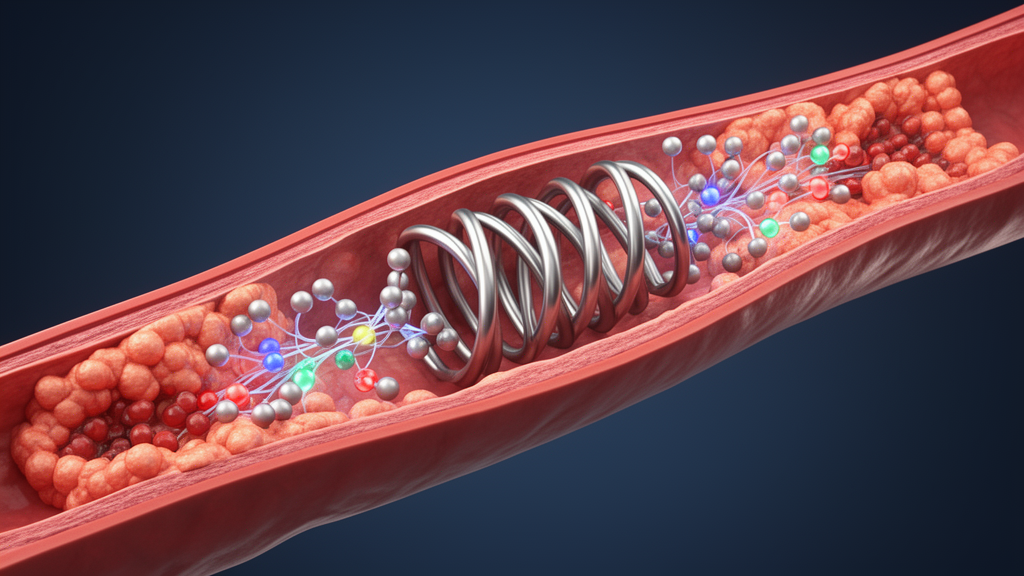
Coronary in-stent restenosis (ISR) persists as a critical limitation in the efficacy of percutaneous coronary intervention (PCI), even with the widespread adoption of drug-eluting stents (DES). This complex vascular complication is not a singular event but rather a heterogeneous pathological process driven by a confluence of biological and mechanical factors. Key drivers include neointimal hyperplasia, neoatherosclerosis, and mechanical issues such as stent underexpansion or fracture, which collectively contribute to the narrowing of the coronary artery within the stent itself. The traditional approach to managing ISR, which often relies heavily on anatomical assessment, is increasingly being superseded by a paradigm focused on mechanism-guided, individualized therapy.
The evolution of intravascular imaging has been pivotal in this shift. Techniques such as intravascular ultrasound (IVUS) and optical coherence tomography (OCT) now allow clinicians to move beyond simple anatomical visualization. These sophisticated imaging tools enable precise mechanism-guided lesion preparation and more informed device selection during intervention. By providing detailed cross-sectional views of the vessel, these modalities help practitioners understand the underlying structural reasons for restenosis, guiding their therapeutic decisions with greater precision than ever before.
Beyond structural assessment, recent research is profoundly improving our comprehension of the biological heterogeneity of ISR through advanced molecular techniques. Metabolomics, molecular imaging, and the analysis of circulating biomarkers are providing novel insights into the complex biological processes occurring within the vessel wall. This multidisciplinary approach is beginning to illuminate the systemic and cellular mechanisms that contribute to restenosis, moving the field toward a more nuanced understanding of disease progression.
Current clinical management strategies remain anchored in fundamental principles of adequate lesion preparation. The established principal treatment strategies involve the use of drug-coated balloons and the implantation of repeat drug-eluting stents when necessary. For lesions that present with severe calcification or significant resistance due to underexpansion, adjunctive techniques, such as intravascular lithotripsy, may be employed to facilitate successful intervention and optimize stent deployment.
However, the most cutting-edge research is pointing toward deeper, systemic biological influences in the development of ISR. Emerging evidence is implicating intricate metabolic pathways, specifically sphingolipid metabolism, as well as mitochondrial dysfunction within the affected tissues. Furthermore, the role of immune-inflammatory signaling and systemic metabolic modulation is being explored as critical components of the restenotic cascade, suggesting that ISR may be influenced by factors beyond the immediate coronary lesion.
These emerging findings represent a significant shift in the scientific understanding of cardiovascular disease. The implication is that ISR is not merely a localized mechanical failure or a simple proliferative response, but rather a complex interplay between mechanical stress, local cellular dysfunction, and systemic metabolic dysregulation. Validating the clinical relevance of these molecular and metabolic findings is the current focus of ongoing research efforts.
The trajectory of ISR management is therefore moving away from a purely anatomical focus—simply treating the visible narrowing—toward a mechanism-guided strategy. This involves integrating high-resolution imaging with molecular data to tailor treatment to the specific biological profile of the patient’s lesion.
Subject of Research: Advances in understanding and treating coronary in-stent restenosis through molecular and imaging techniques.
Article Title: Recent advances in coronary in-stent restenosis: a comprehensive narrative review
Article References: Du, M., & Hui, H. (2026). Recent advances in coronary in-stent restenosis: a comprehensive narrative review. Frontiers in Cardiovascular Medicine, 13, 2002465. https://doi.org/10.3389/fcvm.2026.2002465
Image Credits: AI Generated
DOI: 10.3389/fcvm.2026.2002465
Keywords: Coronary Artery Disease, In-Stent Restenosis, Drug-Eluting Stents, Intravascular Imaging, Metabolomics, Cardiovascular Medicine, PCI, Neointimal Hyperplasia, Recent, advances, coronary, in-stent
News Source: Ophelia Keating. (October 27, 2026). Targeting the Root Causes of Coronary Stent Restenosis: New Mechanism-Guided Approaches. Scienmag.