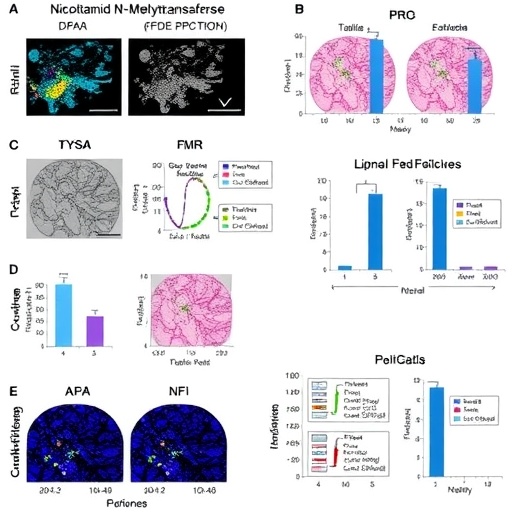
In the rapidly evolving landscape of oncology, the emergence of drug resistance remains a formidable obstacle, particularly in the treatment of advanced prostate cancer. A groundbreaking study has recently brought to light a promising new therapeutic target that could revolutionize the management of taxane-resistant castration-resistant prostate cancer (CRPC). Spearheaded by researchers B. Cevatemre, E. Karyemez, I. Bulut, and colleagues, their work, published in Cell Death Discovery (2026), presents a compelling case for targeting nicotinamide N-methyltransferase (NNMT) to overcome one of the most pressing challenges in prostate cancer therapy.
Castration-resistant prostate cancer represents a stage of the disease where tumors continue to progress despite androgen deprivation therapy, which is the standard initial treatment modality. Taxanes, a class of chemotherapeutic agents including drugs like docetaxel and cabazitaxel, have been critical in extending survival for patients with CRPC. However, resistance to these agents often develops, leading to relapse and poor clinical outcomes. Understanding the molecular underpinnings that drive this resistance is therefore vital in developing new therapeutic strategies.
NNMT, an enzyme long studied for its role in cellular metabolism, particularly in methylation processes involving nicotinamide, has recently attracted attention in oncology due to its overexpression in various cancers. This study rigorously investigates how NNMT plays a critical role in modulating metabolic pathways that contribute to the development of taxane resistance in CRPC cells. By elucidating these mechanisms, the researchers offer a novel angle to target drug-resistant prostate tumors.
Using advanced biochemical assays and in vitro models, the research team demonstrated that NNMT levels were significantly elevated in taxane-resistant CRPC cell lines compared to their sensitive counterparts. This upregulation of NNMT was shown to reprogram cellular metabolism, leading to enhanced survival pathways and reduced apoptotic responses, which collectively underpin the cells’ ability to evade taxane-induced cytotoxicity.
Further molecular analyses revealed that NNMT activity leads to a shift in the balance of NAD+ metabolism. Since NAD+ functions as a critical coenzyme in cellular redox reactions and DNA repair, its altered homeostasis through NNMT-mediated methylation reactions profoundly impacts the cancer cells’ ability to counteract chemotherapy-induced stress. This metabolic remodeling facilitates a more robust defense mechanism, enabling tumor cells to survive and proliferate despite drug exposure.
Crucially, the study employed gene silencing techniques to knock down NNMT expression in resistant CRPC model systems. The results were striking: suppression of NNMT restored sensitivity to taxane chemotherapy, resulting in a marked increase in apoptosis and inhibition of tumor cell proliferation. This finding not only validates NNMT as a driver of resistance but also underscores its potential as a therapeutic target.
Importantly, the research team pursued in vivo studies using xenograft mouse models implanted with taxane-resistant prostate cancer tissues. Treatment regimens incorporating NNMT inhibitors alongside standard taxane chemotherapy yielded significant tumor regression compared to chemotherapy alone. This synergy points to a promising therapeutic avenue that could translate into improved clinical outcomes for patients with resistant disease.
The authors of the study also delved into the potential molecular partners interacting with NNMT, discovering complex networks involving key oncogenic signaling pathways, including PI3K/Akt and MAPK cascades. These pathways are well-recognized for their role in cancer survival and drug resistance, suggesting that NNMT may exert its pro-survival effects via modulation of these crucial intracellular circuits.
One compelling aspect of this research lies in the translational potential of NNMT inhibitors. The development of small molecule inhibitors targeting NNMT has been relatively unexplored until now, but the identification of NNMT as a pivotal player in taxane resistance could catalyze new drug discovery efforts. Such targeted therapies may complement existing treatment protocols, offering hope for patients who have exhausted conventional options.
The study also poses profound implications for diagnostic approaches. Elevated NNMT expression or activity could serve as a biomarker for anticipating taxane resistance, allowing oncologists to tailor therapeutic strategies more effectively and avoid futile chemotherapy cycles. The possibility of integrating NNMT monitoring in clinical practice adds a new dimension to personalized medicine in prostate cancer care.
Furthermore, this research highlights the intricate relationship between cancer metabolism and epigenetic regulation. NNMT’s enzymatic action influences methylation patterns across various molecules, hinting at widespread effects that might impact gene expression profiles linked to resistance phenotypes. Unraveling this epigenetic crosstalk could unveil additional therapeutic targets and enhance our understanding of cancer biology.
While these findings pave the way for innovative interventions, the authors caution that further studies are needed to delineate NNMT’s complex role in cancer metabolism and to develop clinically viable inhibitors. The challenges ahead include optimizing drug specificity, minimizing off-target effects, and conducting rigorous clinical trials to assess safety and efficacy in human subjects.
Concluding with a broader perspective, this work encapsulates the power of metabolic research in addressing drug resistance, a hurdle that continues to hinder the success of cancer therapies globally. By shining a spotlight on NNMT, Cevatemre and colleagues not only contribute to the scientific community’s understanding of CRPC pathophysiology but also offer a beacon of hope to patients confronting resistant forms of this formidable disease.
As the oncology field enthusiastically awaits subsequent developments inspired by this research, the identification of NNMT as a therapeutic target holds promise to redefine treatment paradigms for taxane-resistant castration-resistant prostate cancer, potentially ushering in a new era of precision medicine and improved survival outcomes.
Subject of Research: Nicotinamide N-methyltransferase as a therapeutic target in overcoming taxane resistance in castration-resistant prostate cancer.
Article Title: Nicotinamide N-methyltransferase as a therapeutic target in taxane-resistant castration-resistant prostate cancer.
Article References:
Cevatemre, B., Karyemez, E., Bulut, I. et al. Nicotinamide N-methyltransferase as a therapeutic target in taxane-resistant castration-resistant prostate cancer. Cell Death Discov. (2026). https://doi.org/10.1038/s41420-026-03110-1
Image Credits: AI Generated
DOI: https://doi.org/10.1038/s41420-026-03110-1
Tags: advanced prostate cancer treatment strategiescastration-resistant prostate cancer therapydocetaxel and cabazitaxel resistanceepigenetic regulation in prostate cancermetabolic enzymes as cancer drug targetsmolecular targets in CRPCnicotinamide N-methyltransferase inhibitionNNMT role in cancer metabolismnovel therapeutic targets in oncologyovercoming chemotherapy resistancetaxane chemotherapy resistance mechanismstaxane-resistant prostate cancer