• HOME
  • NEWS
  • EXPLORE
    • CAREER
      • Companies
      • Jobs
    • EVENTS
    • iGEM
      • News
      • Team
    • PHOTOS
    • VIDEO
    • WIKI
  • BLOG
  • COMMUNITY
    • FACEBOOK
    • INSTAGRAM
    • TWITTER
Sunday, May 17, 2026
BIOENGINEER.ORG
No Result
View All Result
  • Login
  • HOME
  • NEWS
  • EXPLORE
    • CAREER
      • Companies
      • Jobs
        • Lecturer
        • PhD Studentship
        • Postdoc
        • Research Assistant
    • EVENTS
    • iGEM
      • News
      • Team
    • PHOTOS
    • VIDEO
    • WIKI
  • BLOG
  • COMMUNITY
    • FACEBOOK
    • INSTAGRAM
    • TWITTER
  • HOME
  • NEWS
  • EXPLORE
    • CAREER
      • Companies
      • Jobs
        • Lecturer
        • PhD Studentship
        • Postdoc
        • Research Assistant
    • EVENTS
    • iGEM
      • News
      • Team
    • PHOTOS
    • VIDEO
    • WIKI
  • BLOG
  • COMMUNITY
    • FACEBOOK
    • INSTAGRAM
    • TWITTER
No Result
View All Result
Bioengineer.org
No Result
View All Result
Home NEWS Science News Biology

Targeted orphaned domain may lead to drug therapies

Bioengineer by Bioengineer
February 11, 2018
in Biology
Reading Time: 2 mins read
0
Share on FacebookShare on TwitterShare on LinkedinShare on RedditShare on Telegram
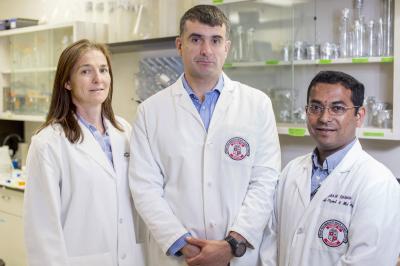
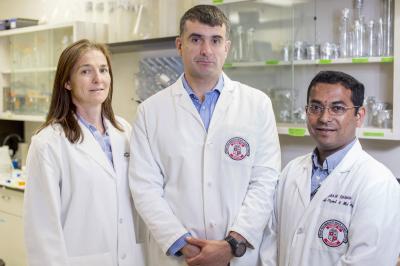
IMAGE

Credit: Credit TTUHSC

"Pentameric quaternary structure of the intracellular domain of serotonin type 3A receptors," was published in the April issue of Scientific Reports. Along with her research team, Akash Pandhare, Ph.D., and Petar N. Grozdanov, Ph.D., Jansen's research demonstrated for the first time that the serotonin type 3A (5-HT3A) ICD assembles into stable pentamers in solution in the absence of the other two domains, thought to be the drivers for oligomerization.

"We are especially interested in the superfamily of pentameric ligand-gated ion channels (pLGICs) that includes the nAChR, GABA, 5-HT3, and glycine families," Jansen said. "The pLGICs function mainly as neurotransmitter receptors, transforming the chemical signal contained in the neurotransmitter into an electrical signal."

The current therapies make it impossible to precisely hit one target because there are more than 40 different subunits in humans. All the drugs currently in clinical use, target the extracellular or transmembrane domains, which are structurally very similar across different subunits.

Jansen's lab focused on the intercellular domain (ICD), which is diverse. By targeting this domain, the research may lead to new drug therapies without undesired effects. Years ago, the ICD was considered extremely disordered. This research is the first to show the ordered assembly of five ICDs.

"This finding was very unexpected" Jansen said. "Compare this to spaghetti. If you put spaghetti into a boiling pot, you never see groups of five and only groups of five. Many labs research pLGICs, but often remove the ICDs for structural studies because IDCs were believed to be disordered just like spaghettis. Yet this research study found this domain makes very stable arrangements. This is the first indication that it is structurally important, and the first stepping stone for future drug targets."

"Our results suggest the ICD constitutes an oligomerization domain," Jansen said. "This novel role significantly adds to its known contributions in receptor trafficking, targeting and functional fine-tuning. The innate diversity of the ICDs with sizes ranging from 50 to 280 amino acids indicates new methodologies need to be developed to determine the structures of these domains. The use of soluble ICD proteins that we report in the present study constitutes a useful approach to address this gap."

Now with the intracellular domain alone, researchers can develop screening methods to identify small molecules that bind to this domain, as well as study interactions with cytosolic proteins. This domain may have the key to treating diseases like epilepsy, anxiety, Alzheimer's disease and several inflammatory processes.

###

Media Contact

Suzanna Cisneros
[email protected]
806-743-7605
@ttuhsc

http://www.ttuhsc.edu

Share12Tweet7Share2ShareShareShare1

Related Posts

Uncovering C. elegans Immunity via Genetic Screens — Biology

Uncovering C. elegans Immunity via Genetic Screens

May 16, 2026
Single mother must adapt swiftly — the survival of her colony depends on it — Biology

Single mother must adapt swiftly — the survival of her colony depends on it

May 15, 2026

Why Are Nearly Everyone Right-Handed? It Might Be Linked to How We Learned to Walk

May 15, 2026

Excessive Neuronal Activity Initiates Severe Autoimmune Brain Disorder

May 15, 2026
Please login to join discussion

POPULAR NEWS

  • Research Indicates Potential Connection Between Prenatal Medication Exposure and Elevated Autism Risk

    844 shares
    Share 338 Tweet 211
  • New Study Reveals Plants Can Detect the Sound of Rain

    730 shares
    Share 291 Tweet 182
  • Salmonella Haem Blocks Macrophages, Boosts Infection

    62 shares
    Share 25 Tweet 16
  • Breastmilk Balances E. coli and Beneficial Bacteria in Infant Gut Microbiomes

    58 shares
    Share 23 Tweet 15

About

We bring you the latest biotechnology news from best research centers and universities around the world. Check our website.

Follow us

Recent News

Flexible Framework Optimizes Data Center Site Planning

Short-Term Home Cognitive & Physical Training Tested in Seniors

Stress Evolution and Time Control in Retreat Roadways

Subscribe to Blog via Email

Success! An email was just sent to confirm your subscription. Please find the email now and click 'Confirm' to start subscribing.

Join 82 other subscribers
  • Contact Us

Bioengineer.org © Copyright 2023 All Rights Reserved.

Welcome Back!

Login to your account below

Forgotten Password?

Retrieve your password

Please enter your username or email address to reset your password.

Log In
No Result
View All Result
  • Homepages
    • Home Page 1
    • Home Page 2
  • News
  • National
  • Business
  • Health
  • Lifestyle
  • Science

Bioengineer.org © Copyright 2023 All Rights Reserved.