In recent strides toward unraveling the complexities of pancreatic cancer, a team of researchers at Cold Spring Harbor Laboratory (CSHL) has illuminated a previously underappreciated facet of this lethal disease: the active role of the nervous system during its earliest stages. Pancreatic cancer, notorious not only for its dense nerve infiltration but also for its enigmatic resistance to conventional therapies, demands innovative approaches to decipher and disrupt its progression. This groundbreaking research reveals that nerve fibers and tumor-supporting fibroblasts, known as myofibroblastic cancer-associated fibroblasts (myCAFs), engage in a dynamic and self-amplifying crosstalk that primes the pancreatic tissue for malignancy even before overt tumor formation.
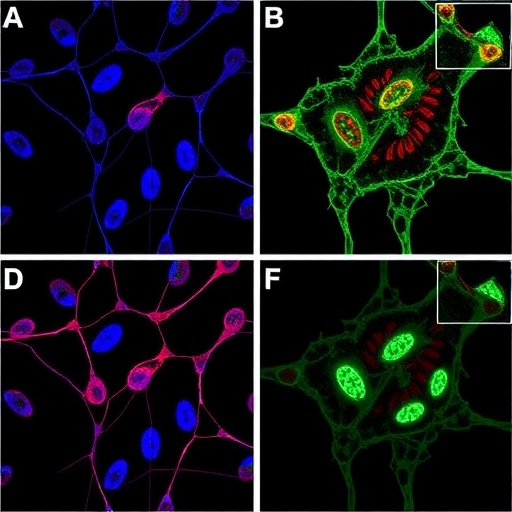
Central to this discovery is the application of advanced three-dimensional (3D) imaging techniques, notably whole-mount immunofluorescence, which enabled the visualization of intricate cellular interplay within pancreatic lesions. Traditional two-dimensional (2D) microscopy has long confined scientists to fragmented representations of nerve fibers as isolated puncta, obscuring the true extent of their infiltration. The leap to 3D imaging unveiled a complex network of sympathetic nerves weaving through and around myCAFs and neoplastic structures, presenting an awe-inspiring panorama that redefines our understanding of neuro-stromal architecture in pancreatic tissue.
The interplay between myCAFs and nerves is not merely structural but profoundly functional. Fibroblasts within the tumor microenvironment are not passive bystanders; instead, they secrete signaling molecules that actively attract sympathetic nerve fibers, which are known to mediate the body’s fight-or-flight responses. These nerve fibers, in turn, release norepinephrine, a key neurotransmitter that binds adrenergic receptors on the myCAFs. This binding elicits a calcium influx within fibroblasts, a critical intracellular signal that potentiates their activation and perpetuates tumor-promoting functions.
This neuro-fibroblast interaction erects a pernicious feed-forward loop. Activated myCAFs enhance their signaling to recruit further nerve fibers, while the increased nervous presence escalates norepinephrine levels, thereby accelerating fibroblast activation. This cycle creates a pro-inflammatory, pro-tumorigenic niche, fostering a microenvironment that facilitates the transition from pancreatic inflammation to outright cancer. Such insights provide a compelling shift from viewing innervation as a late-stage tumor invasion phenomenon to understanding it as a foundational element in cancer genesis and progression.
The ramifications of these findings extend into therapeutic territory. Using murine models, the research team demonstrated that pharmacological disruption of the sympathetic nervous system via targeted neurotoxins markedly attenuated fibroblast activation and resulted in an almost 50% decrement in tumor growth. This pivotal experiment underscores the potential impact of therapeutically interrupting neural inputs to the tumor microenvironment as a strategy to hinder pancreatic cancer development at an incipient stage.
Moreover, the study implicates clinically approved drugs such as doxazosin—an adrenergic receptor antagonist traditionally used for hypertension and benign prostatic hyperplasia—as promising adjuvants in pancreatic cancer therapy. By blocking norepinephrine signaling, these agents could thwart the harmful neuro-fibroblast loop, thereby enhancing the efficacy of established chemotherapy and immunotherapy regimens. This repurposing approach could accelerate the translation of laboratory discoveries into clinical practice, bypassing many hurdles associated with entirely new drug development.
The research’s emphasis on the sympathetic nervous system—a critical player in stress and homeostasis—further raises intriguing questions regarding the systemic influences on pancreatic pathology. The fight-or-flight mediated release of neurotransmitters, long associated with acute physiological responses, appears to have a sinister counterpart in oncology, where its aberrant activation may precipitate oncogenic remodeling in pancreatic stroma. This paradigm shift opens avenues for exploring how lifestyle factors, stress, and neuroendocrine regulation intersect with tumor biology.
Importantly, the team’s dissection of fibroblast-neuron communication enhances the broader understanding of tumor microenvironment plasticity. MyCAFs, characterized by their myofibroblastic phenotype, have emerged increasingly as pivotal architects within the stromal compartment, sculpting the extracellular matrix, modulating immune cell infiltration, and now, as demonstrated, orchestrating neural infiltration. This expanded functional repertoire underscores the necessity of targeting stromal components alongside cancer cells for comprehensive therapeutic attack.
The study’s reliance on sophisticated imaging and molecular techniques paves the way for future investigations into the spatial and temporal dynamics of tumor innervation. By resolving the 3D architecture and signaling cascades in situ, researchers can better comprehend how cellular heterogeneity and microenvironmental cues synchronize to drive pancreatic carcinogenesis. This holistic perspective is crucial for the rational design of interventions that disrupt pathological cell-cell communication networks.
Looking ahead, the research team envisions an intensive effort to delineate the molecular mediators bridging myCAFs and nerves, aiming to identify druggable targets that can sever their nefarious dialogue. Supported by philanthropic organizations such as the Lustgarten Foundation and the Pancreatic Cancer Action Network, these endeavors seek to translate molecular insights into tangible clinical benefits, potentially improving the grim prognosis associated with pancreatic cancer.
The revelation that neuroplasticity—in this context, the nerve remodeling induced by myofibroblasts—serves as a catalyst for pancreatic inflammation and carcinogenesis breaks new ground in cancer biology. It highlights the interdependence of diverse cell types within the tumor microenvironment and the critical impact of nervous system components in disease progression, heralding a holistic approach to cancer treatment that accounts for neural contributions.
In sum, this research from CSHL reframes pancreatic cancer as not solely a cellular aberration confined to epithelial cells but as an orchestrated pathological process involving intricate neuro-stromal crosstalk. The identification of this neuro-fibroblast cycle as a driver of tumor landscape morphogenesis opens a promising frontier for interventions designed to dismantle the supportive niche tumors exploit for survival and expansion.
Subject of Research: Pancreatic cancer development and the role of sympathetic nervous system and myofibroblastic cancer-associated fibroblasts (myCAFs) in tumor microenvironment remodeling.
Article Title: Myofibroblasts induce neuroplasticity to promote pancreatic inflammation and cancer progression
News Publication Date: 9-Feb-2026
Web References: http://dx.doi.org/10.1158/2159-8290.CD-25-1337
Image Credits: Tuveson lab/Cold Spring Harbor Laboratory
Keywords: Fibroblasts, Pancreatic cancer, Adrenergic receptor signaling, FGF pathway, Axons, Paracrine signaling
Tags: advanced 3D imaging techniquescancer treatment innovationscrosstalk between nerves and tumorsdense nerve infiltration in tumorsearly-stage pancreatic malignancymyofibroblastic cancer-associated fibroblastsnerve connections in cancerneuro-stromal architecturepancreatic cancer researchpancreatic cancer resistance mechanismstumor microenvironment interactionswhole-mount immunofluorescence applications