
Tumor Macrophage Architecture and iNOS Intensity Predict Non-Small Cell Lung Cancer Survival
A binational spatial immunophenotyping study of 581 non-small cell lung cancer patients demonstrates that macrophage proximity to cancer cells and ...
A binational spatial immunophenotyping study of 581 non-small cell lung cancer patients demonstrates that macrophage proximity to cancer cells and ...

In an institutional lung adenocarcinoma cohort, higher tissue CXCL12 expression was associated with increased T-bet abundance and longer overall survival.

A clinical trial evaluating a triple combination therapy in EGFR-mutant lung cancer found that TP53 and RB1 mutations drive treatment ...

In targeted sequencing of non–small cell lung cancer, prognostic gene discovery increases linearly with cohort size before reaching a plateau ...
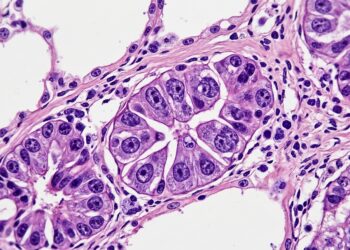
A preclinical evaluation reveals that PET/CT imaging with gallium-68 labeled EMP-100 non-invasively quantifies cell-surface c-Met receptor expression across diverse non-small ...

A narrative review and multi-dataset benchmark shows deep learning algorithms outperform classical thresholding methods in segmenting cell nuclei across major ...

A clinical case report and literature review found that the eruptive skin condition known as the Leser–Trélat sign can develop ...

Evaluating lung adenocarcinoma whole-slide images revealed that mild JPEG2000 compression reduces storage requirements by approximately 90% while maintaining deep learning ...

Downregulation of the transcription factor RFX2 promotes immune escape and tumor progression in lung adenocarcinoma by suppressing RASSF1 and reducing ...

Pharmacological activation of STING signaling remodels myeloid-derived suppressor cells and suppresses tumor progression in lung adenocarcinoma models.

Researchers discover that transcription factor GATA1 transactivates HSD17B6 to overcome cisplatin chemoresistance in lung adenocarcinoma cells by promoting DNA damage.
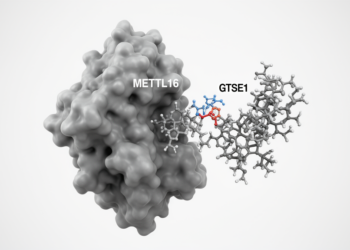
A new study reveals that METTL16 accelerates lung adenocarcinoma progression by modifying GTSE1 via m6A, thereby regulating the p53 pathway ...

A new deep learning framework uses virtual imaging to improve the objective grading and prognostic stratification of lung adenocarcinoma from ...

A retrospective analysis of three randomized trials suggests that Y chromosome loss is associated with improved survival in male lung ...

Researchers conducted an in vivo CRISPR screen to identify metabolic dependencies and pathways tied to anti-PD1 resistance in oncogenic Kras-driven ...

Researchers developed a seven-gene prognostic model linked to oxeiptosis in lung adenocarcinoma and demonstrated experimentally that silencing PSMD2 impairs tumor ...

A retrospective study of seventy-two lung adenocarcinoma patients indicates that quantitative spectral parameters from photon-counting computed tomography can noninvasively assist ...

A retrospective study developed an XGBoost model using routine laboratory tests to predict recurrence risk in lung adenocarcinoma patients treated ...

A computational twelve-gene zinc finger signature stratifies lung adenocarcinoma survival and correlates with distinct immune microenvironment profiles.
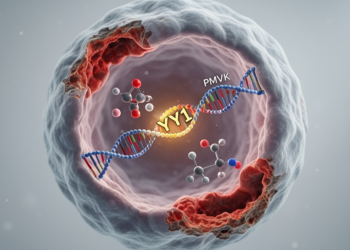
A study reveals that the transcription factor YY1 transcriptionally activates PMVK to suppress ferroptosis and promote radiotherapy resistance in lung ...