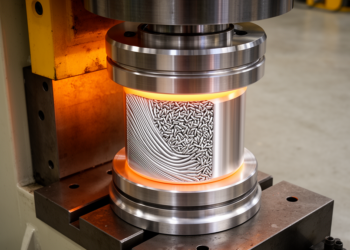
Controlled Forging Deformation Optimizes Aluminum Alloy Strength and Corrosion Resistance
Researchers found that applying 40 percent forging deformation to an Al–Zn–Mg–Cu alloy optimizes its mechanical strength, grain structure, and corrosion ...
Researchers found that applying 40 percent forging deformation to an Al–Zn–Mg–Cu alloy optimizes its mechanical strength, grain structure, and corrosion ...

MIT researchers have developed a method to measure and steer the internal physical reasoning of language models by observing how ...

An OpenCV workflow measured Ti-6Al-4V fusion-zone grain sizes under four welding conditions, showing smaller grains with pulsing and ultrasonic vibration ...

A massive genomic study of 904 sorghum varieties reveals that grain filling duration and kernel weight share overlapping genetic controls, ...

Researchers have combined fifteen years of ASCAT satellite radar data with firn and radiative transfer models to infer effective grain ...

Researchers have used hot rolling and cyclic heat treatment to push a low-cost copper-aluminum-manganese shape memory alloy to record superelastic ...