
Geopolymer Concrete Cuts Carbon Emissions up to 80 Percent in Study
A technical review reveals that geopolymer concrete derived from activated aluminosilicate by-products can reduce carbon emissions by up to 80 ...
A technical review reveals that geopolymer concrete derived from activated aluminosilicate by-products can reduce carbon emissions by up to 80 ...

Pre-growing bacterial biofilms directly on aggregate particles significantly boosts mineral precipitation, refines internal pore architecture, and multiplies compressive strength in ...
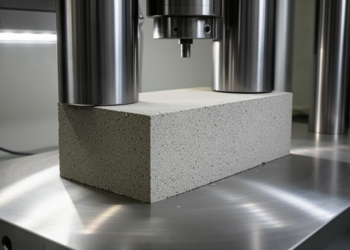
Researchers synthesized sustainable geopolymer mortar from industrial sanitary ceramic dust, demonstrating durable acid resistance and compressive strengths reaching 53.16 megapascals ...

A comparative analysis reveals that while 16th-century bricks from Lahore Fort share chemical similarities with modern bricks, their physical and ...
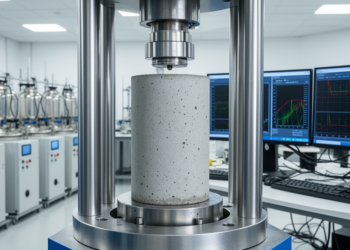
Researchers developed a hybrid machine-learning maturity model that accurately predicts the compressive strength development of self-compacting concretes incorporating supplementary cementitious ...
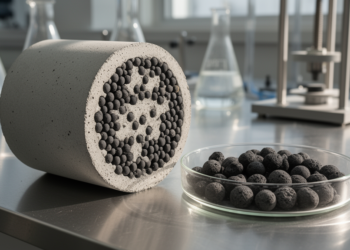
Researchers evaluated lightweight aggregate concrete produced from woody biomass ash and palm oil fuel ash using cold-bonded cementing and alkali-activation ...
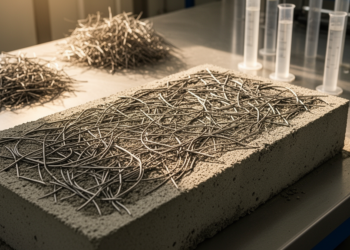
A comprehensive life cycle assessment of 38 concrete formulations shows that recycled tyre steel fibres provide compressive strengths comparable to ...
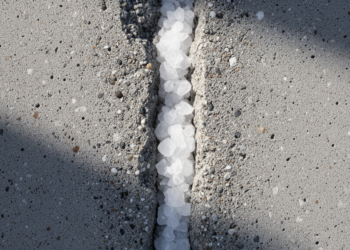
Researchers optimized a ternary shotcrete mix balancing workability, compressive strength, and autonomous crack healing under laboratory water-immersion conditions.
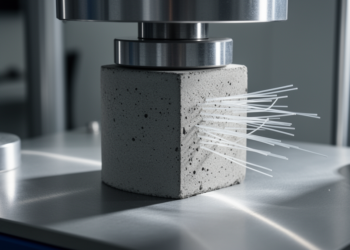
Researchers found that embedded polymer optical fibers can alter mortar compressive strength beyond simple geometric void effects.
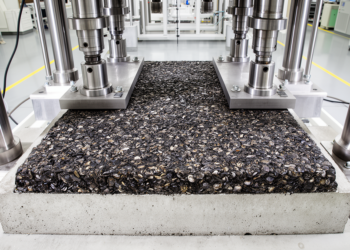
Experimental testing demonstrates that light-duty precast manhole cover slabs cast with treated coconut shell coarse aggregate and blast furnace slag ...
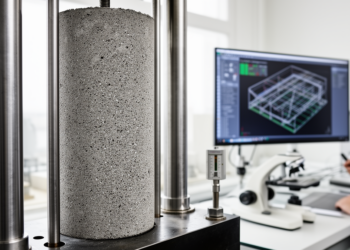
A hybrid deep learning model incorporating cement hydration kinetics accurately predicts the time-dependent mechanical strength and durability of concrete containing ...

A study of clayey sands from northern Cameroon demonstrates that calcined clay substitutions accelerate cement setting times while decreasing twenty-eight-day ...
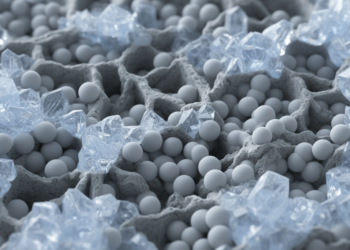
Incorporating nano-silica up to 0.8 percent into cement mortars refines internal pore architectures, alters acoustic fracture modes, and significantly increases ...
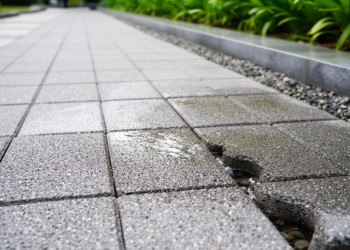
Researchers experimentally evaluated the mechanical strength, permeability, and carbon dioxide emission intensity of eco-friendly pervious pavement blocks containing high volumes ...
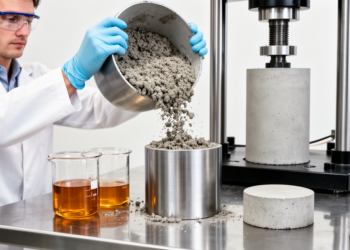
A new study shows that combining polycarboxylate ether with specific retarders enhances the fluidity and strength of gold tailings-cement grouts ...

A new time-dependent predictive model reveals how harsh environmental conditions accelerate early-age concrete shrinkage before converging with standard laboratory benchmarks, ...
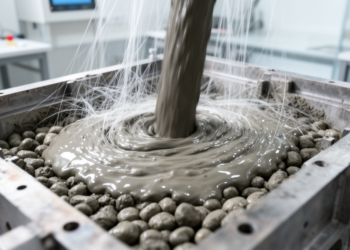
Researchers found that incorporating nylon fibers at dosages up to 0.25 percent balances fresh workability and 28-day mechanical strength in ...

A study of polypropylene-fiber-reinforced joint-filling mortar demonstrated that adding a defoamer reduced shrinkage and water absorption but accelerated freeze–thaw degradation ...
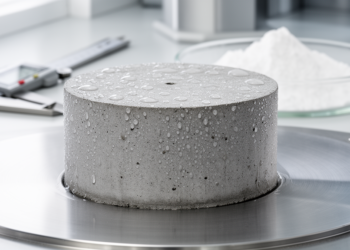
Incorporating approximately three percent nano-sized polyethylene terephthalate powder into concrete improves mechanical strength and reduces water absorption, researchers report.
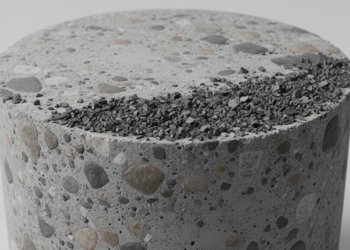
A new study shows that replacing 10% of cement with bio-medical waste ash can significantly improve the strength and durability ...