Johns Hopkins-led protein-misfolding research protocol receives up to $52.1 million
A Johns Hopkins Medicine-led protocol will use up to $52.1 million in ARPA-H funding to study protein misfolding and develop ...
A Johns Hopkins Medicine-led protocol will use up to $52.1 million in ARPA-H funding to study protein misfolding and develop ...
A new study reveals that impaired proteasome function, driven by SUMOylation, may underlie the toxic accumulation of alpha-synuclein in Parkinson's ...
A whole-transcriptome study of five brain regions from verified Alzheimer's and Lewy body dementia donors reveals a shared molecular signature ...
A new MRI study finds that impaired glymphatic clearance, measured by the ALPS index, independently predicts the severity of drooling ...
A new perspective in npj Parkinson's Disease proposes a six-dimensional MRI-based framework for capturing the biological heterogeneity of Parkinson's disease ...
New research shows that the age-related decline of the mitochondrial protein CHCHD2 disrupts the mitochondria-lysosome axis and drives proteostatic collapse ...
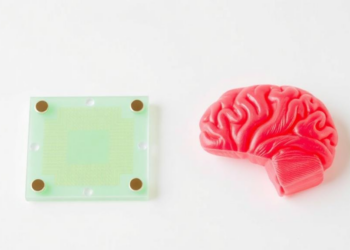
Researchers in New Delhi have developed a disposable paper-based electrochemical sensor that simultaneously detects Alzheimer's and Parkinson's disease biomarkers with ...
University of Oxford researchers have discovered that a specialised population of human microglia protects dopamine neurons in Parkinson's disease by ...
A spatial multi-omics study in Nature Communications identifies disease-associated oligodendrocytes whose interleukin 33–ST2 signaling influences alpha-synuclein burden and motor symptoms ...
A new resting-state fMRI study shows that Parkinson's disease-related brain network patterns can be detected in genetically at-risk people before ...
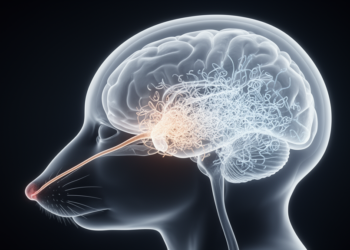
Researchers have developed a chronic intranasal rotenone mouse model that reproduces the brain-first, olfactory-to-midbrain spread of alpha-synuclein pathology characteristic of ...
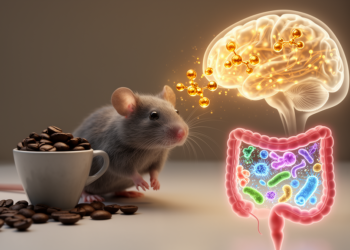
A new preclinical study shows that trigonelline, a coffee-derived alkaloid, reduces alpha-synuclein pathology and neuroinflammation in Parkinson's model mice while ...
A new study shows that the antioxidant protein thioredoxin-1 regulates the expansion of oligodendrocyte lineage cells and the accumulation of ...
A new review in Acta Neuropathologica chronicles how Byron Caughey's development of the RT-QuIC assay revolutionized prion detection and seeded ...

Researchers have developed an electroporation-based NMR method that delivers labeled proteins into intact mitochondria, enabling atomic-resolution observation of alpha-synuclein membrane ...
A sweeping review of human neuropathological evidence shows that misfolded SOD1, long tied to familial ALS, coexists with TDP-43, tau, ...
A new review argues that chaperone-mediated autophagy, the cell's most selective protein degradation pathway, acts as a master regulator of ...
A human-specific GLUD2 gene variant worsens Parkinson's disease pathology in mice by driving complement C3 signaling from astrocytes to microglia, ...
A new study in BMC Medicine reports that intranasally delivered recombinant BMP2/6 proteins delayed dopaminergic neuron degeneration and improved motor ...
In a groundbreaking study published in npj Parkinson’s Disease, researchers have unveiled the intricate role of synphilin-1 in modulating the ...