• HOME
  • NEWS
  • EXPLORE
    • CAREER
      • Companies
      • Jobs
    • EVENTS
    • iGEM
      • News
      • Team
    • PHOTOS
    • VIDEO
    • WIKI
  • BLOG
  • COMMUNITY
    • FACEBOOK
    • INSTAGRAM
    • TWITTER
Monday, May 18, 2026
BIOENGINEER.ORG
No Result
View All Result
  • Login
  • HOME
  • NEWS
  • EXPLORE
    • CAREER
      • Companies
      • Jobs
        • Lecturer
        • PhD Studentship
        • Postdoc
        • Research Assistant
    • EVENTS
    • iGEM
      • News
      • Team
    • PHOTOS
    • VIDEO
    • WIKI
  • BLOG
  • COMMUNITY
    • FACEBOOK
    • INSTAGRAM
    • TWITTER
  • HOME
  • NEWS
  • EXPLORE
    • CAREER
      • Companies
      • Jobs
        • Lecturer
        • PhD Studentship
        • Postdoc
        • Research Assistant
    • EVENTS
    • iGEM
      • News
      • Team
    • PHOTOS
    • VIDEO
    • WIKI
  • BLOG
  • COMMUNITY
    • FACEBOOK
    • INSTAGRAM
    • TWITTER
No Result
View All Result
Bioengineer.org
No Result
View All Result
Home NEWS Science News Health

Tackling cancer at ground zero with designer molecules

Bioengineer by Bioengineer
July 17, 2018
in Health
Reading Time: 2 mins read
0
Share on FacebookShare on TwitterShare on LinkedinShare on RedditShare on Telegram
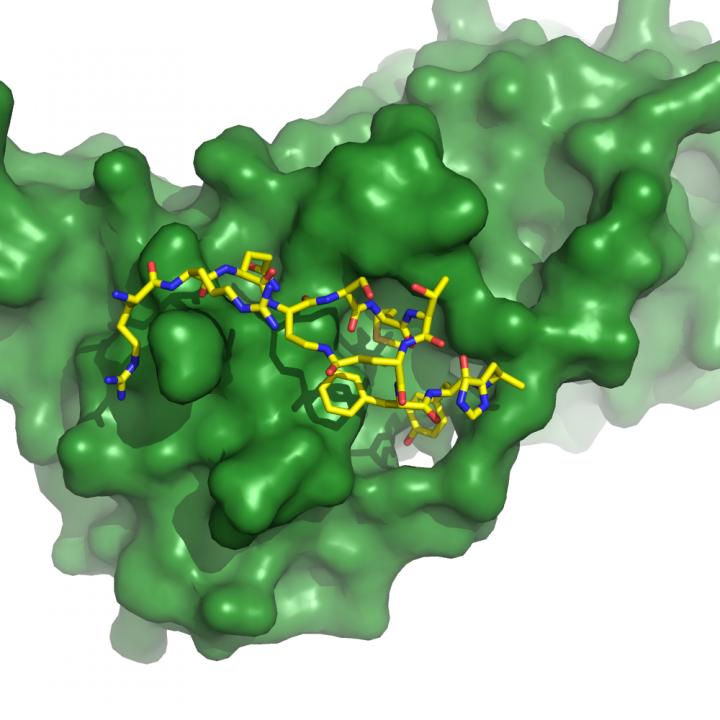
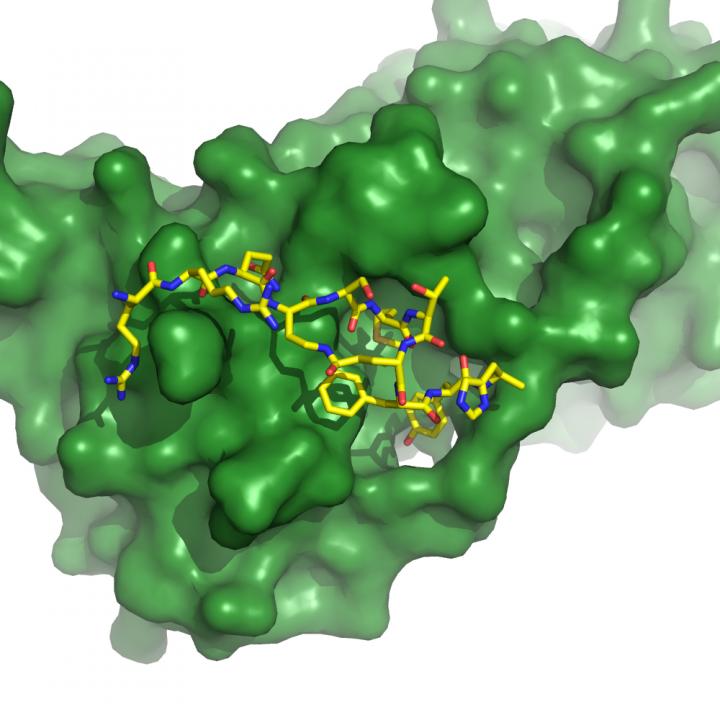
IMAGE

Credit: University of Adelaide

A new molecule designed by University of Adelaide researchers shows great promise for future treatment of many cancers.

The new molecule successfully targets a protein that plays a major role in the growth of most cancers. This protein target is called proliferating cell nuclear antigen (PCNA), otherwise known as the human sliding clamp.

"PCNA is required for DNA replication and is therefore essential for rapidly dividing cancer cells," says project leader Dr John Bruning, Senior Research Fellow at the University's Institute for Photonics and Advanced Sensing (IPAS).

"PCNA holds the machinery that copies DNA. The DNA slides through the centre of this donut-shaped protein where it is replicated.

"If we can inhibit the action of this protein, the cells can't make DNA, so they can't divide. This is really tackling cancer at ground zero. It's stopping cell division and therefore tackling cancer at its most fundamental level.

"We also know that PCNA is 'overexpressed' – or makes too many copies – in 90% of all cancers. That means it is a potential target for inhibiting the growth of multiple cancers, not just a select few.

"And importantly, this protein seldom mutates which means that it is less likely to develop resistance against a drug inhibitor."

The research, in collaboration with the University of Wollongong, has been published in Chemistry, A European Journal.

The multi-disciplinary team at IPAS designed a molecule that can interact with PCNA, offering a promising new strategy for the design of a PCNA inhibiting anti?cancer treatment.

"In this study, we have taken a protein fragment that naturally interacts with PCNA and transformed it using smart chemistry into a drug-like molecule," says lead author Dr Kate Wegener, Ramsay Postdoctoral Research Fellow in the University of Adelaide's School of Biological Sciences.

"We've changed its chemistry to protect it from degrading like the natural protein, and so that it works better."

The new molecule shows increased potency over other PCNA inhibitors, and is likely to show less side-effects.

"Because of the special approach we have used in turning a natural protein into a drug-like molecule, it fixes to PCNA more readily and its action is specific to this protein," says Dr Bruning.

"This is a first. It's the first in this type of inhibitor and it will pave the way for a new class of drugs inhibiting the proliferation of cancerous cells."

###

Media Contact:

Dr John Bruning, Senior Research Fellow, Institute for Photonics and Advanced Sensing, University of Adelaide. Phone: +61 8 8313 5218, Mobile: +61 (0)424 446 070, [email protected]

Robyn Mills, Media Officer, Phone: +61 (0)8 8313 6341, Mobile: +61 (0)410 689 084, [email protected]

Media Contact

Dr John Bruning
[email protected]
61-042-444-6070
@UniofAdelaide

http://www.adelaide.edu.au

Related Journal Article

http://dx.doi.org/10.1002/chem.201801734

Share12Tweet8Share2ShareShareShare2

Related Posts

Durvalumab and HAIC-FOLFOX Advance Liver Cancer Treatment

May 18, 2026

Social Exclusion in Midlife Caregivers Explored Through Photos

May 18, 2026

Unraveling Non-Ischaemic Dilated Cardiomyopathy Trends

May 18, 2026

New Study Reveals Potential Misinterpretations in Alzheimer’s Drug Effectiveness Analysis

May 18, 2026
Please login to join discussion

POPULAR NEWS

  • Research Indicates Potential Connection Between Prenatal Medication Exposure and Elevated Autism Risk

    845 shares
    Share 338 Tweet 211
  • New Study Reveals Plants Can Detect the Sound of Rain

    731 shares
    Share 292 Tweet 182
  • Salmonella Haem Blocks Macrophages, Boosts Infection

    62 shares
    Share 25 Tweet 16
  • Breastmilk Balances E. coli and Beneficial Bacteria in Infant Gut Microbiomes

    58 shares
    Share 23 Tweet 15

About

We bring you the latest biotechnology news from best research centers and universities around the world. Check our website.

Follow us

Recent News

Durvalumab and HAIC-FOLFOX Advance Liver Cancer Treatment

Transformer Model Predicts Energy-Adaptive Glycopeptide Spectra

Social Exclusion in Midlife Caregivers Explored Through Photos

Subscribe to Blog via Email

Enter your email address to subscribe to this blog and receive notifications of new posts by email.

Join 82 other subscribers
  • Contact Us

Bioengineer.org © Copyright 2023 All Rights Reserved.

Welcome Back!

Login to your account below

Forgotten Password?

Retrieve your password

Please enter your username or email address to reset your password.

Log In
No Result
View All Result
  • Homepages
    • Home Page 1
    • Home Page 2
  • News
  • National
  • Business
  • Health
  • Lifestyle
  • Science

Bioengineer.org © Copyright 2023 All Rights Reserved.