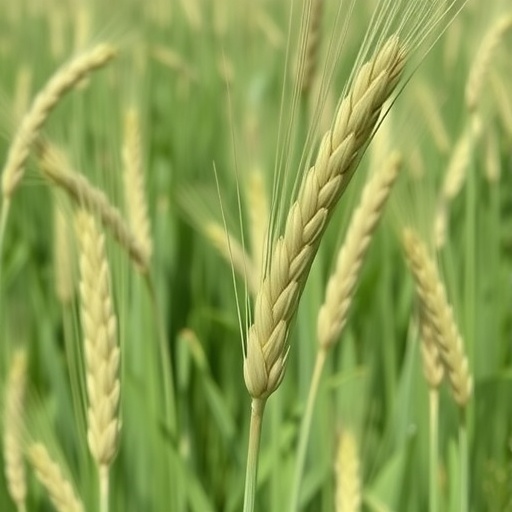
Bipolaris sorokiniana is emerging as one of the most formidable threats to wheat production worldwide, significantly impacting food security. This fungal pathogen is primarily responsible for wheat leaf blight, a disease that can devastate crops if not adequately managed. Researchers have highlighted the importance of understanding the pathology and lifecycle of this organism, as well as the various environmental factors that contribute to its prevalence. As yields decline, the urgency to devise effective management strategies has never been greater.
The lifecycle of Bipolaris sorokiniana is intricately linked to environmental conditions. Warm temperatures and high humidity create an ideal setting for the fungus to thrive, allowing it to spread rapidly among wheat crops. The pathogen can survive in soil and debris, making it crucial for farmers to adopt practices that reduce its survival and spread. Through the study of its lifecycle, scientists are learning more about the conditions that promote infection and how to break this cycle effectively.
In recent studies, researchers have explored various biotic and abiotic factors that influence the severity of wheat leaf blight caused by Bipolaris sorokiniana. These factors include plant variety, soil health, and climatic conditions. By using resistant cultivars, farmers can mitigate the impact of the fungus, but genetic resistance alone is not enough. It is imperative to integrate genetic strategies with cultural practices for effective management.
Cultural management practices are fundamental in controlling Bipolaris sorokiniana. Crop rotation, for instance, can disrupt the lifecycle of the fungus, thereby reducing the disease incidence in subsequent crops. Additionally, the time of planting plays a crucial role. Early or late planting can influence the exposure of wheat plants to favorable conditions for infection. Thus, farmers must be strategic in their planting schedules to minimize risk.
Chemical control methods have historically been employed to manage plant disease; however, the over-reliance on fungicides can lead to resistance development. Research has shown that while fungicides can be effective in the short term, they often yield diminishing returns over time. This phenomenon necessitates a more integrated approach to disease management that minimizes chemical usage while still effectively protecting crops.
Biological control agents are also emerging as a viable alternative to chemical fungicides. Certain beneficial microbes have shown promise in inhibiting the growth of Bipolaris sorokiniana. By enhancing soil health and biodiversity, farmers can foster an environment where beneficial microorganisms thrive, thus providing a natural defense against pathogens. Ongoing research aims to identify and characterize these microbial agents for practical application in wheat production.
Innovative techniques in precision agriculture are also transforming how farmers manage diseases like those caused by Bipolaris sorokiniana. The use of drone technology and satellite imagery allows for early detection of disease outbreaks. Farmers can monitor their fields in real time and make informed decisions about when to intervene with management practices. This data-driven approach not only helps in managing health issues but also boosts overall productivity and sustainability.
In addition, governments and agricultural organizations are beginning to recognize the economic implications of crop diseases. Investing in research related to Bipolaris sorokiniana and similar pathogens is crucial for future food security. Funding for studies that address resistance breeding, the development of bio-pesticides, and improved agronomic practices is vital to ensure that farmers have the tools needed to combat emerging threats effectively.
Farmers need training and resources to understand the complexities of managing diseases like Bipolaris sorokiniana. Extension services should focus on providing farmers with updated knowledge regarding the pathogen, its management, and best agricultural practices. Empowering farmers with the right information and support can lead to reduced reliance on harmful chemicals and better crop outcomes.
As the climate continues to evolve, the implications for agricultural practices become increasingly prominent. The interaction between climate change and fungal diseases is an area of active research. Shifting climatic conditions could potentially alter the geographical distribution and lifecycle of Bipolaris sorokiniana, leading to increased challenge for wheat producers. Scientists stress that adaptation strategies must be developed to address these anticipated changes.
The challenges imposed by Bipolaris sorokiniana underscore the importance of international collaboration in agricultural research. Global partnerships can facilitate the sharing of knowledge and resources, which is essential in developing comprehensive management strategies. These collaborations also open avenues for sharing resistant germplasm, allowing diverse ecosystems to benefit from collective advancements in agricultural science.
Looking forward, the management of Bipolaris sorokiniana in wheat production must evolve with a multifaceted approach. Understanding the significance of cultural practices, biological alternatives, and advanced technologies presents a holistic means of tackling this menace. As researchers continue to unravel the complexities of the pathogen, farmers can more effectively navigate the risks associated with wheat production.
In conclusion, Bipolaris sorokiniana poses a significant challenge to wheat production and global food security. Combating this pathogen requires a systematic approach combining scientific research, innovative agricultural practices, and a cooperative spirit among farmers and researchers. The future of wheat production will depend on a concerted effort to manage this and other plant diseases sustainably and effectively.
Subject of Research: Bipolaris sorokiniana in Wheat
Article Title: Addressing Bipolaris sorokiniana in wheat: challenges, management strategies, and future directions for sustainable food security.
Article References: Farzana, L., Islam, S.S., Rahman, M. et al. Addressing Bipolaris sorokiniana in wheat: challenges, management strategies, and future directions for sustainable food security. Discov Agric 3, 211 (2025). https://doi.org/10.1007/s44279-025-00389-z
Image Credits: AI Generated
DOI: 10.1007/s44279-025-00389-z
Keywords: Bipolaris sorokiniana, wheat, crop disease, food security, agricultural research, sustainable agriculture.
Tags: abiotic stress in agriculturebiotic factors in plant pathologyBipolaris sorokiniana management strategieseffective disease control in wheatenvironmental factors affecting wheatfungal pathogens in agricultureimpact of climate on crop diseaseslifecycle of Bipolaris sorokinianaresistant cultivars for wheatsoil health and crop managementwheat leaf blight diseasewheat production and food security