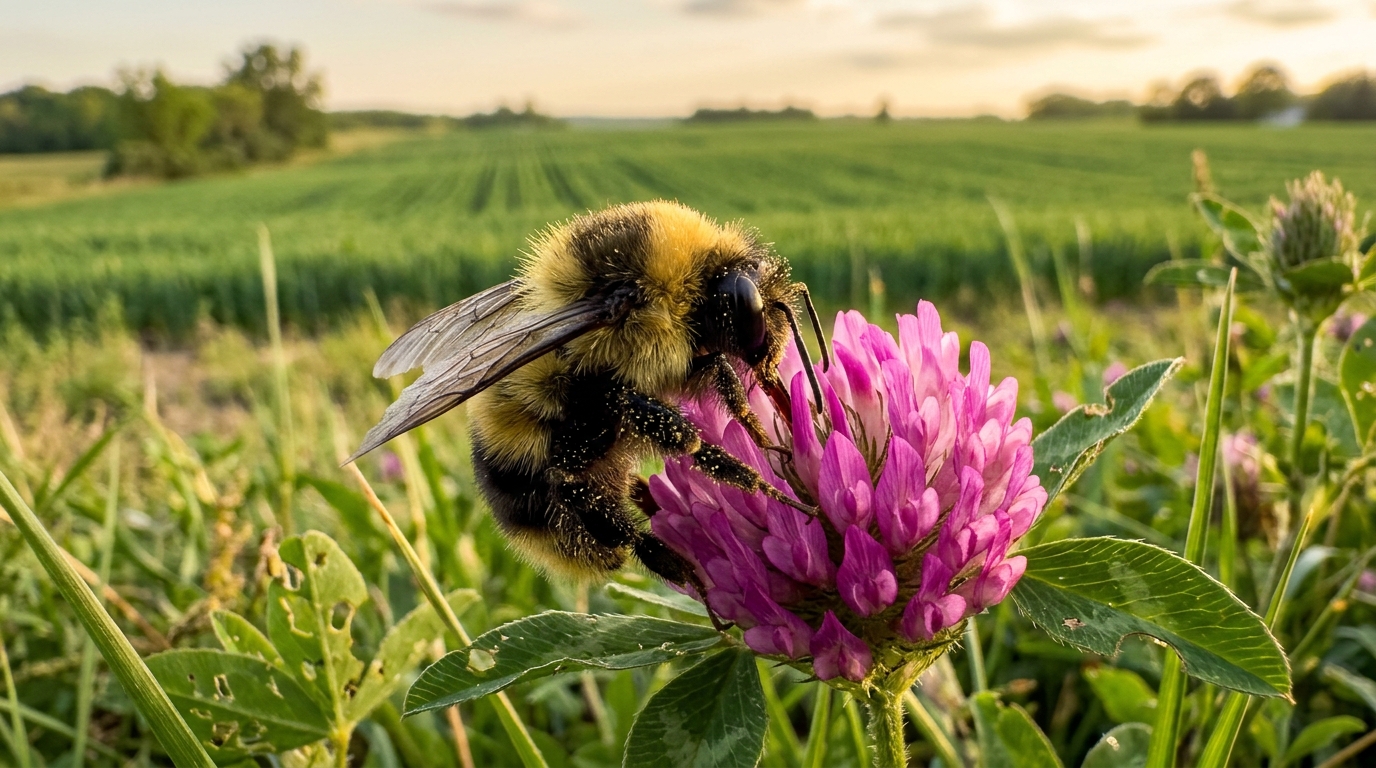
A comprehensive systematic review of 124 empirical studies published between 2017 and 2026 reveals that both legacy neonicotinoid pesticides and their modern, next-generation systemic replacements are exerting profound detrimental effects on the health of bumble bees (Bombus spp.). The research, which synthesized data regarding taxa, caste, chemical classes, and biological outcomes according to PRISMA 2020 guidelines, challenges the regulatory assumption that newer insecticide alternatives—such as sulfoxaflor and flupyradifurone—possess inherently safe profiles for non-target pollinators. While legacy nitro-substituted neonicotinoids like imidacloprid and clothianidin have faced severe restrictions due to their high acute toxicity, this new synthesis highlights that these compounds and their successors share a common neurotoxic mode of action, specifically targeting nicotinic acetylcholine receptors within the insect central nervous system. The evidence demonstrates that these chemicals consistently drive severe physiological and neurological disruptions across multiple biological scales, manifesting as suppressed immunity, significant transcriptomic shifts in tissues such as the brain and Malpighian tubules, and gut dysbiosis. These cellular-level deficits translate directly into complex behavioral impairments, including altered feeding preferences, reduced foraging efficiency, and impaired olfactory learning, which ultimately scale up to threaten whole-colony survival.
The study highlights that bumble bees face unique ecological risks that are often overlooked by current Environmental Risk Assessment (ERA) frameworks, which have historically relied heavily on the Western honey bee (Apis mellifera) as a universal surrogate for all bee species. Unlike the massive, buffered colonies of honey bees, bumble bee colonies are annual, founded by a single solitary queen, and contain far fewer workers, making them exceptionally sensitive to sublethal stressors that would be manageable for more robust species. The review found that pesticide exposures as low as 5 to 10 parts per billion (ppb) frequently result in significant sublethal impacts, such as delayed nest initiation, reduced gyne production, and diminished total colony biomass, yet these concentrations often fall within or below the legally permitted environmental limits for many next-generation systemic insecticides. The evidence indicates that the regulatory reliance on acute mortality metrics, such as lethal dose (LD50) calculations, has inadvertently incentivized an agricultural shift toward compounds that appear less lethal upon initial exposure but cause severe long-term damage when consumed chronically in treated nectar and pollen.
Molecular and physiological research analyzed in the review provides a mechanistic explanation for the behavioral deficits observed at the colony level. Systemic insecticides induce structural damage to the bumble bee brain, including the shrinkage of the antennal lobes and the degeneration of Kenyon cells within the mushroom body calyces, which are critical neural centers for learning and memory. These physical degradations correlate with transcriptomic alterations that vary depending on the duration of exposure. While acute exposure triggers a rapid upregulation of detoxification genes and general stress response pathways, chronic exposure primarily disrupts fundamental biological processes, including DNA replication, energy metabolism, and neuroimmune networks. For instance, studies showed that imidacloprid exposure can reduce total hemocyte counts by up to 61% and impair the antimicrobial activity of hemolymph, leaving exposed colonies highly vulnerable to secondary pathogens such as Nosema bombi and Crithidia bombi. Furthermore, the disruption of the gut microbiome—specifically the reduction of beneficial symbionts like Apibacter—indicates that systemic insecticides destabilize the internal health equilibrium essential for nutrient metabolism and pathogen defense.
The synthesis also exposed critical methodological biases that undermine the robustness of current toxicological data. The literature remains heavily skewed toward testing non-reproductive Bombus terrestris workers, who account for over 60% of the investigated studies, while experiments evaluating the impacts on reproductive queens and drones are severely underrepresented. Extrapolating toxicity metrics derived from non-reproductive workers to reproductive castes is scientifically problematic, as evidence suggests that queens and drones frequently exhibit higher sensitivity to insecticide-induced mortality and reproductive failure. Because the survival of the entire bumble bee population relies upon the successful founding and growth of new colonies by these specific castes, their systemic exclusion from standard ERA testing paradigms represents a fundamental failure to accurately predict the ultimate ecological consequences of pesticide use in agricultural landscapes. This lack of caste-specific testing, combined with the focus on a few commercially reared species, may significantly underestimate the risks posed to smaller, less common wild species that possess different life history traits and localized exposure risks.
Beyond the caste and taxonomic biases, the review highlighted a heavy reliance on artificial, laboratory-based experimental settings, which accounted for approximately 84% of the studies examined. Laboratory assays typically provide bees with constant, static chemical doses and artificial diets, thereby removing the energetic demands of active foraging and masking the synergistic threats encountered in real-world agricultural environments. The evidence reveals that when chemical exposure is paired with interacting stressors—such as nutritional deficits from monofloral diets or concurrent exposure to fungicides—the toxicity is frequently multiplied, resulting in synergistic or additive impacts on larval growth and colony survival. In contrast, landscape-level studies conducted in open-field or semi-field settings often show more neutral outcomes, suggesting that the availability of diverse food sources allows bees to buffer some sublethal costs by diluting their exposure. However, this buffering effect is highly dependent on landscape complexity, and the current regulatory focus on confined laboratory experiments fails to capture the spatial and environmental nuances that dictate true ecological risk in the wild.
The comparative analysis of different chemical classes further underscored the misleading nature of relying solely on acute safety metrics for regulatory approval. While legacy compounds like imidacloprid consistently displayed higher acute lethality, next-generation systemic insecticides, including sulfoxaflor and flupyradifurone, exhibited much lower acute lethality profiles, which has allowed for their widespread adoption in many jurisdictions. However, the synthesis confirmed that these new compounds also consistently trigger severe reproductive failure, stunting brood production and reducing overall colony biomass when evaluated over chronic timelines. The documentation of acquired preferences or addiction-like feeding behaviors for contaminated resources in some instances further complicates the risk landscape, as bees may continue to forage on treated plants even after initial exposure, thereby increasing their cumulative dosage. These findings indicate that the toxicological basis for grouping and assessing these distinct chemical classes as if they were safe alternatives is insufficient, as the long-term ecological consequences remain largely unmitigated by current policy frameworks.
The review also identified that the interaction between biological stressors and systemic insecticides creates complex, often compounded outcomes that defy simple toxicological classification. For example, exposure to sublethal doses of imidacloprid alone might not significantly reduce worker survival, but when combined with a non-pathogenic immune challenge, it leads to a statistically significant decrease in survival probability. Similarly, some multi-stressor combinations, such as concurrent exposure to the trypanosome parasite Crithidia bombi and the insecticide sulfoxaflor, resulted in no significant impact on whole-colony development in certain settings, illustrating the highly context-dependent nature of pesticide toxicity. This variability confirms that testing insecticides in isolation, without accounting for the reality of agricultural cocktails and environmental pressures, provides an incomplete picture of the hazard and fundamentally obscures the threats faced by wild pollinators.
The regulatory infrastructure is built upon paradigms that fail to reflect the unique ecological needs of bumble bees, particularly regarding their annual cycle and their sensitivity at the larval and queen-founding stages. Although the global phase-out of certain nitro-substituted neonicotinoids was an important conservation step, the subsequent replacement with chemicals that function through the same neurotoxic nAChR agonist mechanism does not address the underlying ecological risks. As agricultural production continues to intensify, the disconnect between currently permitted exposure benchmarks and the evidence of harm found at sublethal doses creates a dangerous oversight that risks the continued decline of these essential pollinators. Bridging this gap requires an urgent transition toward multi-tiered, ecologically realistic testing paradigms that explicitly incorporate chronic, life-cycle-long exposure timelines and complex, multi-stressor interactions.
Ultimately, the synthesized evidence points to a clear need for regulatory reform that prioritizes long-term reproductive viability over immediate acute lethality benchmarks. The data indicates that by the time overt behavioral issues or reduced colony growth are detected at the macro-level, the bumble bees have already sustained irreversible neurological, transcriptomic, and immunological damage. Future conservation efforts should incentivize the development of more protective risk assessment protocols that mandate the use of reproductive caste data, ecologically relevant colony-level metrics, and multi-stressor design in the pesticide approval process. Policymakers and funding agencies have a critical role in mandating this shift, ensuring that the agricultural systems of the future can support biodiversity and pollination services while managing the impacts of chemical pest control. Without such systemic changes to the way ecological risk is calculated and addressed, the ongoing decline of bumble bees across managed and unmanaged landscapes is likely to persist despite the recent shifts in chemical regulation.
Subject of Research: Impact of systemic insecticides on bumble bee colony health and reproductive viability.
Article Title: A systematic review of the effects of neonicotinoids and next-generation insecticides on bumble bee (Bombus spp.) health
Article References: Gibbs, A. J. (2026). A systematic review of the effects of neonicotinoids and next-generation insecticides on bumble bee (Bombus spp.) health. Frontiers in Bee Science, 4, 1970356. https://doi.org/10.3389/frbee.2026.1970356
Image Credits: AI Generated
DOI: 10.3389/frbee.2026.1970356
Keywords: Bombus, bumble bee, ecotoxicology, neonicotinoids, systemic insecticides, pollinator decline, sublethal effects, environmental risk assessment, colony collapse, sulfoxaflor, flupyradifurone, nAChR agonists, transcriptomics, immunotoxicity, gut dysbiosis, reproductive failure, multi-stressor impacts, ERA frameworks, PRISMA 2020
News Source: Drew Townsend. (November 17, 2026). Systemic Insecticides Drive Bumble Bee Colony Collapse Even at Permitted Levels. Scienmag.