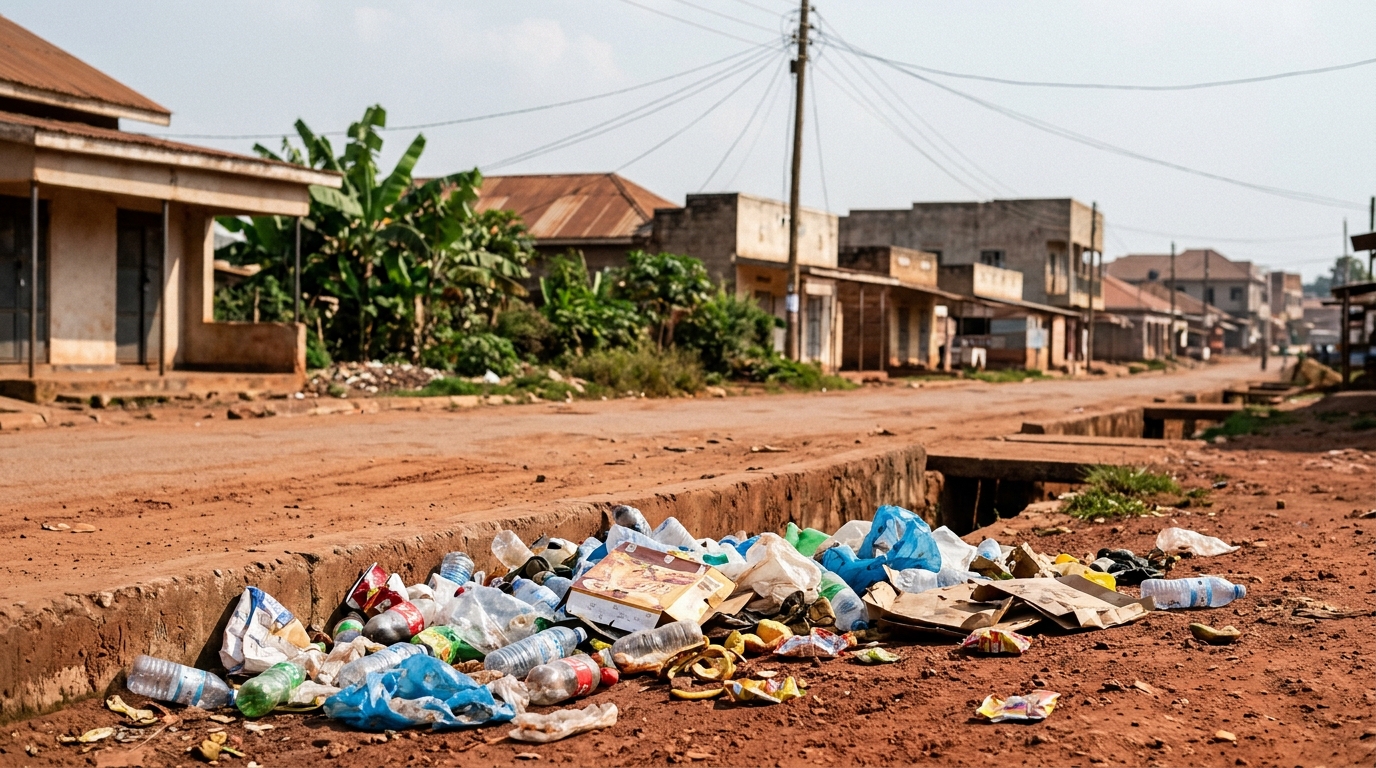
A systematic review examining municipal solid waste in rapidly urbanising regions of Uganda has found that local waste streams are predominantly organic but are becoming increasingly heterogeneous as plastic and mixed-material fractions rise. Synthesising published research on generation dynamics and management constraints, the investigation argues that poor solid waste outcomes across rapidly expanding municipalities are best understood as systemic failures of urban governance and institutional capacity rather than as narrow sanitation problems.
Published in Discover Applied Sciences by researchers Nkwanzi Lillian and Abdallah Ziraba, the review establishes an evidence-based framework integrating waste generation patterns, management failures, and governance fragility. The authors observed that while rapid urbanisation is accelerating solid waste generation across low- and middle-income regions, municipal systems responsible for waste collection, recovery, treatment, and disposal have remained structurally under-capacitated to handle the expanding volumes.
To investigate these systemic challenges, the researchers conducted a systematic literature search guided by the PRISMA 2020 framework, covering studies published between 2000 and 2025. The authors queried four major academic databases: Scopus, Web of Science, ScienceDirect, and Google Scholar. From an initial identification of 180 records, 72 studies satisfied the established inclusion criteria following rigorous screening and full-text assessment, incorporating evidence from Uganda alongside relevant comparative data from other rapidly urbanising environments.
The review team extracted data from the 72 included studies using a structured matrix and evaluated study quality with the Mixed Methods Appraisal Tool. Evidence was subsequently evaluated through narrative thematic synthesis. In situating municipal trends within broader regional developments, the synthesis noted that municipal solid waste in Sub-Saharan Africa expanded from 81 million tonnes to 174 million tonnes between 2012 and 2016, with total generation projected to reach 269 million tonnes by 2030, even as collection coverage remained persistently low.
Across the assessed body of literature, the authors identified several persistent operational and institutional constraints. The most pervasive operational barriers included weak waste collection and transport systems coupled with inadequate disposal infrastructure. On the administrative side, the review documented fragmented municipal governance, chronic underfinancing, weak enforcement of existing regulations, and a limited integration of local communities into formal municipal waste governance structures.
The synthesis demonstrated that these structural and institutional failures were consistently associated with environmental degradation, heightened public health risks, and declining municipal resilience.
To address these recurrent vulnerabilities, the review identified several response pathways that received frequent empirical support across the 72 included studies. The most supported interventions included waste segregation at source, composting initiatives, decentralised collection systems, stronger institutional coordination, and improved regulatory enforcement. The authors concluded that achieving sustainable improvements in solid waste outcomes across Uganda’s rapidly urbanising municipalities will ultimately depend on establishing integrated, data-driven, and context-responsive waste governance systems.
Subject of Research: Solid waste generation, management constraints, and urban governance in Uganda
Article Title: A systematic review of solid waste generation and management challenges and governance in rapidly urbanising Uganda
Article References: Lillian, N., & Ziraba, A. (2026). A systematic review of solid waste generation and management challenges and governance in rapidly urbanising Uganda. Discover Applied Sciences. https://doi.org/10.1007/s42452-026-09908-z
Image Credits: AI Generated
DOI: 10.1007/s42452-026-09908-z
Keywords: solid waste management, rapid urbanisation, Uganda, urban governance, systematic review, PRISMA 2020, waste generation, Sub-Saharan Africa, source segregation, composting, decentralised collection, municipal resilience, public health risks, environmental degradation, Mixed Methods Appraisal Tool, organic waste, plastic waste, waste infrastructure
News Source: Courtney Benton. (November 29, 2026). Systematic Review Links Uganda Urban Solid Waste Failures to Governance Gaps. Scienmag.