• HOME
  • NEWS
  • EXPLORE
    • CAREER
      • Companies
      • Jobs
    • EVENTS
    • iGEM
      • News
      • Team
    • PHOTOS
    • VIDEO
    • WIKI
  • BLOG
  • COMMUNITY
    • FACEBOOK
    • INSTAGRAM
    • TWITTER
Sunday, November 29, 2026
BIOENGINEER.ORG
No Result
View All Result
  • Login
  • HOME
  • NEWS
  • EXPLORE
    • CAREER
      • Companies
      • Jobs
        • Lecturer
        • PhD Studentship
        • Postdoc
        • Research Assistant
    • EVENTS
    • iGEM
      • News
      • Team
    • PHOTOS
    • VIDEO
    • WIKI
  • BLOG
  • COMMUNITY
    • FACEBOOK
    • INSTAGRAM
    • TWITTER
No Result
View All Result
Bioengineer.org
No Result
View All Result
Home NEWS Science News Technology

Graphene oxide thickness influences colloidal stability and cellular toxicity across models

by
November 29, 2026
in Technology
Reading Time: 2 mins read
0
Graphene oxide thickness influences colloidal stability and cellular toxicity across models

Graphene oxide thickness influences colloidal stability and cellular toxicity across models

Share on FacebookShare on TwitterShare on LinkedinShare on RedditShare on Telegram

A comparative evaluation of graphene oxide nanomaterials indicates that sheet thickness and the degree of structural exfoliation play significant roles in determining colloidal stability and cellular toxicity across biological models.

The investigation examined several distinct graphene oxide formulations synthesized to explore how structural dimensions influence material behavior. Researchers prepared graphite oxide along with large graphene oxide and small graphene oxide sheets.

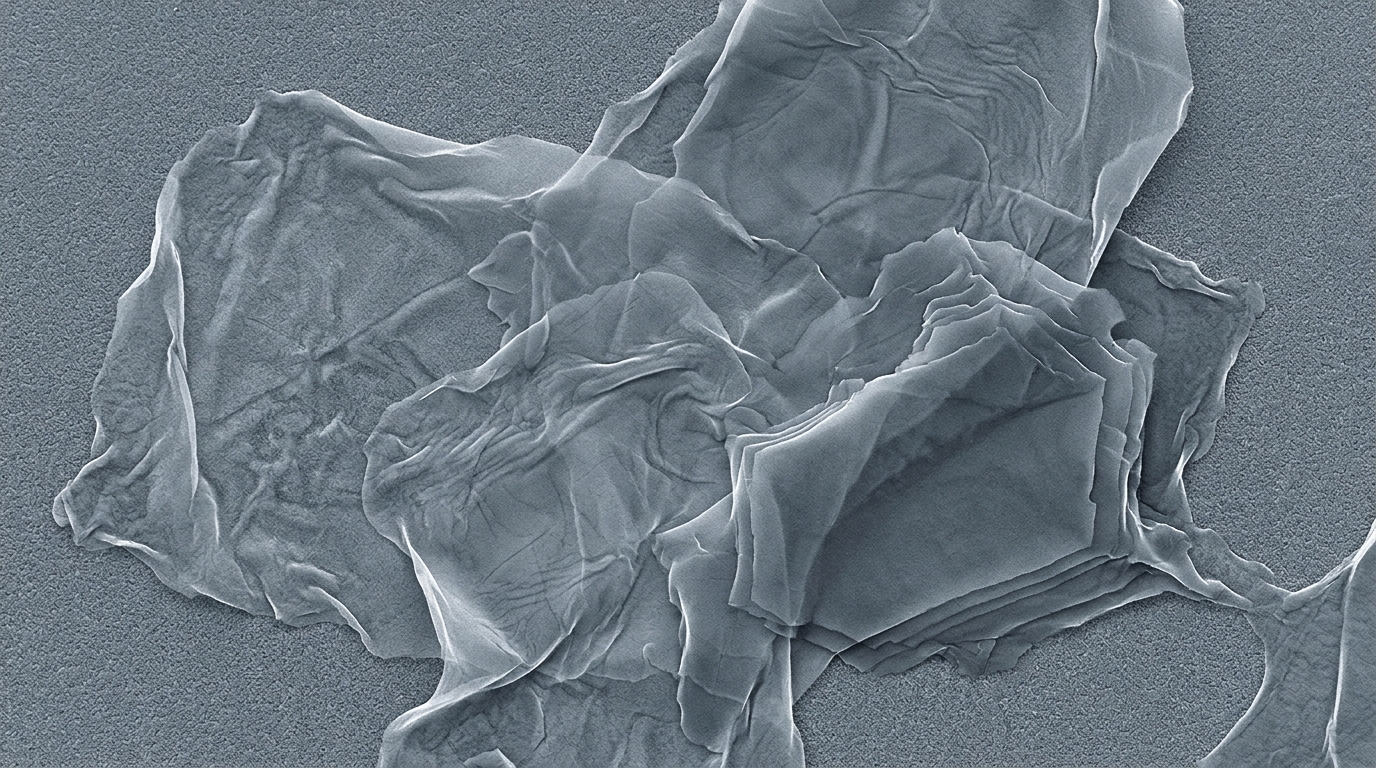
Morphological characterization using complementary high-resolution imaging confirmed that the synthesized materials maintained flat, planar structures. Observations through high-resolution scanning electron microscopy, transmission electron microscopy, and scanning transmission electron microscopy verified the planar sheet architecture across the samples. Furthermore, atomic force microscopy revealed marked variations in thickness between the large graphene oxide and its monolayer counterpart, showing that the monolayer material consisted predominantly of highly exfoliated, near-monolayer sheets.

Spectroscopic and diffraction evaluations provided detailed insight into the surface chemistry and structural organization of the synthesized sheets. Measurements gathered through X-ray photoelectron spectroscopy demonstrated comparable surface oxidation levels and similar distributions of oxygen-containing functional groups among graphite oxide, large graphene oxide, and monolayer large graphene oxide, with especially close chemical parity between the large and monolayer variants. Additionally, X-ray diffraction patterns corroborated the extensive exfoliation achieved in the monolayer material.

Physical assessments further demonstrated that dimensional variations significantly impacted suspension dynamics and electronic transitions. In parallel, estimations of the apparent optical band gaps obtained through Tauc analysis reflected distinct optical properties corresponding to the underlying physicochemical differences between the multilayer and exfoliated materials.

The in vitro assays demonstrated that cytotoxicity profiles differed between eukaryotic and prokaryotic test systems, with sheet thickness and exfoliation status driving variations in cell response.

Subject of Research: Influence of graphene oxide sheet thickness and exfoliation on cellular toxicity and colloidal stability

Article Title: Incorporating graphene oxide thickness as a design parameter for biomedical nanomaterials: a comparative study in eukaryotic and prokaryotic cell models

Article References: Muñoz-Silva, M., Olazabal-Morán, M., Arranz, M. A., Morales, M., Martín-Folgar, R., Garrido, A., Álvarez-Rodríguez, J., & Esteban-Arranz, A. (2026). Incorporating graphene oxide thickness as a design parameter for biomedical nanomaterials: a comparative study in eukaryotic and prokaryotic cell models. Journal of Materials Science. https://doi.org/10.1007/s10853-026-14211-8

Image Credits: AI Generated

DOI: 10.1007/s10853-026-14211-8

Keywords: graphene oxide, graphite oxide, large graphene oxide, small graphene oxide, monolayer large graphene oxide, sheet thickness, exfoliation degree, colloidal stability, cytotoxicity, eukaryotic cells, prokaryotic cells, atomic force microscopy, transmission electron microscopy, scanning electron microscopy, scanning transmission electron microscopy, X-ray photoelectron spectroscopy, X-ray diffraction, Turbiscan analysis, Tauc analysis, optical band gaps

News Source: Neil Sanderson. (November 29, 2026). Graphene oxide thickness influences colloidal stability and cellular toxicity across models. Scienmag.


Tags: atomic force microscopyColloidal Stabilitycytotoxicityeukaryotic cellsexfoliation degreegraphene oxidegraphite oxidelarge graphene oxidemonolayer large graphene oxideoptical band gapsprokaryotic cellsscanning electron microscopyscanning transmission electron microscopysheet thicknesssmall graphene oxideTauc analysistransmission electron microscopyTurbiscan analysisX-ray diffractionX-ray photoelectron spectroscopy
Share12Tweet7Share2ShareShareShare1

Related Posts

Computational Modeling Identifies Novel Triphenylamine Dye Q4-TPA for Efficient Solar Cells

Computational Modeling Identifies Novel Triphenylamine Dye Q4-TPA for Efficient Solar Cells

November 29, 2026
Natural Plant Fiber Composites Match Synthetic Performance in Multilayer Armor Systems

Natural Plant Fiber Composites Match Synthetic Performance in Multilayer Armor Systems

November 29, 2026

Dynamic Replenishment Cuts Robot Delivery Fleet Size by 63 Percent

November 29, 2026

Neural Network Architecture Cuts Tourist Crowd Forecasting Errors by Forty-Six Percent

November 29, 2026

POPULAR NEWS

  • Natural Plant Fiber Composites Match Synthetic Performance in Multilayer Armor Systems

    Natural Plant Fiber Composites Match Synthetic Performance in Multilayer Armor Systems

    29 shares
    Share 12 Tweet 7
  • Plant Compound Alpha-Mangostin Inhibits Mycobacterium Tuberculosis Gyrase B in Laboratory Tests

    29 shares
    Share 12 Tweet 7
  • Suspected Pediatric Transverse Myelitis Case Managed Without Advanced Imaging in Gaza

    29 shares
    Share 12 Tweet 7
  • Head Nurse Mentorship Pilot Tracks Feasibility and Preliminary Management Competency Gains

    29 shares
    Share 12 Tweet 7

About

We bring you the latest biotechnology news from best research centers and universities around the world. Check our website.

Follow us

Recent News

Severe Muscle Breakdown After Resistance Training Mimics Hepatic and Cardiac Injury

Freeze-Drying Preserves Antioxidants and Lightness in Cactus Cladode Powders

MOGAD Relapses Frequently Strike Initial Central Nervous System Anatomical Locations

Subscribe to Blog via Email

Enter your email address to subscribe to this blog and receive notifications of new posts by email.

Join 90 other subscribers
  • Contact Us

Bioengineer.org © Copyright 2023 All Rights Reserved.

Welcome Back!

Login to your account below

Forgotten Password?

Retrieve your password

Please enter your username or email address to reset your password.

Log In
No Result
View All Result
  • Homepages
    • Home Page 1
    • Home Page 2
  • News
  • National
  • Business
  • Health
  • Lifestyle
  • Science

Bioengineer.org © Copyright 2023 All Rights Reserved.