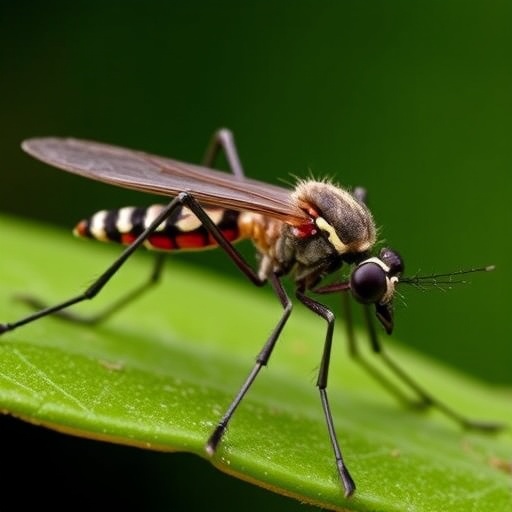
Brazilian researchers have unveiled a groundbreaking synthetic compound with the potential to revolutionize malaria treatment by targeting the disease at three critical stages of its complex life cycle. This innovative molecule exhibits a multifaceted mechanism of action: it eradicates the asexual forms of the Plasmodium parasite in both the human liver and bloodstream and crucially impedes transmission to the mosquito vector. This triadic approach not only promises enhanced therapeutic efficacy but also presents a novel strategy to curtail the spread of malaria, a disease that continues to inflict severe morbidity and mortality worldwide.
Key to the significance of this discovery is its activity against Plasmodium vivax, the predominant malaria species in Brazil, distinguished by its notorious resistance to long-term laboratory cultivation that complicates drug testing. The research group, led by Professor Anna Caroline Aguiar from the Federal University of São Paulo (UNIFESP), successfully demonstrated the compound’s efficacy through tests performed at the Oswaldo Cruz Foundation (FIOCRUZ) in Rondônia, utilizing blood samples from infected patients. Additionally, the compound shows potent effects against Plasmodium falciparum, the species most often associated with severe clinical manifestations and mortality, underscoring its broad-spectrum potential.
The collaborative study involved a network of institutions including UNIFESP, the Center for Research and Innovation in Biodiversity and Pharmaceuticals (CIBFar) housing a FAPESP Research, Innovation, and Dissemination Center at the São Carlos Institute of Physics, University of São Paulo (IFSC-USP), as well as international partners such as NOVA University Lisbon. This synergy facilitated in-depth investigations and cross-validation of the compound’s pharmacological profile in diverse experimental settings, ranging from human cell cultures to murine malaria infection models.
Supported by multiple grants from the São Paulo Research Foundation (FAPESP), the research employed a rigorous thematic and interdisciplinary framework to evaluate the compound’s therapeutic potential. Detailed in an article published in ACS Omega, the study rigorously characterizes the biochemical mechanisms underpinning the molecule’s activity and its effect on the various parasite stages essential to malaria pathogenesis and transmission.
The compound belongs to a class of natural 4-quinolones, chemically tailored to disrupt the Plasmodium parasite’s lifecycle by targeting its mitochondrial function. Specifically, it acts as a selective inhibitor of the cytochrome bc1 complex, a critical enzyme responsible for electron transport within the parasite’s mitochondria. This inhibition impedes the synthesis of pyrimidines, nucleotides imperative for DNA replication and cell division. By arresting mitochondrial function, the parasite is rendered incapable of replicating within liver cells and red blood cells, effectively halting disease progression.
Significantly, the molecule demonstrates selective toxicity, affecting the parasite’s mitochondrial cytochrome bc1 complex without interfering with the analogous enzyme in human cells. Such selectivity is essential to minimize potential side effects and enhance the safety profile of future antimalarial drugs derived from this compound. The molecular specificity also represents a strategic advantage in circumventing the host-pathogen biochemical similarities that have historically complicated drug development against protozoan parasites.
While previous studies established the compound’s efficacy against hepatic and blood-stage parasites, this latest publication provides the first experimental evidence of its transmission-blocking capability. Laboratory tests using infected human blood samples revealed that the molecule inhibits critical developmental stages within the mosquito vector, specifically thwarting the formation of ookinetes, oocysts, and sporozoites. By preventing the parasite’s maturation inside mosquitoes, the compound effectively breaks the malaria transmission cycle, reducing the risk of spreading infection within endemic communities.
Animal model studies at NOVA University Lisbon utilizing Plasmodium berghei, a rodent malaria parasite, further substantiated these findings. Treated mice demonstrated significant suppression of parasite development within the mosquito vector, corroborating the compound’s role in interrupting the pathogen’s lifecycle beyond the human host. This dual activity—treatment and transmission blockade—positions the compound as a promising candidate for integrated malaria control strategies.
Malaria remains a global health challenge, complicated by the intricate biology of its causative agents. The parasite undergoes a complex life cycle alternating between human and Anopheles mosquito hosts, involving hepatic invasion, replication within red blood cells, and subsequent transmission stages. Therapeutic agents traditionally target discrete stages, necessitating combination therapies and complicating treatment regimens. The development of a single compound effective across multiple stages marks a paradigm shift, offering streamlined treatment that could reduce drug resistance emergence.
Resistance to antimalarial drugs is a persistent threat to malaria control efforts. The adaptability of Plasmodium species has rendered several frontline drugs progressively ineffective, necessitating the urgent development of novel compounds with unique mechanisms of action. The newly synthesized 4-quinolone derivative targets a highly conserved enzymatic complex essential for parasite survival, potentially reducing the likelihood of resistance development. Moreover, the compound’s transmission-blocking properties could disrupt the propagation of resistant strains in endemic populations.
Despite the promising data, the path from discovery to clinical application remains challenging. The compound requires extensive pharmacokinetic and toxicological studies, optimization for human use, and carefully designed clinical trials to assess safety and efficacy. The researchers emphasize the importance of sustained investment and collaborative efforts to accelerate this process. The potential global health impact of an all-encompassing antimalarial drug justifies prioritizing such innovative candidates in the drug development pipeline.
Furthermore, the collaboration enhanced research capabilities by integrating expertise in molecular chemistry, parasitology, pharmacology, and biophysics, facilitating the comprehensive evaluation of the compound. This multidisciplinary approach, combined with access to authentic parasite isolates and vector models, was instrumental in elucidating the molecule’s multifaceted activity. It also exemplifies how international scientific partnerships can overcome complex challenges inherent to neglected tropical diseases.
In conclusion, the synthetic 4-quinolone derivative discovered by Brazilian scientists represents a significant advance in antimalarial drug research. By simultaneously targeting hepatic, blood, and transmission stages of Plasmodium spp., this molecule offers a holistic solution to malaria treatment and prevention. Continued development and clinical validation could transform current malaria control paradigms, offering hope in the fight against a disease that annually claims hundreds of thousands of lives globally.
Subject of Research: Development and evaluation of a synthetic 4-quinolone compound targeting multiple life stages of Plasmodium spp. for malaria treatment and transmission blockade.
Article Title: Evaluation of the Activity of 4-Quinolones against Multi-Life Stages of Plasmodium spp.
News Publication Date: 5-Nov-2025
Web References:
Article DOI: 10.1021/acsomega.5c08663
Keywords
Malaria, Plasmodium spp., 4-quinolones, drug development, antimalarial, transmission-blocking, cytochrome bc1 inhibitor, mitochondrial targeting, multi-stage therapy, parasitology, drug resistance, synthetic molecules
Tags: blocking malaria transmissionBrazilian malaria research initiativescollaborative malaria researchFederal University of São Paulo researchinnovative malaria therapiesmalaria life cycle targetingOswaldo Cruz Foundation studiesPlasmodium vivax resistancepotent effects against Plasmodium falciparumsynthetic compound for malaria treatmenttriadic approach to malaria