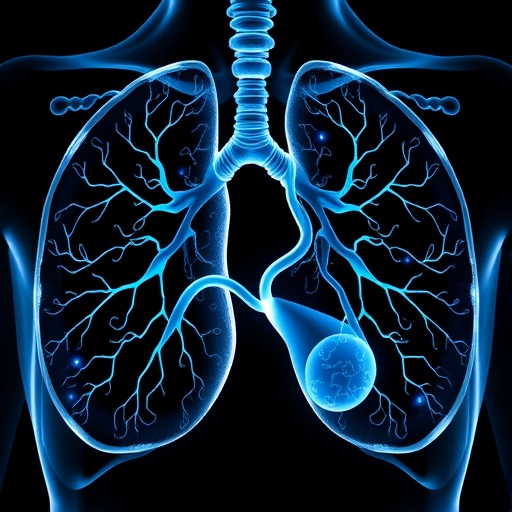
In a groundbreaking study poised to reshape the understanding and treatment of acute respiratory distress syndrome (ARDS), researchers have unraveled a novel pathway that harnesses the body’s sympathetic nervous system to combat this devastating inflammatory lung condition. Published in Cell Death Discovery, the investigation led by Lv, Jiang, Zhang, and colleagues delves into the molecular intricacies of how sympathetic signaling modulates macrophage activity through the HDC/SLC7A11 axis, offering a promising therapeutic avenue for ARDS induced by lipopolysaccharide (LPS), a component commonly used to simulate bacterial infection in experimental models.
ARDS remains one of the most severe pulmonary conditions encountered in clinical settings, characterized by widespread inflammation, alveolar damage, and impaired gas exchange, often culminating in respiratory failure. Despite advances in critical care, effective targeted therapies for ARDS are notably lacking, largely due to incomplete understanding of the complex cellular and molecular networks that fuel lung injury. This study transcends traditional paradigms by spotlighting the sympathetic nervous system—not merely as a regulator of cardiovascular or metabolic function—but as an active participant in the immune modulation of macrophage-driven inflammation within the lungs.
The sympathetic nervous system’s activation induces cardiac, vascular, and metabolic responses primarily through the release of catecholamines, but this study elucidates its role in modulating immune cell behavior during acute lung injury. The authors employ an LPS-induced macrophage model, which recapitulates key features of ARDS pathology, to explore how sympathetic agonists influence macrophage function, focusing specifically on enzymatic and transporter proteins pivotal to cellular redox balance and survival.
Central to their discoveries is the histidine decarboxylase (HDC), an enzyme responsible for histamine biosynthesis, and the cystine/glutamate antiporter subunit SLC7A11. The upregulation of HDC in macrophages was shown to enhance cystine uptake via SLC7A11, boosting intracellular glutathione levels and thereby reinforcing the antioxidant defenses of these immune cells. This axis mitigated oxidative stress-induced cell death, attenuating the inflammatory milieu responsible for alveolar damage in ARDS.
Mechanistically, the sympathetic signaling activation was found to stimulate β-adrenergic receptors on macrophages, triggering intracellular cascades that culminate in increased expression and activity of HDC. Subsequently, elevated histamine synthesis influenced downstream pathways that modulate SLC7A11 expression. The augmented activity of this transporter promoted the import of cystine necessary for glutathione synthesis, a critical antioxidant molecule that buffers against LPS-induced reactive oxygen species (ROS).
Significantly, the study provides compelling evidence that the HDC/SLC7A11 axis functions as a protective molecular shield, reducing macrophage ferroptosis — a recently characterized form of inflammatory cell death reliant on iron-dependent lipid peroxidation. By inhibiting ferroptotic processes, sympathetic activation preserved macrophage viability and maintained their essential roles in resolving inflammation rather than exacerbating tissue injury.
Intervention strategies mimicking sympathetic activation or pharmacologically upregulating the HDC/SLC7A11 pathway demonstrated substantial improvements in lung histopathology, oxygenation indices, and survival in experimental animal models. These results underscore the therapeutic potential of modulating neuroimmune communication pathways to quell dysregulated inflammation in ARDS.
The implications of this study extend beyond ARDS to a broad spectrum of inflammatory and infectious diseases involving macrophage dysregulation. The work opens new horizons in neuroimmunology, suggesting that precise manipulation of sympathetic signaling may recalibrate immune responses with minimal adverse effects compared to conventional anti-inflammatory agents.
Additionally, the findings add nuance to the debate concerning the dual role of the sympathetic nervous system in inflammation — a system previously implicated in both pro-inflammatory and anti-inflammatory contexts. The demonstration of its anti-inflammatory effects mediated through the HDC/SLC7A11 axis propels the possibility of targeted therapies that exploit endogenous feedback mechanisms rather than broadly suppressing immunity.
The translational prospects of this research are particularly compelling given the current global burden of ARDS, exacerbated by infectious outbreaks such as COVID-19 where cytokine storms and macrophage activation syndrome significantly contribute to morbidity and mortality. Therapies bolstering antioxidant defenses through metabolic reprogramming of macrophages may offer a viable adjunct or alternative to immunosuppressants and ventilatory support.
Future research directions may explore the exact receptor subtypes and downstream signaling molecules mediating sympathetic input in lung-resident macrophages, the crosstalk between systemic and local neuroimmune pathways, and the long-term consequences of modulating the HDC/SLC7A11 axis in chronic lung diseases.
Moreover, clinical trials are warranted to validate these findings in human subjects, determine optimal dosing strategies for sympathetic agonists or HDC/SLC7A11 modulators, and assess potential synergistic effects with current standard-of-care treatments. Biomarker development to monitor macrophage redox status and ferroptosis susceptibility could refine patient stratification and real-time assessment of therapeutic efficacy.
In summary, Lv and colleagues have revealed a sophisticated interplay between the nervous and immune systems, whereby sympathetic signaling activation invigorates a HDC/SLC7A11 antioxidant defense axis in macrophages, alleviating the inflammatory storm of ARDS. This discovery marks a paradigm shift in understanding ARDS pathophysiology and charts a promising course for innovative, mechanism-based therapeutics capable of saving countless lives from respiratory failure.
As the scientific community grapples with the complexity of immune-mediated diseases, this illuminating research underscores the transformative potential of neuroimmune cross-talk in disease modulation. Unlocking new therapeutic targets within this interface may herald a new era in precision medicine for inflammatory lung diseases and beyond.
Subject of Research: Acute Respiratory Distress Syndrome (ARDS) and sympathetic nervous system regulation of macrophage antioxidant pathways.
Article Title: Sympathetic signaling activation alleviated acute respiratory distress syndrome via the HDC/SLC7A11 axis in lipopolysaccharide-induced macrophages.
Article References:
Lv, X., Jiang, C., Zhang, X. et al. Sympathetic signaling activation alleviated acute respiratory distress syndrome via the HDC/SLC7A11 axis in lipopolysaccharide-induced macrophages.
Cell Death Discov. (2026). https://doi.org/10.1038/s41420-026-03173-0
Image Credits: AI Generated
DOI: https://doi.org/10.1038/s41420-026-03173-0
Tags: acute respiratory distress syndrome treatmentcatecholamine role in immune responseCell Death Discovery ARDS researchHDC SLC7A11 axis mechanismimmune regulation by sympathetic signalinginflammatory lung disease therapylipopolysaccharide induced lung injurymacrophage modulation in ARDSmacrophage-driven inflammation controlmolecular pathways in ARDSnovel ARDS therapeutic targetssympathetic nervous system in lung inflammation