• HOME
  • NEWS
  • EXPLORE
    • CAREER
      • Companies
      • Jobs
    • EVENTS
    • iGEM
      • News
      • Team
    • PHOTOS
    • VIDEO
    • WIKI
  • BLOG
  • COMMUNITY
    • FACEBOOK
    • INSTAGRAM
    • TWITTER
Sunday, February 8, 2026
BIOENGINEER.ORG
No Result
View All Result
  • Login
  • HOME
  • NEWS
  • EXPLORE
    • CAREER
      • Companies
      • Jobs
        • Lecturer
        • PhD Studentship
        • Postdoc
        • Research Assistant
    • EVENTS
    • iGEM
      • News
      • Team
    • PHOTOS
    • VIDEO
    • WIKI
  • BLOG
  • COMMUNITY
    • FACEBOOK
    • INSTAGRAM
    • TWITTER
  • HOME
  • NEWS
  • EXPLORE
    • CAREER
      • Companies
      • Jobs
        • Lecturer
        • PhD Studentship
        • Postdoc
        • Research Assistant
    • EVENTS
    • iGEM
      • News
      • Team
    • PHOTOS
    • VIDEO
    • WIKI
  • BLOG
  • COMMUNITY
    • FACEBOOK
    • INSTAGRAM
    • TWITTER
No Result
View All Result
Bioengineer.org
No Result
View All Result
Home NEWS Science News

SwRI has created a new test for internal diesel injector deposits

Bioengineer by Bioengineer
February 3, 2020
in Science News
Reading Time: 3 mins read
0
IMAGE
Share on FacebookShare on TwitterShare on LinkedinShare on RedditShare on Telegram

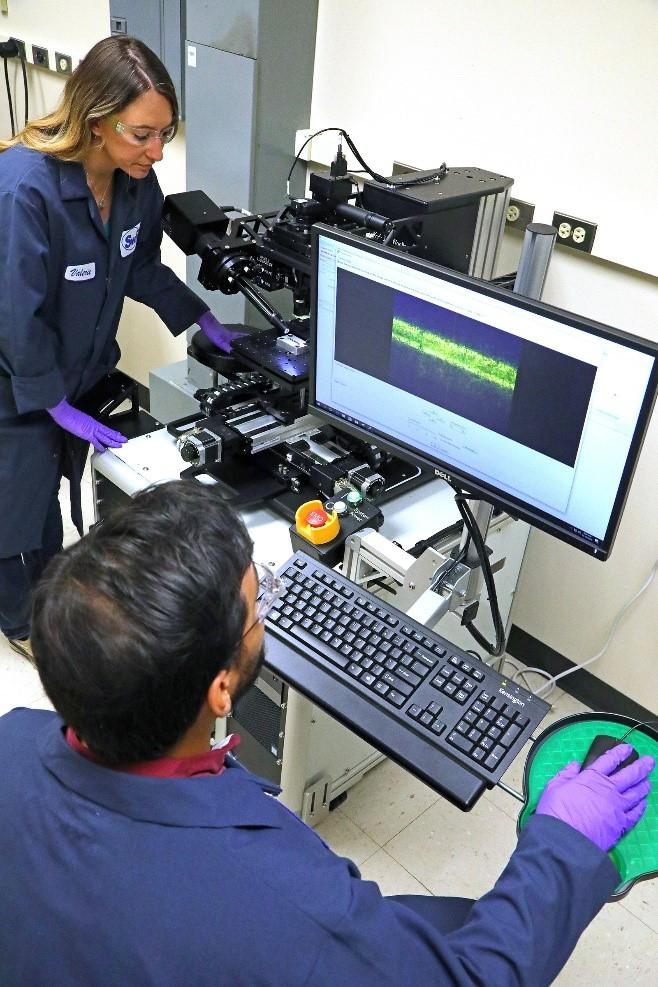
Highly precise ellipsometer can measure harmful deposits on fuel injector surfaces
IMAGE

Credit: Southwest Research Institute


SAN ANTONIO — Feb. 3, 2020 — Southwest Research Institute has created a new test that significantly reduces the time and fuel needed to evaluate the formation of internal deposits on diesel engine fuel injectors. The test utilizes a custom-built injector rig. Any deposits formed in the injector are measured with a variable angle spectroscopic ellipsometer (VASE), which is a tool typically used by computer engineers to examine layers in microchips.

Internal diesel injector deposit (IDID) tests have been used for several decades to study the formation of deposits caused by fuels, additives, and contaminants. Some tests are used to determine if certain additives can prevent deposits or help remove them once they have formed.

“Deposits can slow down or even plug an injector, which can stop the engine from working,” said Doug Yost, staff engineer in SwRI’s Fuels and Lubricants Division. “For many years, the most common IDID test methods involved some combination of full-size engines and test fuels, perhaps doped with excessive levels of additives or contaminants, which would ultimately yield deposits that can be characterized with the naked eye. But the need to visually rate the deposits meant that abnormally high levels of deposit were required. Obtaining the high levels of deposit meant using higher than typical amounts of additives or contaminants. These test conditions were not representative of usual engine operation.”

The solution for this fuel injector quandary came from an entirely different industry: computer circuit production. The SwRI research team became aware of the VASE, a highly accurate device most frequently used to measure the thickness of microchip layers during assembly.

“Instead of microchip layers, our VASE measures the thickness of deposits in the fuel injector,” Yost said.

The VASE can identify deposits as thin as 10 nanometers, invisible to the naked eye. It works by measuring a material’s response to light, which depends on the thickness of the material being tested, allowing the ellipsometer to measure the thickness of the material to an incredibly precise degree. IDID testing, which previously took hundreds of hours and required several hundred gallons of fuel, has been reduced to a seven-hour process that uses roughly seven liters of fuel.

“There’s no more measuring with the naked eye,” he said. “We run the fuel test, and the VASE measures the thickness of the deposits on the injector parts.”

SwRI began offering its new, highly accurate internal diesel injector deposit tests in November 2019.

###

For more information, visit https://www.swri.org/us-army-tardec-fuels-lubricants-research-facility.

Release url with: https://www.swri.org/press-release/vase-diesel-engine-fuel-injector-deposit-measurement?utm_source=EurekAlert!&utm_medium=Distribution&utm_campaign=VASE-PR

Client service link: https://www.swri.org/us-army-tardec-fuels-lubricants-research-facility?utm_source=EurekAlert!&utm_medium=SwRI&utm_campaign=VASE-PR

Media Contact
Joanna Carver
[email protected]
210-522-2073

Original Source

https://www.swri.org/press-release/vase-diesel-engine-fuel-injector-deposit-measurement?utm_source=EurekAlert!&utm_medium=Distribution&utm_campaign=VASE-PR

Tags: Computer ScienceResearch/DevelopmentSoftware EngineeringTechnology/Engineering/Computer ScienceVehicles
Share12Tweet8Share2ShareShareShare2

Related Posts

Community Involvement Eases Depression in China’s Empty Nesters

February 8, 2026

Group Therapy Boosts Recovery in Elderly Depression

February 8, 2026

Evaluating Biosimilar Trastuzumab for Breast Cancer in Thailand

February 8, 2026

Decoding Phantom Limb Movements via Intraneural Signals

February 8, 2026
Please login to join discussion

POPULAR NEWS

  • Robotic Ureteral Reconstruction: A Novel Approach

    Robotic Ureteral Reconstruction: A Novel Approach

    82 shares
    Share 33 Tweet 21
  • Digital Privacy: Health Data Control in Incarceration

    63 shares
    Share 25 Tweet 16
  • Breakthrough in RNA Research Accelerates Medical Innovations Timeline

    53 shares
    Share 21 Tweet 13
  • Mapping Tertiary Lymphoid Structures for Kidney Cancer Biomarkers

    50 shares
    Share 20 Tweet 13

About

We bring you the latest biotechnology news from best research centers and universities around the world. Check our website.

Follow us

Recent News

Community Involvement Eases Depression in China’s Empty Nesters

Group Therapy Boosts Recovery in Elderly Depression

Evaluating Biosimilar Trastuzumab for Breast Cancer in Thailand

Subscribe to Blog via Email

Enter your email address to subscribe to this blog and receive notifications of new posts by email.

Join 74 other subscribers
  • Contact Us

Bioengineer.org © Copyright 2023 All Rights Reserved.

Welcome Back!

Login to your account below

Forgotten Password?

Retrieve your password

Please enter your username or email address to reset your password.

Log In
No Result
View All Result
  • Homepages
    • Home Page 1
    • Home Page 2
  • News
  • National
  • Business
  • Health
  • Lifestyle
  • Science

Bioengineer.org © Copyright 2023 All Rights Reserved.