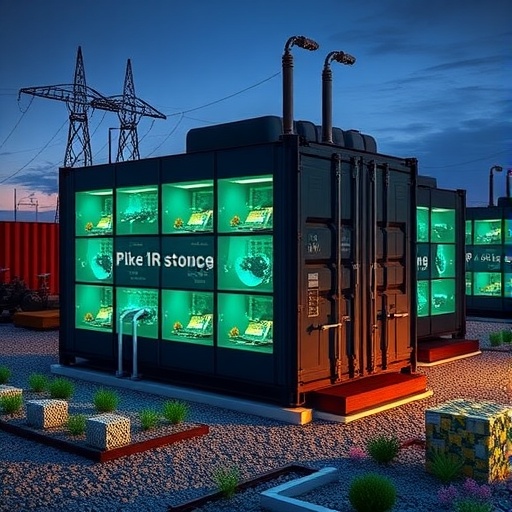
SAN ANTONIO—A new approach to powering data centers could soon combine batteries and hydrogen in a single, intelligent microgrid controller. Southwest Research Institute (SwRI) and SMU (Southern Methodist University) are developing an AI-driven system designed to coordinate multiple energy sources and long-duration storage in real time, with the goal of improving reliability, efficiency, and resilience during grid stress.
The project is supported by a $129,842 grant from the SPARKS (Seed Projects Aligning Research, Knowledge and Skills) joint program, which strengthens long-term collaboration between SwRI and SMU’s Lyle School of Engineering. The work targets a critical challenge: electricity demand is rising quickly as AI computing expands, forcing utilities and operators to find dependable, scalable power—especially when renewables fluctuate or outages extend.
Batteries excel for short-term storage, but their duration is limited. Hydrogen-based storage, by contrast, can extend energy availability from hours to days, making it attractive for prolonged disruptions. The microgrid concept pairs a battery energy storage system (BESS) with a long-duration hydrogen energy storage system (HESS), enabling energy to be shifted across both short and long timescales.
At the core of the system is a hybrid energy stack that includes fuel cells, advanced solid-state storage technologies, renewable generation, and grid integration. Hydrogen is produced on site using electrolyzers that split water into hydrogen and oxygen through electrolysis, allowing energy to be stored chemically and later converted back into electricity through fuel cells.
The AI controller will manage energy dispatch under realistic operating conditions while optimizing cost and renewable utilization. Rather than relying on fixed control rules, it will use physics-informed artificial intelligence to respect equipment constraints—factors that directly influence performance and long-term lifetime of storage and conversion components.
To train and validate decision-making, the team will employ a digital twin: a continuously updated virtual replica of the physical microgrid. This model will emulate workloads relevant to data centers and capture system dynamics needed to test dispatch strategies before deployment.
Crucially, SwRI’s on-campus infrastructure—featuring grid-connected BESS capacity ranging from 250 kilowatts to 500 kilowatt-hours—will support rigorous hardware-in-the-loop testing. Using real controllers in an emulated environment, engineers can stress the AI with rapid load swings, renewable volatility, and grid events without putting customers or the grid at risk.
“We’re working to create a control system that helps hybrid microgrids integrate long-duration energy storage and renewable power without sacrificing reliability,” said Dr. Richard Fu of SwRI. Dr. Jianhui Wang of SMU added that the digital twin and physics-informed AI approach enable intelligent coordination while respecting constraints.
“This work demonstrates how SwRI can contribute to the effective development of next generation data centers or other critical facilities by designing, controlling, and validating resilient, low-carbon power systems from concept through deployment,” Fu said. For further context, the project builds on SwRI’s broader expertise in advanced algorithms, energy storage technologies, and performance validation.
Subject of Research: AI-driven hybrid microgrid control (BESS + hydrogen long-duration storage)
Article Title: SwRI and SMU Developing AI Controller for Battery-Hydrogen Hybrid Microgrids
News Publication Date: July 14, 2026
Web References: https://www.swri.org/markets/energy-environment/power-generation-utilities/conventional-power-generation/energy-storage-systems
References: SPARKS grant (Seed Projects Aligning Research, Knowledge and Skills) between SwRI and SMU Lyle School of Engineering
Image Credits: Southwest Research Institute
Tags: advanced solid-state energy storageAI-controlled microgrid managementAI-driven energy grid optimizationbattery and hydrogen integrationgrid reliability during outageshybrid energy systems for data centerslong-duration energy storage solutionsmulti-modal energy storage systemsreal-time energy source coordinationrenewable energy and fuel cell integrationresilient microgrid designscalable microgrid control systems