• HOME
  • NEWS
  • EXPLORE
    • CAREER
      • Companies
      • Jobs
    • EVENTS
    • iGEM
      • News
      • Team
    • PHOTOS
    • VIDEO
    • WIKI
  • BLOG
  • COMMUNITY
    • FACEBOOK
    • INSTAGRAM
    • TWITTER
Monday, May 18, 2026
BIOENGINEER.ORG
No Result
View All Result
  • Login
  • HOME
  • NEWS
  • EXPLORE
    • CAREER
      • Companies
      • Jobs
        • Lecturer
        • PhD Studentship
        • Postdoc
        • Research Assistant
    • EVENTS
    • iGEM
      • News
      • Team
    • PHOTOS
    • VIDEO
    • WIKI
  • BLOG
  • COMMUNITY
    • FACEBOOK
    • INSTAGRAM
    • TWITTER
  • HOME
  • NEWS
  • EXPLORE
    • CAREER
      • Companies
      • Jobs
        • Lecturer
        • PhD Studentship
        • Postdoc
        • Research Assistant
    • EVENTS
    • iGEM
      • News
      • Team
    • PHOTOS
    • VIDEO
    • WIKI
  • BLOG
  • COMMUNITY
    • FACEBOOK
    • INSTAGRAM
    • TWITTER
No Result
View All Result
Bioengineer.org
No Result
View All Result
Home NEWS Science News Health

Sweet potato microbiome research important first step towards improving yield

Bioengineer by Bioengineer
April 22, 2020
in Health
Reading Time: 2 mins read
0
IMAGE
Share on FacebookShare on TwitterShare on LinkedinShare on RedditShare on Telegram

IMAGE

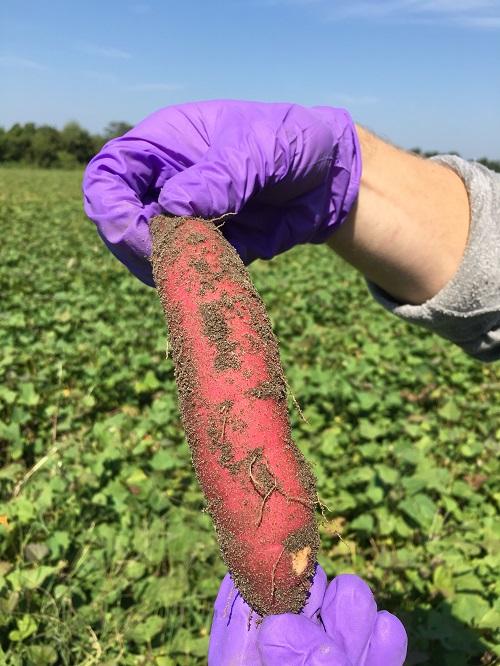
Credit: Brooke Bissinger

Grown around the world, sweet potatoes are an important source of nutrition particularly in sub-Saharan African and Asian diets. Sweet potatoes are especially significant to sub-Saharan Africa as a source of Vitamin A, a nutrient commonly deficient in the region. While China currently produces the most sweet potatoes by country, sub-Saharan Africa has more land devoted to sweetpotatoes and continues to expand production. Farmers elsewhere are also increasingly growing sweetpotatoes.

Despite the importance of sweet potato, little is known about the sweet potato microbiome. “A plant’s microbiome profoundly impacts its health and development,” explains Brooke Bissinger, an entomologist who recently published a study on sweet potatoes in Phytobiomes Journal. “We sought to better understand the sweet potato microbiomes by characterizing it within and between actual working farms.”

Bissinger and her colleagues work for AgBiome which was funded by the Bill & Melinda Gates Foundation to identify and develop beneficial microbes that would protect sweet potatoes in the developing world from insects. They used this opportunity to characterize the sweet potato microbiome in order to inform their project and provide information for other researchers interested in similar work.

They found that, similar to more popularly studied crops, the sweet potato microbiome follows the two-step model of development.

“We demonstrated a striking variability in the microorganisms that make up the sweet potato microbiome across a single farm. Despite this variability, we found commonalities in how the microbiome develops across fields within a single sweet potato farm and across two farms in the same region,” says Charles Pepe-Ranney, microbial genomics data scientist and lead author of the paper.

This is the first study to characterize the sweet potato microbiome using modern, next-generation sequencing technology–an important first step towards leveraging the microbiome to improve sweet potato yield.

“Also of note, our study suggests that the sweet potato presents a strong ecological challenge to its endophytes (microbes that live inside a plant),” says Pepe-Ranney. “If we are going to develop a sweet potato endophyte that protects sweetpotatoes from pests, for example, this sweet potato-beneficial endophyte must be able to withstand the strong ecological pressure from the sweet potato itself.”

For more information, read “Surveying the Sweetpotato Rhizosphere, Endophyte, and Surrounding Soil Microbiomes at Two North Carolina Farms Reveals Underpinnings of Sweetpotato Microbiome Community Assembly” published in the March issue of the open access Phytobiomes Journal.

###

Media Contact
Ashley Bergman Carlin
[email protected]

Related Journal Article

http://dx.doi.org/10.1094/PBIOMES-07-19-0038-R

Tags: AgricultureEarth ScienceEcology/EnvironmentFood/Food ScienceGeology/SoilMicrobiologyNutrition/NutrientsPlant Sciences
Share12Tweet8Share2ShareShareShare2

Related Posts

AI Tool in Radiotherapy Advances Global Fight to Eradicate Cervical Cancer

May 18, 2026

New Study Reveals the Massive Economic Impact of Tuberculosis

May 17, 2026

Age Discrimination Affects Healthcare Use in India

May 17, 2026

Advancements and Insights into Life Expectancy for Chronic Obstructive Pulmonary Disease Patients

May 17, 2026
Please login to join discussion

POPULAR NEWS

  • Research Indicates Potential Connection Between Prenatal Medication Exposure and Elevated Autism Risk

    844 shares
    Share 338 Tweet 211
  • New Study Reveals Plants Can Detect the Sound of Rain

    730 shares
    Share 291 Tweet 182
  • Salmonella Haem Blocks Macrophages, Boosts Infection

    62 shares
    Share 25 Tweet 16
  • Breastmilk Balances E. coli and Beneficial Bacteria in Infant Gut Microbiomes

    58 shares
    Share 23 Tweet 15

About

We bring you the latest biotechnology news from best research centers and universities around the world. Check our website.

Follow us

Recent News

AI Tool in Radiotherapy Advances Global Fight to Eradicate Cervical Cancer

Detecting Illicit Bitcoin Transactions with Temporal Graph Learning

New Study Reveals the Massive Economic Impact of Tuberculosis

Subscribe to Blog via Email

Enter your email address to subscribe to this blog and receive notifications of new posts by email.

Join 82 other subscribers
  • Contact Us

Bioengineer.org © Copyright 2023 All Rights Reserved.

Welcome Back!

Login to your account below

Forgotten Password?

Retrieve your password

Please enter your username or email address to reset your password.

Log In
No Result
View All Result
  • Homepages
    • Home Page 1
    • Home Page 2
  • News
  • National
  • Business
  • Health
  • Lifestyle
  • Science

Bioengineer.org © Copyright 2023 All Rights Reserved.