
In the relentless quest to combat the escalating global water pollution crisis, researchers from the Technical University of Munich have unveiled a pioneering material that promises to revolutionize water purification technologies. Water contamination, primarily driven by anionic pollutants such as nitrates, sulphates, and phosphates, poses dire threats to ecosystems and public health worldwide. Current remediation technologies often involve complex, costly, and environmentally taxing procedures. The recent breakthrough leverages the unique properties of microfibrillated cellulose (MFC) combined with reactive ionic liquids to develop an innovative, sustainable ion-exchange material, thereby opening new horizons in efficient water purification.
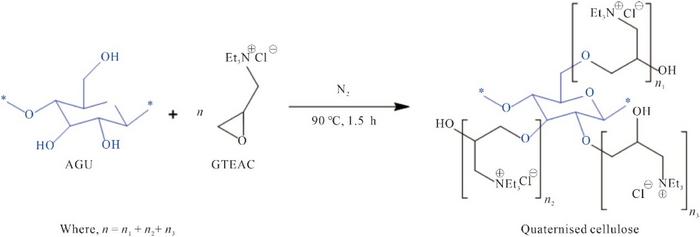
At the heart of this innovation is the functionalization of microfibrillated cellulose using glycidyltriethylammonium chloride (GTEAC), a reactive ionic liquid which grafts quaternary ammonium groups onto the cellulose backbone. This modification transforms MFC into a cationic polyelectrolyte-grafted quaternized microfibrillated cellulose (QMFC) with a high degree of quaternization. The presence of positively charged quaternary ammonium sites endows QMFC with a remarkable affinity for anionic contaminants, an essential attribute for effective ion exchange in aqueous environments. This chemical engineering feat results in a sustainable and recyclable material that excises hazardous anions from contaminated waters with unprecedented efficiency.
One of the groundbreaking aspects of this research lies in the dynamic flow conditions under which QMFC exhibits its ion-exchange prowess. Traditional batch adsorption methods often fail to mimic realistic filtration scenarios. QMFC was tested under dynamic flow, reflecting practical filtration use, and demonstrated extraordinary removal efficiencies: 83.2% of nitrates (NO₃⁻), 98.1% of sulphates (SO₄²⁻), and 94.9% of phosphates (PO₄³⁻) were effectively sequestered from aqueous solutions. These figures underscore the material’s suitability for real-world applications, offering a powerful alternative to existing, less efficient removal strategies.
From a structural perspective, characterization studies involving small-angle X-ray scattering (SAXS) and wide-angle X-ray scattering (WAXS) analyses confirmed that the crystalline architecture of MFC remains substantially intact after the graft polymerization process. This structural retention is crucial as it preserves the mechanical integrity and filtration efficiency of the cellulose network. Concurrently, the grafted amorphous polyelectrolyte segments imbue the material with enhanced hydrophilicity and ion-exchange capacity, enabling robust interaction with anionic species while maintaining structural stability across multiple filtration cycles.
The researchers further demonstrated the impressive durability and reusability of QMFC. Stability tests under repeated filtration cycles revealed minimal loss in ion-exchange capacity, indicating the material’s potential for long-term deployment without frequent replacement. This durability aligns with sustainability goals, as it reduces material waste and operational costs, making QMFC an economically viable option for widespread industrial adoption and portable water purification devices alike.
A core strength of this technology is its alignment with green chemistry principles. The process mass efficiency (PME) of 2.79 and an E-factor of 1.97 indicate low waste generation and efficient utilization of resources throughout the synthesis and functionalization processes. Additionally, the energy efficiency score of 66.3 reflects the comparatively low energy input required to produce QMFC, marking an advancement in environmentally conscious material fabrication. These metrics collectively signal a mindful balance between performance and ecological impact, a critical consideration in modern materials science.
Economic feasibility often dictates the scalability of innovative materials. Impressively, QMFC can be manufactured at a cost of approximately 3.5 Euros per kilogram, a competitive figure that suggests potential for mass production without prohibitive expenses. This affordability enhances the likelihood of QMFC’s integration into both developed and resource-limited settings, amplifying its global impact on water purification efforts, especially in regions burdened by contaminated water sources.
Beyond technical prowess in removing common anionic pollutants, QMFC’s synthetic flexibility offers promising avenues for future enhancements. The precise control over grafting density and polymer chain length within the microfibrillated cellulose matrix can be exploited to tailor ion selectivity and enhance affinity towards a broader spectrum of contaminants. Researchers are particularly interested in expanding the material’s efficacy to target organic pollutants, which remain a persistent challenge in water treatment technologies.
The environmental significance of eliminating nitrates, sulphates, and phosphates cannot be overstated; these ions contribute to eutrophication and toxic algal blooms, which devastate aquatic life and compromise drinking water quality. By providing a green, cost-effective, and efficient alternative to conventional anion exchangers such as synthetic resins or activated carbon, QMFC represents a critical step forward in safeguarding environmental health and promoting sustainable resource management worldwide.
In addition to industrial water treatment plants, the innovative properties of QMFC lend themselves well to portable, user-friendly filtration systems. These devices could empower communities lacking centralized water treatment infrastructure, providing immediate access to cleaner water and reducing exposure to harmful anionic contaminants. The scalable nature and mechanical robustness of the cellulose-based material also suggest potential integration with existing filtration technologies, augmenting their efficacy and lifespan.
One of the more compelling aspects of the study is the interdisciplinary approach, combining materials chemistry, structural analysis, and environmental engineering to address a multifaceted problem. Applying ionic liquids in cellulose chemistry is a novel concept that not only enhances material functionality but also broadens the scope of biomass utilization in high-performance applications. This synergy exemplifies modern scientific innovation, where sustainable materials meet advanced functional design for tangible environmental solutions.
To realize the full potential of quaternized microfibrillated cellulose in water purification, ongoing research will probably focus on refining the grafting processes to maximize ion-exchange capacity while minimizing production complexity. Investigations into the selective removal of mixed ionic species, as well as the material’s performance in real wastewater matrices with competing ions and organic materials, will be crucial in validating the technology’s robustness and scalability under industrial conditions.
In summary, this groundbreaking work from the Technical University of Munich introduces a next-generation ion exchanger synthesized from sustainable cellulose and reactive ionic liquids, charting a promising course toward effective, affordable, and eco-friendly water purification. As global water quality challenges intensify, such innovations are not only timely but essential, demonstrating how advanced materials science can lead the charge in protecting natural resources and human health.
Subject of Research: Not applicable
Article Title: Anion Exchangers Prepared from Graft Polymerisation of Microfibrillated Cellulose Using the Reactive Ionic Liquid
News Publication Date: 22-Apr-2025
Web References:
DOI: 10.1016/j.jobab.2025.04.001
Image Credits: Wood Materials Science, Wood Research Institute of Munich (HFM), Technical University of Munich, Munich 80797, Germany
Keywords
Materials science, Chemistry, Engineering, Technology, Scientific method
Tags: anion exchange materialscationic polyelectrolyte developmentcombating global water pollutionefficient removal of anionic pollutantsenvironmentally friendly water remediationinnovative ion-exchange processesmicrofibrillated cellulose applicationsquaternary ammonium group functionalityreactive ionic liquids in water treatmentrecycling in water purificationsustainable water purification technologiesTechnical University of Munich research advancements