• HOME
  • NEWS
  • EXPLORE
    • CAREER
      • Companies
      • Jobs
    • EVENTS
    • iGEM
      • News
      • Team
    • PHOTOS
    • VIDEO
    • WIKI
  • BLOG
  • COMMUNITY
    • FACEBOOK
    • INSTAGRAM
    • TWITTER
Sunday, May 10, 2026
BIOENGINEER.ORG
No Result
View All Result
  • Login
  • HOME
  • NEWS
  • EXPLORE
    • CAREER
      • Companies
      • Jobs
        • Lecturer
        • PhD Studentship
        • Postdoc
        • Research Assistant
    • EVENTS
    • iGEM
      • News
      • Team
    • PHOTOS
    • VIDEO
    • WIKI
  • BLOG
  • COMMUNITY
    • FACEBOOK
    • INSTAGRAM
    • TWITTER
  • HOME
  • NEWS
  • EXPLORE
    • CAREER
      • Companies
      • Jobs
        • Lecturer
        • PhD Studentship
        • Postdoc
        • Research Assistant
    • EVENTS
    • iGEM
      • News
      • Team
    • PHOTOS
    • VIDEO
    • WIKI
  • BLOG
  • COMMUNITY
    • FACEBOOK
    • INSTAGRAM
    • TWITTER
No Result
View All Result
Bioengineer.org
No Result
View All Result
Home NEWS Science News Chemistry

Sun, moon and sea as part of a ‘seismic probe’

Bioengineer by Bioengineer
April 2, 2019
in Chemistry
Reading Time: 2 mins read
0
IMAGE
Share on FacebookShare on TwitterShare on LinkedinShare on RedditShare on Telegram

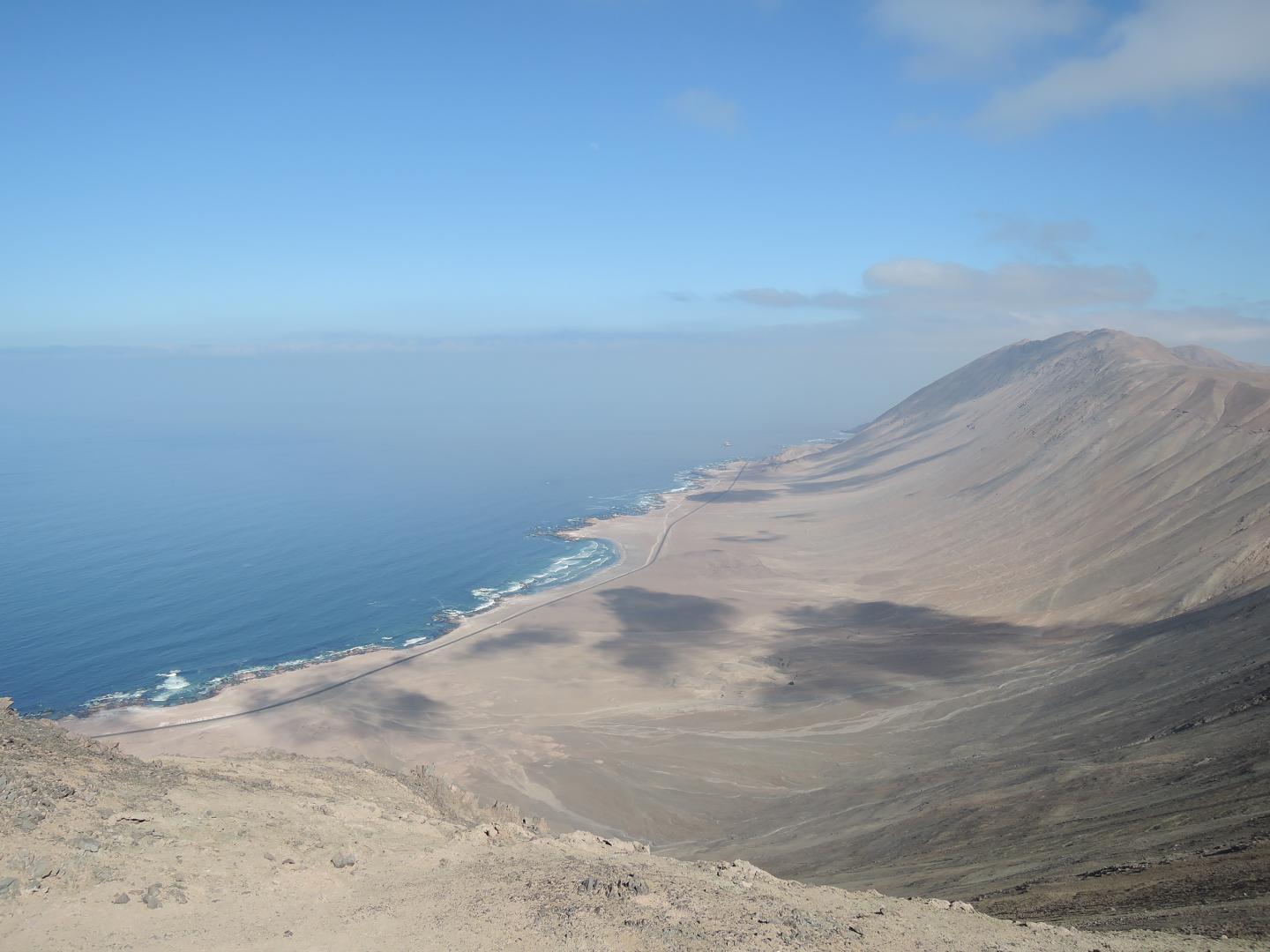
Tides and surf can be used for non-destructive analysis of subsurface; study highlighted by American Physical Society
IMAGE

Credit: C. Sens-Schönfelder, GFZ

Anyone who wants to take a look inside the Earth needs a signal that can penetrate rocks, minerals and other opaque material. Seismic waves represent such a signal. If you record them with a seismometer, you can draw conclusions from the recorded data about the state of the subsurface through which the waves have passed. Knowledge of subsurface stress or strain fluctuations is just as important for safety in construction and mining, for example, as it is for monitoring geological processes in volcanoes and fault zones. Now Christoph Sens-Schönfelder from the GFZ German Research Centre for Geosciences in Potsdam and Tom Eulenfeld from the University of Jena have been able to show that the seismic waves excited by the surf, together with the effect of the Earth’s tides on the subsoil, can be used to better understand the properties of the Earth.

Seismic waves not only provide information about the structure of the Earth’s material, but also about the forces acting on it. For example, deformations of the subsurface change the velocity at which a wave travels. In order to draw conclusions about the subsurface forces from the velocity, however, data is required on how the material reacts to deformations under known conditions. Until now, such data have only been available from laboratory experiments, not from the field.

Christoph Sens-Schönfelder and Tom Eulenfeld have now succeeded for the first time in using a single seismometer to measure how sensitively seismic waves react to the deformation of the Earth’s material they propagate in. In order to achieve that, they evaluated the velocity of the seismic noise generated by the surf. They report on this in the journal Physical Review Letters.

Measuring deformations in the Earth’s interior from the surface

“We use two different signals that the environment provides us with naturally,” explains Christoph Sens-Schönfelder. “Due to the tidal effect of the moon and the sun, the universe conducts a permanent deformation experiment with the Earth. The luminaries pull with great regularity on our planet. To observe this pulling, we use the seismic noise in the underground that is generated by the surf.”

The relation investigated by Christoph Sens-Schönfelder and Tom Eulenfeld allows in principle a measurement of the deformations inside the Earth by means of recordings of seismographs on the Earth’s surface. And that without having to drill into the ground.

The data that the two researchers investigated was recorded by the Integrated Plate Boundary Observatory in the Atacama Desert in northern Chile. Improved software was needed to detect even the slightest changes in wave velocity and to combine these changes with the deformation of the subsurface by the tides. Since this tidal deformation is known with high accuracy, it is possible to characterize the subsurface more comprehensively than before.

###

Media Contact
Philipp Hummel
[email protected]
Tags: Earth ScienceGeology/SoilGeophysics/GravityPlanets/MoonsStars/The Sun
Share12Tweet8Share2ShareShareShare2

Related Posts

Miniature Sensor Uses Light to Detect Touch — Chemistry

Miniature Sensor Uses Light to Detect Touch

May 8, 2026
Iron Minerals Determine Whether Dissolved Organic Matter Fuels Microbes or Becomes Long-Term Carbon Storage — Chemistry

Iron Minerals Determine Whether Dissolved Organic Matter Fuels Microbes or Becomes Long-Term Carbon Storage

May 8, 2026

Kate Evans Appointed Associate Lab Director for Biological and Environmental Systems Science at ORNL

May 8, 2026

Advancing Multiscale Modeling and Overcoming Operational Challenges in Autothermal CO₂-to-Methanol Reactors

May 8, 2026
Please login to join discussion

POPULAR NEWS

  • Research Indicates Potential Connection Between Prenatal Medication Exposure and Elevated Autism Risk

    840 shares
    Share 336 Tweet 210
  • New Study Reveals Plants Can Detect the Sound of Rain

    727 shares
    Share 290 Tweet 181
  • Scientists Investigate Possible Connection Between COVID-19 and Increased Lung Cancer Risk

    68 shares
    Share 27 Tweet 17
  • Salmonella Haem Blocks Macrophages, Boosts Infection

    61 shares
    Share 24 Tweet 15

About

We bring you the latest biotechnology news from best research centers and universities around the world. Check our website.

Follow us

Recent News

Evaluating Digoxin Use in Patients with Symptomatic Rheumatic Heart Disease

Evaluating the Effectiveness and Safety of Digitalis Glycosides in Treating Heart Failure

Urdu Fall Risk Questionnaire Adapted for Elderly

Subscribe to Blog via Email

Enter your email address to subscribe to this blog and receive notifications of new posts by email.

Join 82 other subscribers
  • Contact Us

Bioengineer.org © Copyright 2023 All Rights Reserved.

Welcome Back!

Login to your account below

Forgotten Password?

Retrieve your password

Please enter your username or email address to reset your password.

Log In
No Result
View All Result
  • Homepages
    • Home Page 1
    • Home Page 2
  • News
  • National
  • Business
  • Health
  • Lifestyle
  • Science

Bioengineer.org © Copyright 2023 All Rights Reserved.