

• HOME
  • NEWS
  • EXPLORE
    • CAREER
      • Companies
      • Jobs
    • EVENTS
    • iGEM
      • News
      • Team
    • PHOTOS
    • VIDEO
    • WIKI
  • BLOG
  • COMMUNITY
    • FACEBOOK
    • INSTAGRAM
    • TWITTER
Tuesday, September 1, 2026
BIOENGINEER.ORG
No Result
View All Result
  • Login
  • HOME
  • NEWS
  • EXPLORE
    • CAREER
      • Companies
      • Jobs
        • Lecturer
        • PhD Studentship
        • Postdoc
        • Research Assistant
    • EVENTS
    • iGEM
      • News
      • Team
    • PHOTOS
    • VIDEO
    • WIKI
  • BLOG
  • COMMUNITY
    • FACEBOOK
    • INSTAGRAM
    • TWITTER
  • HOME
  • NEWS
  • EXPLORE
    • CAREER
      • Companies
      • Jobs
        • Lecturer
        • PhD Studentship
        • Postdoc
        • Research Assistant
    • EVENTS
    • iGEM
      • News
      • Team
    • PHOTOS
    • VIDEO
    • WIKI
  • BLOG
  • COMMUNITY
    • FACEBOOK
    • INSTAGRAM
    • TWITTER
No Result
View All Result
Bioengineer.org
No Result
View All Result
Home NEWS Science News Biology

Sumatran tigers on path to recovery in ‘in danger’ UNESCO World Heritage site

Bioengineer by Bioengineer
October 23, 2017
in Biology
Reading Time: 2 mins read
0
Share on FacebookShare on TwitterShare on LinkedinShare on RedditShare on Telegram
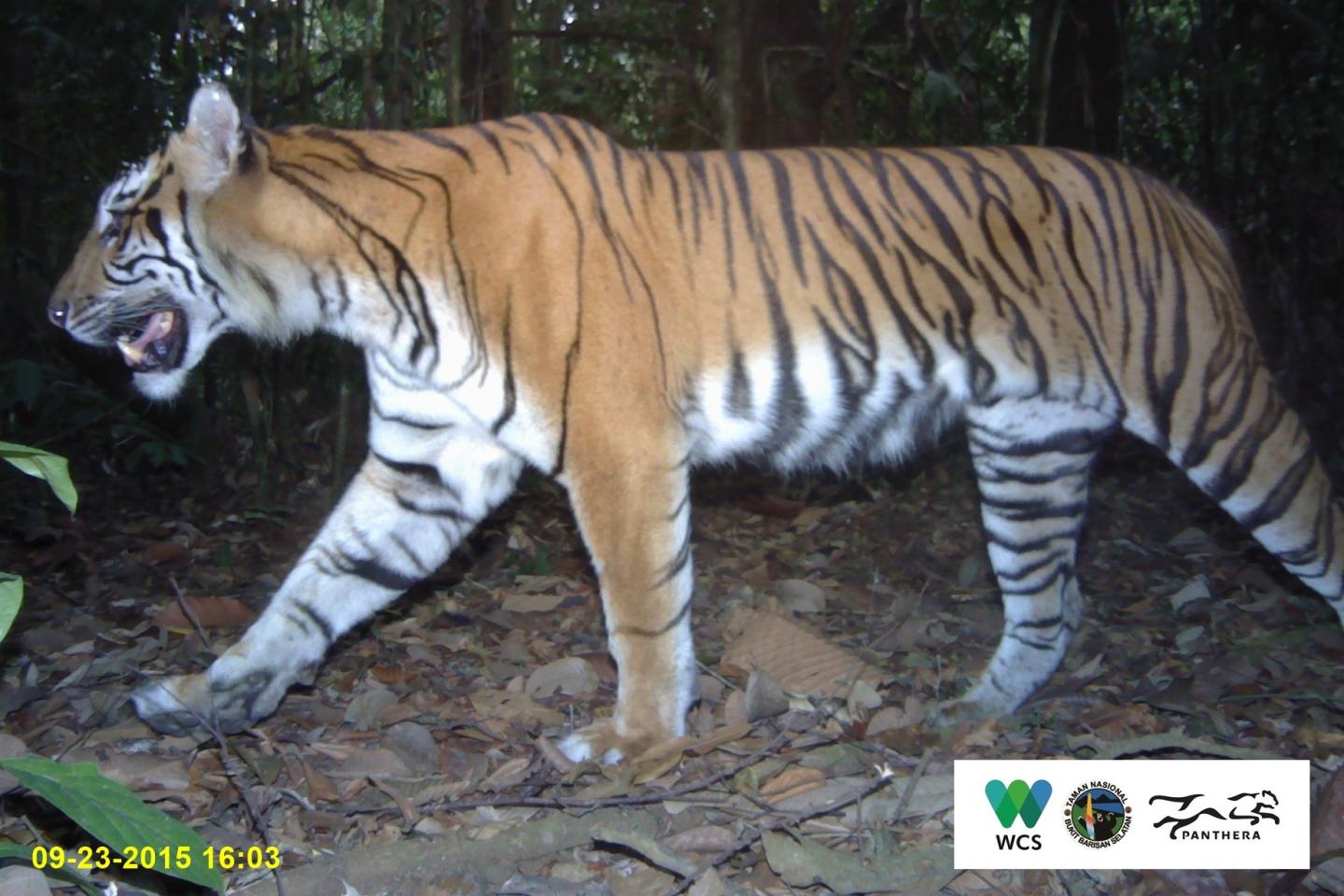
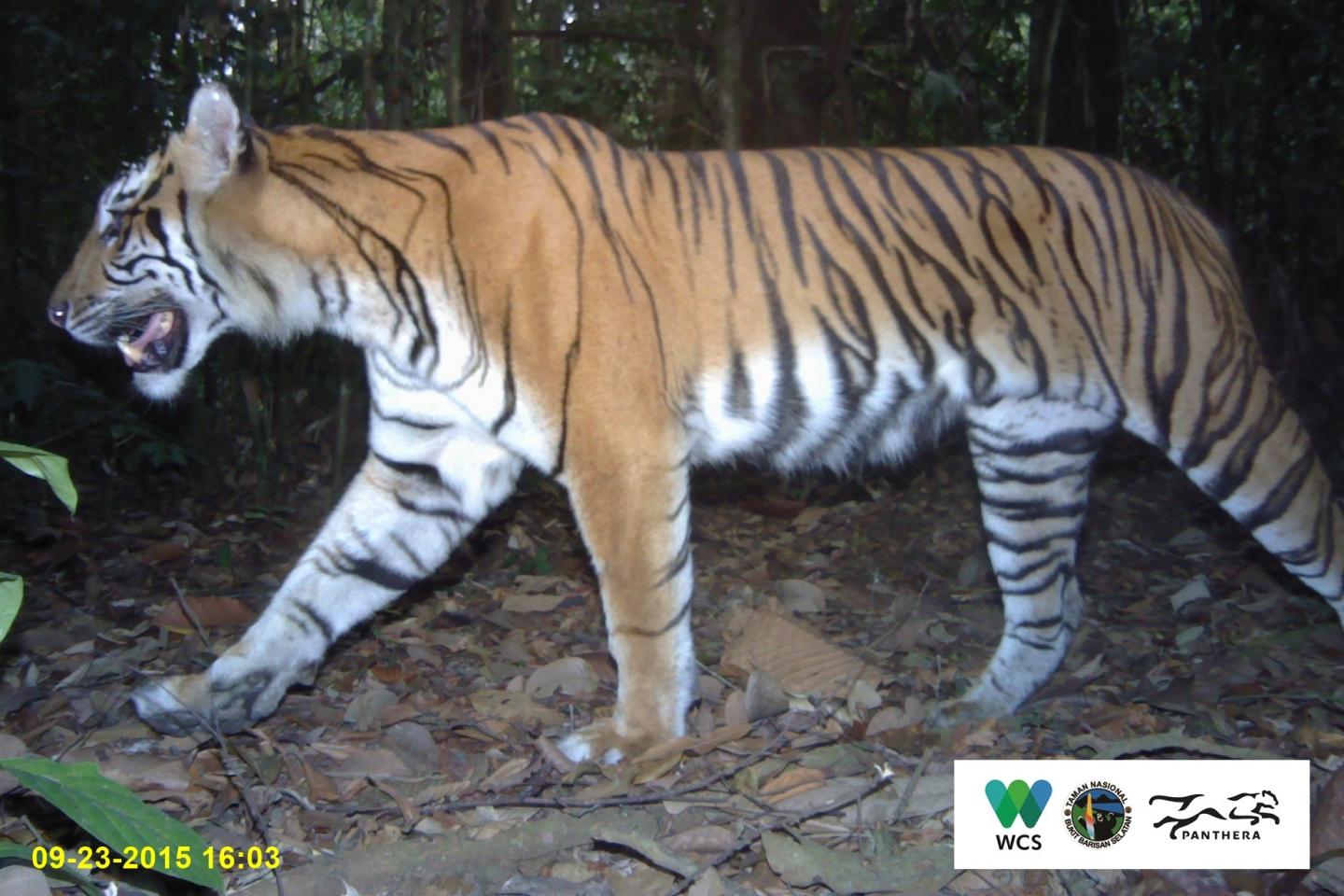
IMAGE

Credit: WCS/Panthera

Jakarta, Indonesia (Oct. 23, 2017) – A new scientific publication from WCS (Wildlife Conservation Society) and the Bukit Barisan Selatan National Park Authority looks at the effectiveness of the park's protection zone and finds that the density of Sumatran tigers has increased despite the continued threat of living in an 'In Danger' World Heritage Site.

Living only on the Indonesian island of Sumatra, the Critically Endangered Sumatran tiger (Panthera tigris sumatrae) is the only extant sub-species of 'Island tigers', which includes the now-extinct Javan and Bali tiger. This sub-species is genetically distinct from the other six sub-species of continental tigers.

Sumatran tigers face many challenges to their continued existence in the wild, where they require a home range of 25,000 hectares. These include being poached for their skin, bones and other body parts, involvement in conflict with people, a depleted prey base, and habitat loss.

The study set 123 PantheraCam camera traps over a 1,000 km2 forest block located in a protection zone specially designated by the Bukit Barisan Selatan National Park Authority to improve park protection and aid in the recovery of flagship species.

Results of the camera-trap study showed a Sumatran tiger population density increase to 2.8 tigers/100 km2 (2015) from 1.6 tigers/100 km2 (2002). Furthermore, the proportion of male and female tigers recently recorded was 1: 3. "This ratio indicates that the tiger population in the National Park is in a healthy condition and breeding opportunity exists for many females within the areas we surveyed," said lead author, Wulan Pusparini, WCS Species Conservation Specialist. "Our study not only looks at population condition, but also used the photographs to assess the threat of people illegally entering the park."

Timbul Batubara, one of the co-authors and the then head of the Bukit Barisan National Park stated, "The tiger population increase can't be separated from our efforts to maintain this area through ranger patrols. With support from WCS and other partners, we conducted patrols in and around the park to remove tiger and prey snare traps and prevent habitat encroachment."

WCS-Indonesia Country Director and co-author of the paper Dr Noviar Andayani added, "This increasing population trend in Sumatran tigers is a dream come true for all conservationists in Indonesia. I appreciate the work of the park authority and our field team for their efforts in not only protecting tigers and their habitat, but also collecting robust research data to demonstrate this trend and ensure that in the coming years, the UNESCO Tropical Heritage of Sumatra can be removed from the 'in danger list'."

###

This work was supported by Panthera and the U.S. Fish and Wildlife Service.

Media Contact

Stephen Sautner
[email protected]
718-220-3682
@TheWCS

http://www.wcs.org

Original Source

https://newsroom.wcs.org/News-Releases/articleType/ArticleView/articleId/10630/Critically-Endangered-Sumatran-Tigers-On-Path-To-Recovery-in-an-In-Danger-UNESCO-World-Heritage-Site.aspx http://dx.doi.org/10.1017/S0030605317001144

Share12Tweet8Share2ShareShareShare2

Related Posts

Methylation puts parasites in motion

Methylation puts parasites in motion

August 31, 2026
Desiccation promotes DNA damage and rifampin resistance in Mycobacterium tuberculosis

Desiccation promotes DNA damage and rifampin resistance in Mycobacterium tuberculosis

August 31, 2026

Gastrointestinal Parasitism in Cattle and Water Buffaloes in Pakistan: Prevalence and Associated Risk Factors

August 31, 2026

Development of HPLC–PDA method for steviol glycosides analysis in food matrices

August 31, 2026
Please login to join discussion

POPULAR NEWS

  • β-Sitosterol from Ipomoea carnea Jacq. As a promising anti-inflammatory agent: Evidence from in silico modeling and in vitro validation

    29 shares
    Share 12 Tweet 7
  • Design, fabrication and characterization of a wearable Fiber Bragg grating sensor for cardiorespiratory monitoring using finger plethysmography

    29 shares
    Share 12 Tweet 7
  • KAIST opens the era of industrial-scale microbial foods, proposing growth strategies for the next-generation protein market

    29 shares
    Share 12 Tweet 7
  • Virologist awarded $2 million NIH grant to investigate how virus-infected cells live and die

    29 shares
    Share 12 Tweet 7

About

We bring you the latest biotechnology news from best research centers and universities around the world. Check our website.

Follow us

Recent News

β-Sitosterol from Ipomoea carnea Jacq. As a promising anti-inflammatory agent: Evidence from in silico modeling and in vitro validation

Design, fabrication and characterization of a wearable Fiber Bragg grating sensor for cardiorespiratory monitoring using finger plethysmography

KAIST opens the era of industrial-scale microbial foods, proposing growth strategies for the next-generation protein market

Subscribe to Blog via Email

Enter your email address to subscribe to this blog and receive notifications of new posts by email.

Join 85 other subscribers
  • Contact Us

Bioengineer.org © Copyright 2023 All Rights Reserved.

Welcome Back!

Login to your account below

Forgotten Password?

Retrieve your password

Please enter your username or email address to reset your password.

Log In
No Result
View All Result
  • Homepages
    • Home Page 1
    • Home Page 2
  • News
  • National
  • Business
  • Health
  • Lifestyle
  • Science

Bioengineer.org © Copyright 2023 All Rights Reserved.