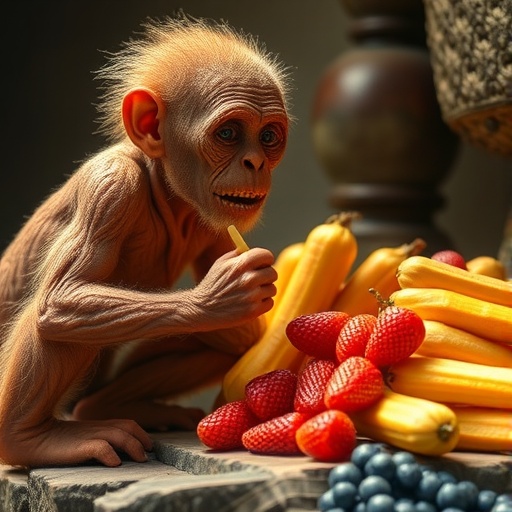
The human brain may owe its extraordinary expansion not only to meat and other animal foods, but also to the sweetness of fruit, honey and other carbohydrate-rich foods, according to a new analytical review published in Science. The study challenges a long-standing narrative in human evolution that places animal protein, fat and omega-3 fatty acids at the center of the dietary changes that enabled our ancestors to develop larger brains and more complex bodies. By reconstructing the energetic demands of humans across roughly four million years, researchers argue that natural sugars and starches may have been just as important to the story of human development.
The review, led by Jennie Brand-Miller and colleagues, examines how changes in brain size, body size, activity levels and metabolic requirements may have shaped the diets of early hominins. Their modeling suggests that naturally occurring sugars could have supplied approximately 20 to 35 percent of total dietary energy during substantial periods of human evolution. These carbohydrates would have been available from foods such as ripe fruits, honey and possibly other plant sources. The researchers argue that this energy could have been especially valuable because the human brain consumes a disproportionately large amount of glucose compared with its size.
The brain is a metabolically expensive organ. Although it accounts for only a small fraction of total body mass, it requires a continuous supply of energy to maintain electrical signaling, synthesize neurotransmitters and support the activity of billions of neurons. Glucose is a major fuel for the brain under ordinary dietary conditions, while other tissues, including red blood cells, rely heavily or exclusively on glucose. As hominin brains increased in size and bodies became more active, the demand for rapidly available energy would also have risen. The researchers propose that carbohydrate-rich foods helped meet this demand alongside the nutrients supplied by animal foods.
The findings do not reject the importance of meat, fish or other animal products. Instead, they present human evolution as the result of a broader dietary strategy. Animal foods provided concentrated protein and fats and may have supported changes in anatomy, including smaller teeth, reduced jaw size and a shorter digestive tract. These adaptations are often interpreted as evidence that meat became increasingly central to the human diet. However, the new review argues that the evolutionary advantages associated with animal foods may have developed in parallel with an expanding reliance on carbohydrate sources.
Natural sweetness may also have influenced food choice and foraging behavior. Sugars provide immediate energy, and humans possess specialized sensory and metabolic systems that detect and process sweet foods. The strong preference for sweetness seen in modern humans could reflect, in part, an ancient attraction to energy-dense resources. Fruit and honey are not uniformly available, however. Their abundance changes with season, rainfall, temperature and habitat conditions. The researchers suggest that these fluctuations may have encouraged early humans to develop larger ranging patterns, more flexible diets and improved memory for the location and timing of valuable food sources.
Honey may have been particularly significant because it combines highly concentrated sugars with relatively little structural material. Although direct evidence for honey consumption by early hominins is limited, the potential energetic value of honey makes it an important component of the researchers’ evolutionary model. Accessing it would have required practical skills and, in some environments, cooperation or the use of tools. Fruit, meanwhile, could have supplied sugars, water and micronutrients, although its availability and nutritional composition would have varied widely among ecosystems and seasons.
The review also highlights the likely importance of cooking. Before cooking became widespread, much of the carbohydrate available to hominins may have come from raw fruits and other naturally sweet foods. Cooking later increased access to starch by softening plant tissues, gelatinizing starch granules and making certain underground storage organs and seeds easier to digest. It also reduced the time and energy required to chew and process these foods. By improving the digestibility of starch, cooking could have expanded the carbohydrate supply available to populations whose brains and bodies had increasingly high energy requirements.
The researchers connect these dietary changes to human physiology and genetics. Modern humans possess adaptations related to glucose transport, insulin regulation and starch digestion, including variation in the number of copies of the salivary amylase gene, which helps begin starch breakdown in the mouth. Such traits do not provide a simple record of ancient diets, but they indicate that carbohydrate metabolism has been important in human biology for a long time. The review combines these biological clues with estimates of energy expenditure and body composition to build a model of how sugars and starches may have contributed to human evolution.
The study also raises questions about the relationship between ancient dietary flexibility and modern health. Human metabolic systems evolved in environments where sweet foods were often seasonal, difficult to obtain or physically demanding to process. Today, refined sugars and highly processed starches are widely available in concentrated forms, creating nutritional conditions that differ sharply from those experienced by most of our ancestors. The evolutionary importance of carbohydrates does not mean that all modern sources of sugar are equivalent to fruit, honey or cooked plant foods. Instead, the authors emphasize that the type, concentration and availability of carbohydrates matter when considering their effects on health.
By placing sugars and starches alongside animal foods in the evolutionary record, the review offers a more complex explanation for the emergence of the human brain. It suggests that human evolution was powered by dietary diversity rather than by a single transformative food. Meat and other animal products may have supplied essential nutrients, while naturally sweet foods and later cooked starches helped provide the glucose required by an energetically demanding brain. The researchers’ estimate that natural sugars supplied roughly one-fifth to one-third of dietary energy during much of human evolution adds a striking dimension to the familiar story of how humans became human: the path to a larger brain may have been fueled not only by hunting, but also by the pursuit of sweetness.
Subject of Research: The role of sugars, carbohydrates and starches in human brain development and evolution
Article Title: Sweet: Sugars, diet, and human evolution—an analytical review
News Publication Date: 6-Aug-2026
Web References: https://doi.org/10.1126/science.aed8437
References: Brand-Miller et al., Science, “Sweet: Sugars, diet, and human evolution—an analytical review”
Keywords: human evolution, brain evolution, carbohydrates, sugars, starch, fruit, honey, cooking, diet, glucose metabolism, neuroscience, anthropology, nutrition, Science
Tags: carbohydrate-rich foods in human evolutiondietary adaptations of early homininsdietary energy sources in early humansearly human dietsevolution of human brain and body sizehuman evolutionimpact of fruit and honey on human brain sizeinfluence of sugars on human metabolic evolutionrethinking human dietary evolution modelsrole of natural sugars in brain developmentrole of plant foods in human evolutionary successsignificance of starches and sugars in human history