


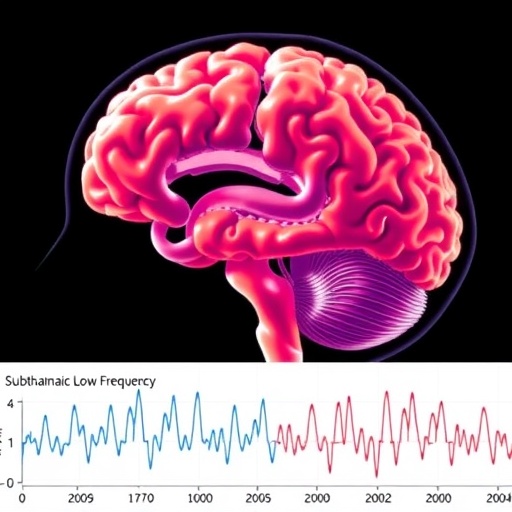
In a groundbreaking development that promises to revolutionize our understanding of Parkinson’s disease, a team of researchers led by Bernasconi, Averna, and D’Onofrio has unveiled pivotal insights into the neuropsychiatric dimensions of this complex disorder. Published in the highly regarded journal npj Parkinsons Disease in 2026, their study elucidates how low-frequency activity within the subthalamic nucleus (STN) serves as a critical biomarker for acute neuropsychiatric states in patients suffering from Parkinson’s disease. This discovery opens new avenues for more precise diagnostics and personalized therapeutic interventions, potentially transforming patient care and clinical outcomes.
Parkinson’s disease (PD), characterized primarily by its motor symptoms such as tremors, rigidity, and bradykinesia, also entails a significant burden of neuropsychiatric disturbances including anxiety, depression, and hallucinations. These non-motor symptoms drastically impair quality of life but remain challenging to monitor and treat effectively due to insufficient objective markers. The study in question addresses this critical gap by identifying distinctive low-frequency oscillatory patterns in the STN, a basal ganglia structure implicated in movement control and emotional regulation, which correlate directly with the patients’ acute neuropsychiatric states.
The subthalamic nucleus has long been a focal point for neurological research, particularly in the context of deep brain stimulation (DBS) therapy, which involves electrical modulation of this nucleus to alleviate motor symptoms in Parkinsonian patients. However, until now, the electrophysiological dynamics of the STN related specifically to neuropsychiatric symptoms have remained elusive. Through chronic recordings obtained during DBS procedures, Bernasconi and colleagues meticulously analyzed neural oscillations across various frequency bands. They discovered that heightened low-frequency activity notably parallels the episodic emergence of neuropsychiatric symptoms, providing a real-time neural signature of psychiatric distress.
Technically, this low-frequency activity spans the delta (1-4 Hz) and theta (4-8 Hz) bands, which are known to be involved in cognitive and emotional processing in the brain. By employing advanced signal processing techniques and machine learning algorithms, the researchers were able to extract and classify these oscillatory patterns from the noisy neural environment with remarkable accuracy. This level of precision is paramount for translating electrophysiological signals into actionable clinical insights, especially for conditions typified by fluctuating symptomatology such as Parkinson’s.
The study’s methodology involved a cohort of patients undergoing standard DBS implantation, equipped with neural recording devices capable of capturing local field potentials from the STN. Throughout the perioperative and post-implantation periods, patients were rigorously assessed for neuropsychiatric symptoms using validated clinical scales. The synchrony between recorded low-frequency neural activity and the clinical assessments was striking. These findings underscore the STN’s dual role as a motor hub and as a nexus influencing emotional and cognitive states, thereby expanding the functional framework within which Parkinson’s disease is understood.
One of the most compelling aspects of this research is its implication for personalized medicine. Current pharmacological and DBS treatments predominantly target motor symptoms, often with limited efficacy and unwanted neuropsychiatric side effects. Incorporating real-time monitoring of low-frequency STN activity could enable dynamically adjustable DBS parameters tailored to the patient’s neuropsychiatric condition at any given moment. Such closed-loop neuromodulation systems promise a future where therapies are not only symptom-specific but also temporally precise, minimizing side effects while maximizing therapeutic benefits.
Moreover, these findings may shed light on the pathophysiological mechanisms underlying the interplay between motor dysfunction and psychiatric disturbance in Parkinson’s disease. The aberrant low-frequency oscillations could reflect dysfunctional communication pathways in cortico-basal ganglia-thalamic circuits known to modulate mood and cognition. Understanding these network-level perturbations is essential for developing comprehensive models that integrate motor and non-motor symptoms into a unified pathophysiological framework.
The implications of this study extend beyond Parkinson’s disease alone. The concept that low-frequency neural oscillations in subcortical structures can serve as biomarkers for neuropsychiatric states might be applicable to other neurological and psychiatric disorders. Conditions such as depression, obsessive-compulsive disorder, and even schizophrenia, where basal ganglia circuits are implicated, could benefit from similar investigative approaches. Thus, this research might catalyze broader shifts in neuropsychiatric diagnostics and therapeutics.
Furthermore, this work demonstrates the feasibility and clinical relevance of invasive neural monitoring in awake human patients, a significant technical achievement. The integration of electrophysiological data with sophisticated computational analyses exemplifies the multidisciplinary collaboration required to tackle complex disorders like Parkinson’s. The researchers’ ability to correlate neural signatures with acute psychiatric episodes in a clinical environment provides a robust proof of concept for future studies aiming to delineate neurobiological substrates of psychiatric phenomena.
The study also calls attention to the necessity of longitudinal data collection and the refinement of DBS technology. As neural interfaces and implantable devices become increasingly sophisticated, the capacity for continuous, high-fidelity brain recordings will likely improve dramatically. This will facilitate deeper insights into temporal brain dynamics and their relationship with fluctuating symptom profiles. The current work by Bernasconi and colleagues may serve as a foundational template for such endeavors.
It is noteworthy that the sample size and clinical heterogeneity of the Parkinson’s cohort were carefully accounted for, with the research team employing rigorous statistical models to control for confounds such as medication effects, disease duration, and comorbidities. This meticulous approach enhances the reproducibility and generalizability of their findings, crucial for eventual clinical translation. Indeed, the ability to detect low-frequency neural signatures amidst the complexity of real-world conditions signifies a major leap forward.
In the wake of this study, future research directions are abundant. Investigating the causality between low-frequency STN oscillations and specific neuropsychiatric symptoms via interventional paradigms could clarify whether these oscillations are mere correlates or actual drivers of psychiatric phenomena. Additionally, exploring how these patterns evolve over the disease course or in response to therapeutic interventions will inform adaptive treatment strategies. Integrative multi-modal approaches incorporating imaging, electrophysiology, and behavioral metrics will likely yield even richer insights.
The potential for commercialization and clinical implementation of these findings is immense. Closed-loop DBS devices, already under development for motor symptom modulation, could be enhanced by integrating algorithms recognizing low-frequency neuropsychiatric biomarkers. This advancement would position Parkinson’s therapy at the forefront of precision neuroengineering, enabling symptom-specific and patient-tailored modulation that was previously unattainable. The study by Bernasconi et al. thus epitomizes the convergence of neuroscience, engineering, and clinical medicine.
This research also raises important ethical and logistical considerations related to invasive brain monitoring. Patient consent, data security, and long-term safety must be navigated carefully as such technologies transition into standard care. The benefit of improved symptom control must be balanced against the risks inherent to implantable devices. Nevertheless, the promise of dramatically enhancing patient quality of life provides a compelling imperative to advance this line of inquiry responsibly.
In summary, Bernasconi, Averna, D’Onofrio and their collaborators have charted a new frontier in Parkinson’s disease research by demonstrating that low-frequency activity within the subthalamic nucleus offers a reliable neural correlate of acute neuropsychiatric states. This landmark study not only advances fundamental neuroscience but also opens a pragmatic pathway toward brain-based biomarkers for psychiatric monitoring and intervention. With continued innovation and interdisciplinary collaboration, such breakthroughs herald a future of truly personalized neuromodulation therapies that address the complex tapestry of symptoms Parkinson’s patients face daily.
Subject of Research: Neurophysiological correlates of neuropsychiatric symptoms in Parkinson’s disease, focusing on low-frequency activity in the subthalamic nucleus.
Article Title: Low-frequency activity in the subthalamic nucleus informs about the acute neuropsychiatric state in Parkinson’s disease.
Article References:
Bernasconi, E., Averna, A., D’Onofrio, V. et al. Low-frequency activity in the subthalamic nucleus informs about the acute neuropsychiatric state in Parkinson’s disease.
npj Parkinsons Dis. (2026). https://doi.org/10.1038/s41531-025-01233-3
Image Credits: AI Generated
Tags: acute neuropsychiatric states in PDanxiety and depression in Parkinson’sbiomarkers for Parkinson’s diseaseclinical outcomes in neuropsychiatric disorders.deep brain stimulation therapymonitoring non-motor symptoms in Parkinson’smotor and non-motor symptoms of Parkinson’sneuropsychiatric disturbances in movement disordersParkinson’s disease neuropsychiatric symptomspersonalized therapeutic interventions for Parkinson’sresearch on Parkinson’s disease treatmentssubthalamic nucleus low-frequency activity



