Credit: Brigitte Sommer
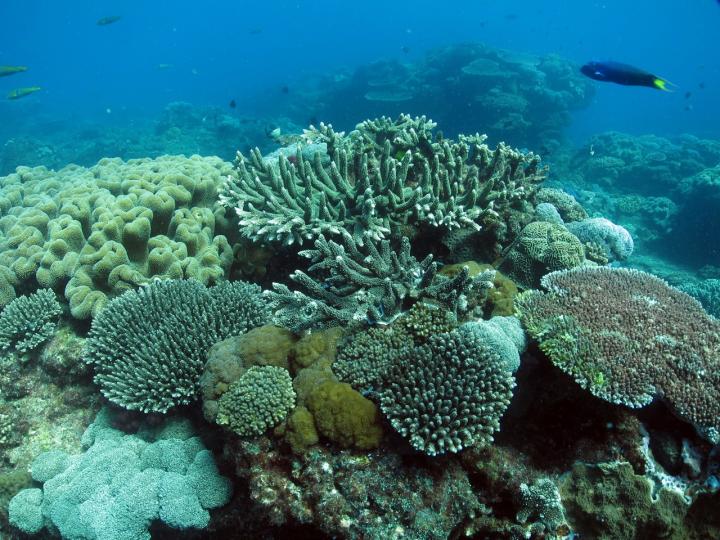
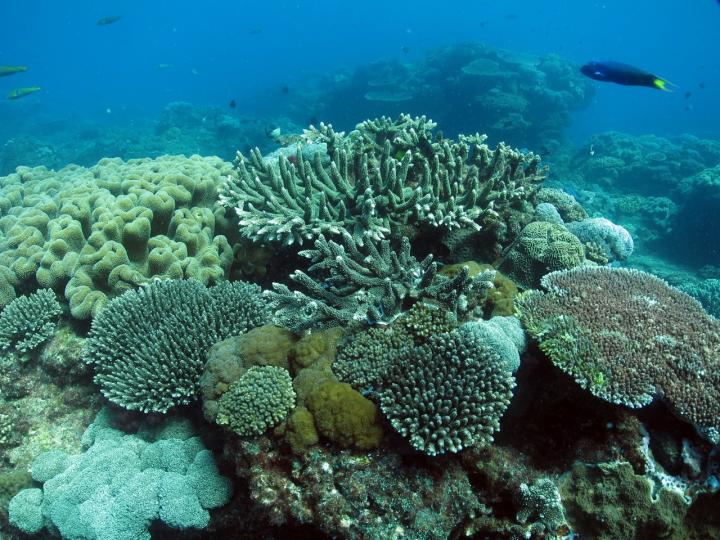
The vulnerability and conservation value of sub-tropical reefs south of the Great Barrier Reef — regarded as climate change refuges — has been highlighted in a new study.
University of Queensland School of Biological Sciences researcher Dr Brigitte Sommer said the study of Eastern Australian reefs revealed coral species would likely shift their distribution southward in response to climate change.
Coral range expansions would likely vary among species depending on the species' characteristics and traits.
"In the subtropical-to-temperate transition zone south of the Great Barrier Reef, corals are at the limits of their distribution and environmental tolerances, as the water is cooler," Dr Sommer said.
"There is less light and conditions are more seasonal and variable than on the Great Barrier Reef."
Dr Sommer, a member of Professor John Pandolfi's lab at UQ, said the new study examined 17 reefs from the Sunshine Coast, in south-east Queensland, to Port Stephens in New South Wales.
"We sought to investigate the ecological and evolutionary processes that shape coral biodiversity patterns at their southern range limits," she said.
"We also examined the evolution of coral species' traits to determine whether these characteristics were stable over time."
Dr Sommer said it was important to conduct such studies to understand the stability of the species' environmental tolerances and the ecological drivers of biodiversity patterns so scientists could more accurately predict species' range shifts and ecological responses to climate change.
"For example, if characteristics such as environmental tolerances are stable over time and don't change, then corals will likely only expand their ranges to areas where environmental conditions are similar to where corals currently occur," Dr Sommer said.
"And corals will probably have less capacity to adapt to novel environmental conditions".
"Our results suggest that species that occur in these subtropical and temperate reefs south of the Great Barrier Reef are more closely related to each other and have more similar characteristics than the coral species that occur on the Great Barrier Reef.
"This suggests that environmental tolerance is important for coral persistence in these marginal environments and that species with unsuitable traits cannot persist in these cooler and more light-limited environments."
Results suggested competition by corals for space and light were also important drivers of biodiversity patterns at local scales.
"These findings indicate that coral biodiversity patterns south of the Great Barrier Reef are shaped by a combination of regional and local processes," Professor Pandolfi said.
Species unable to persist in these cooler and darker conditions were initially excluded from the region and the remaining species then divided into local sites, depending on whether species interactions or environmental conditions were more important locally.
###
The study, which involved researchers from the Australian Research Council Centre of Excellence for Coral Reef Studies, the ARC Centre of Excellence for Environmental Decisions at UQ, University of Leeds, Southern Cross University and CSIRO Marine and Atmospheric Research, is published in the Proceedings of the Royal Society B.
Media Contact
Dr Brigitte Sommer
[email protected]
61-041-459-4159
@uq_news
http://www.uq.edu.au
Original Source
https://www.uq.edu.au/news/article/2017/08/sub-tropical-corals-vulnerable-new-study-shows http://dx.doi.org/10.1098/rspb.2017.0915