Credit: Hans Smid
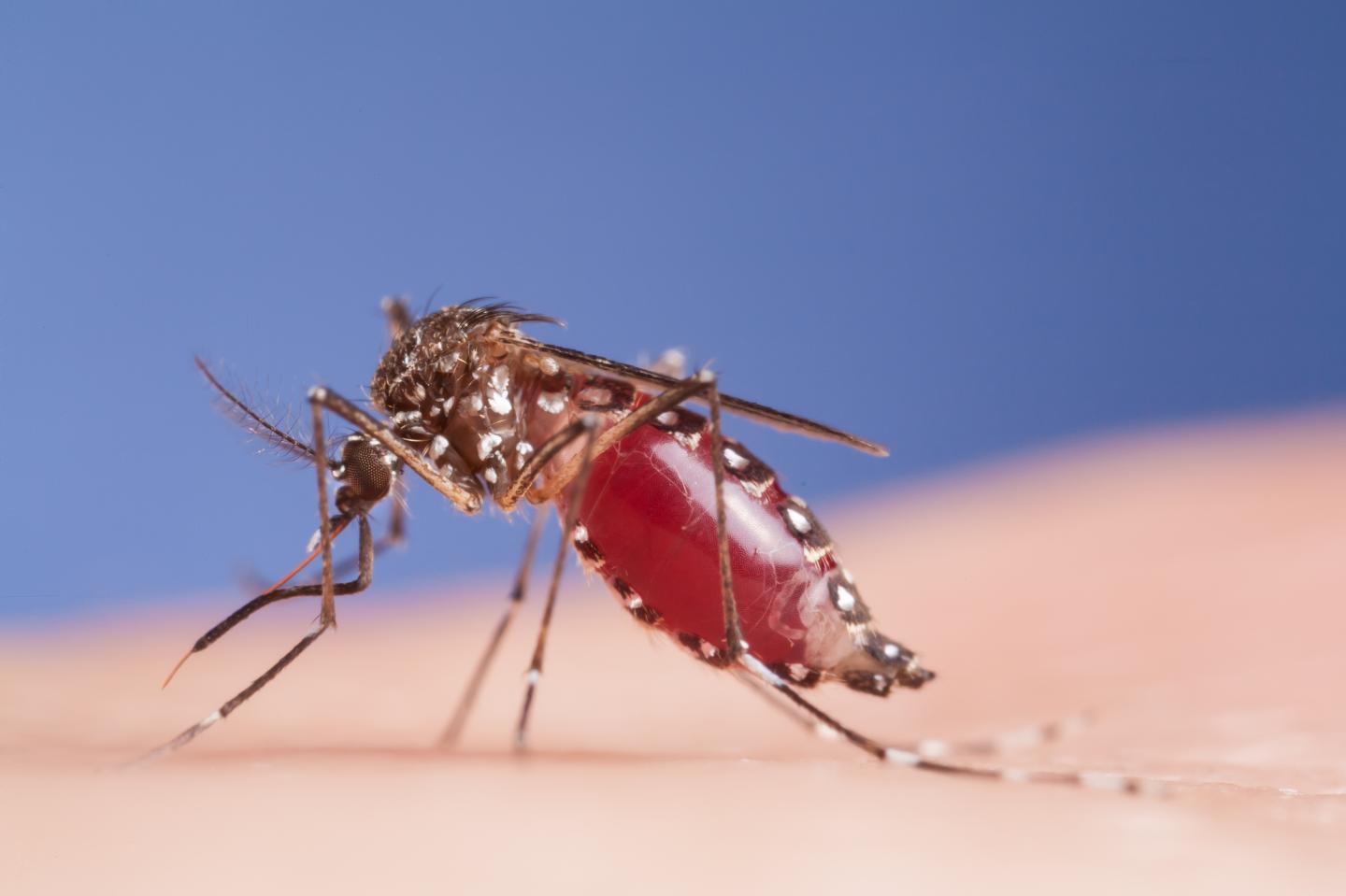
All organisms have DNA, the genetic material that provides a blueprint for life. The long double-helix-shaped DNA molecules in the body’s cells are first translated into RNA molecules and then translated into proteins that ensure the functioning of the cell and the entire organism. But there are large parts of the DNA that are not used for making proteins. This is called ‘junk DNA’, because its function remained unclear for a long time. However, a certain type of junk DNA that is found in mosquitoes and which repeats itself dozens of times, known as ‘satellite DNA’, has now been shown to play an essential role in the early development of mosquito embryos.
Researchers at Radboud university medical center published their findings in the scientific journal Nature.
Early development
All animals–but in this study specifically the yellow fever mosquito Aedes aegypti–are composed of a variety of cell types that form different tissues and organs, all originating from a single fertilized egg. This is a complex process; in order to ensure that the fertilized egg successfully develops into an embryo, the mother not only provides half of the hereditary DNA, but she also provides the egg with extra proteins and RNA.
These RNAs and proteins are essential additions, because these molecules direct the first cell divisions of the fertilized egg. Only after a number of cell divisions have taken place can the mosquito-to-be produce the proteins and RNAs that will prompt further development. At the same time, the mother’s added proteins and RNAs must be broken down in time, so that they do not disturb the subsequent development of the mosquito.
Orchestrating RNAs
It turns out that a certain piece of satellite DNA in the nascent mosquito embryo is responsible for the breakdown of the maternal RNA. But how does this work? Researchers from the laboratory of Professor Ronald van Rij, chiefly among them PhD candidate Rebecca Halbach, discovered that the stuttering DNA produces two small RNA molecules. This happens during the earliest stages of the embryonic development of the mosquito. However, these small RNA molecules do not produce any protein. These RNAs regulate the activity of other pieces of RNA that do encode proteins. In this case, they will bind to the mother’s RNA molecules, which will then be broken down. This step is so essential that absence of these ‘regulatory RNAs’ will result in the continued presence of the mother’s RNA molecules, which will disrupt the subsequent development of the embryo.
Satellites and dinosaurs
Van Rij emphasizes how extraordinary this research has been: “During this study, we made some completely unexpected discoveries. Even though satellite DNA was first discovered sixty years ago, there is little known about its function. In this study we revealed that it actually has a very important function during a critical phase of development.”
It also became apparent that the mechanism is quite old in evolutionary terms. Van Rij: “Together with researchers from Wageningen University, we examined a large group of mosquito species. This showed us that this satellite DNA and the specific regulatory RNAs originated around 200 million years ago, which was during the late Triassic period, an era that coincided with the rise of the dinosaurs. I think it’s great that these small RNAs have remained unchanged for so long. This also specifically suggests that they have an important function.”
From mosquito to human?
There are clear similarities between the first steps in the embryonic development of different animal species, but there are large differences at the molecular level. This particular piece of stuttering DNA is not found in humans, but it is possible that other satellite DNA plays a role in the embryonic development of humans or other animals.
Background: an accidental discovery
This research builds upon an accidental discovery. Aedes aegypti is a mosquito that transmits important pathogens, such as dengue virus and Zika virus. Van Rij’s research group examines how these types of viruses are transmitted by mosquitoes. “We do a lot of research on the mosquito’s immune system against viruses,” says Van Rij. “This immune system recognizes the viruses’ RNA and breaks it down into small fragments. During an analysis of the RNA fragments in virus-infected cells, researchers Pascal Miesen and Rebecca Halbach accidentally stumbled upon small RNA molecules that did not derive from the virus. The small RNAs turned out to be produced from satellite DNA from the cell itself. We found this to be so remarkable that we decided to investigate further. After five years of research–which was partly made possible by an NWO Vici grant–it has now led to this Nature publication.”
###
Media Contact
Stephan van Duin
[email protected]
Related Journal Article
http://dx.