MIAMI – The livestock industry’s impact on climate change has long been a subject of concern, as detailed in the 2006 United Nations Food and Agricultural Organization’s 390-page report “Livestock’s Long Shadow.” The report provided the first global assessment of animal agriculture’s contribution to anthropogenic warming, land degradation, air pollution, water shortage and loss of biodiversity. Further, the report stated grim environmental consequences if the industry continued as usual.
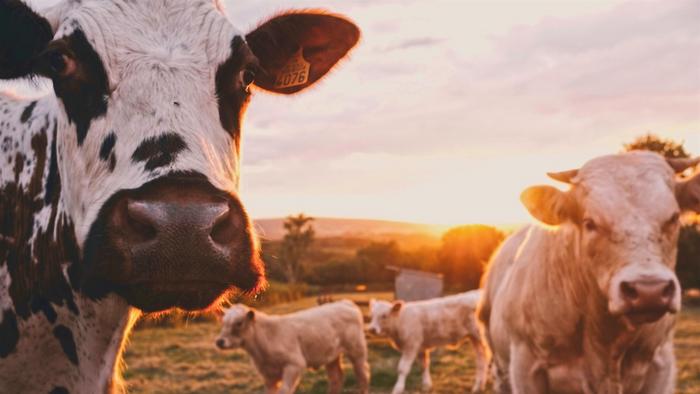
Credit: Stijn te Strake, courtesy of Unsplash
MIAMI – The livestock industry’s impact on climate change has long been a subject of concern, as detailed in the 2006 United Nations Food and Agricultural Organization’s 390-page report “Livestock’s Long Shadow.” The report provided the first global assessment of animal agriculture’s contribution to anthropogenic warming, land degradation, air pollution, water shortage and loss of biodiversity. Further, the report stated grim environmental consequences if the industry continued as usual.
A recent article in the journal Climatic Change sheds light on the industry’s tactics in shaping public discourse and policy surrounding its climate impacts. The study, co-led by Jennifer Jacquet, a professor in the Department of Environmental Science and Policy at the University of Miami Rosenstiel School of Marine, Atmospheric, and Earth Science, and the Abess Center for Ecosystem Science and Policy and Viveca Morris, a research scholar at Yale Law School, reveals how animal agriculture companies, akin to fossil fuel corporations, have downplayed their role in climate change and influenced policymaking in their favor.
Key findings indicate that industry funded efforts have been bolstered by collaborations with academic researchers. Notably, funding support from the beef industry helped to create what appeared to be a scientific dispute over the findings of “Livestock’s Long Shadow” and served to shift blame away from cattle production for climate change impacts.
The researchers also identify the emergence of academic centers, established with industry support, as playing a pivotal role in promoting industry-friendly narratives, obstructing emission regulations, and advocating for climate solutions that prioritize production over environmental concerns.
“This research underscores how industry-funded initiatives within academic institutions have perpetuated misinformation and hindered meaningful action on climate change mitigation in the animal agriculture sector,” said Jacquet. “These are egregious examples of industry funders being heavily involved at universities – the industry groups shape the research agenda, hire PR firms to help name and promote the university centers, get involved with the professors’ social media accounts, and in some cases are the professors’ former employer.”
“It’s now well established that the animal agriculture industry is a major contributor to the climate crisis,” said Morris. “Yet, in the United States – one of the largest producers and consumers of meat and dairy products – livestock greenhouse gas emissions remain effectively unregulated. This begs the question: why? Like other industries, in a multitude of ways, the livestock industry has shaped public opinion and public policy to ensure that it can continue to operate and emit as usual. Industry-funded academics have played a key role in those efforts.”
The study, which evaluated the origins, funding sources, and activities of academic centers and researchers, highlights the need for transparency in academic-industry partnerships. The findings also highlight the industry’s strategic efforts to maintain its social license to operate by leveraging academic credibility to shape public opinion and policymaking.
The study titled “The animal agriculture industry, U.S. universities, and the obstruction of climate understanding and policy” was published February 26, 2024 in Climatic Change. The authors are Viveca Morris, Yale University, and Jennifer Jacquet, University of Miami Rosenstiel School of Marine, Atmospheric, and Earth Science, and the Abess Center for Ecosystem Science and Policy.
Journal
Climatic Change
DOI
10.1007/s10584-024-03690-w
Method of Research
Literature review
Subject of Research
Not applicable
Article Title
The animal agriculture industry, U.S. universities, and the obstruction of climate understanding and policy
Article Publication Date
26-Feb-2024
COI Statement
none